LOUISVILLE – It’s an intricate mosaic of life in the Presbyterian Church (U.S.A.), but the big picture looks something like this.
Presbyteries feel financially stressed, with many mid council leaders saying the denomination’s per capita system isn’t working. The Office of the General Assembly, which depends on per capita, needs more funding to do its work. Many presbyteries and synods impose their own per capita rates on top of what the General Assembly assesses – which means that when mid councils can’t fully collect per capita from congregations, their own budgets take a hit.
There’s confusion about why there are two agencies instead of one at the top of the denomination. The committee’s Financial Sustainability team, in a preliminary report issued at the end of 2019, raised the prospect of restructuring.
Year after year, there are fewer Presbyterians – with churches getting smaller and some closing their doors, which means a smaller donor base, regardless of what funding system is in place. And Presbyterians as a group have significant wealth, and many of them are willing to share what they have to support the work of the church – particularly if they have some say in how the money is used and understand why it’s needed.
That’s some of what the Special Committee on Per-Capita Based Funding and National Church Financial Sustainability has been talking about over the last year. And now, the committee is on the brink of determining what it wants to recommend to the 2020 General Assembly.
It’s not for sure what the result will be, but here’s how the committee was leaning as it finished the second day of its Jan. 13-15 meeting in Louisville. Approval of specific recommendations and exact wording is likely to come on the morning of Jan. 15, although the committee does have until Feb. 21 to finish its report.
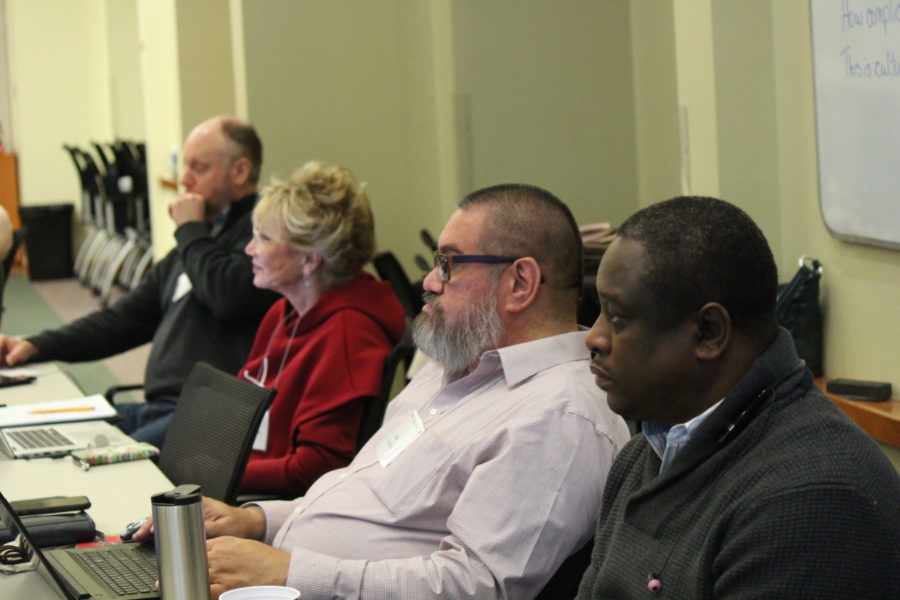
The committee is considering a series of recommendations to the 2020 General Assembly. Among them, asking the assembly to:
- Start a process that could lead to a restructuring of the top levels of the PC(USA) – possibly a consolidation of the Presbyterian Mission Agency and Office of the General Assembly, or finding some other way of reallocating funding to support the work of OGA.
- Instruct staff of denominational entities to work on a model by which overtures to the assembly with financial implications that include agencies beyond OGA and PMA would be funded by sources beyond per capita. In other words, don’t rely on per capita to fund all the added work.
- Create some kind of campaign to educate Presbyterians and communicate to the church the benefits of giving to support a connectional church.
- Create some sort of implementation commission that would begin work after the 2020 General Assembly and would consider changes in the Organization for Mission that could lead to restructuring or alterations in the funding system.
- Approve some pilot projects that would help to test whether the per capita system actually is broken, as many mid council leaders contend, or whether it could be improved or another funding system might work better.
Pilot projects under consideration include one that would allow a group of presbyteries (maybe 10 to 15) to experiment with a funding system that would send money to support the national church based on a percentage of the presbytery’s operating budget, rather than per capita, which is a per-member assessment (currently $8.95 per member for the General Assembly per capita).
Another would address the question of cultural changes needed – asking select presbyteries to be involved in training and education with congregations on the per capita system, with the hope that added engagement and relationship building would produce stronger presbyteries and perhaps greater giving.
A third possibility would redefine per capita to include mission giving and other operational functions — in other words, expand it beyond what’s needed to support OGA, as some sort of per-member giving to support a unified budget for OGA and PMA. Perhaps it could have a name something like “Mission Share.”
While the committee is inching towards finalizing its report to the General Assembly, its discussions also reveal the difficulty of trying to make real change in a complex, entrenched institution that’s also a church.
“My ‘aha! moment’ always is how complicated everybody’s expectations are,” said committee co-moderator Laura Cheifetz.
While the committee has been focusing on finances, “it’s occurring to me that it’s really more of a culture change that we’re looking at,” said Diane Kenning, from the Presbytery of Plains and Peaks.
Pilot project
Sometimes, floating ideas for new ways of doing things also leads quickly to practical questions about how that new thing would work.
Take, for example, the idea of using a percentage model – sending to support the national church maybe a percentage of the presbytery’s budget or the funds it collects from congregations.
But that raises additional questions, said Kevin Veldhuisen, of the Presbytery of South Dakota. Among them:
- Who would determine what percentage of a congregation’s budget would be given to the presbytery to support the mid council and the national church?
- How does a presbytery know what a congregation’s budget actually is? Only about 80 percent of congregations complete the annual PC(USA) statistical report – and only about 65% include the financial piece of that, Veldhuisen said. Would presbyteries be asking congregations more questions about their budgets?
- Would that percentage be a fixed amount – or might it creep up if the General Assembly approved new initiatives that need to be funded? “Are we going to lock it in?” he asked.
- Would the percentage be the same in every place? If there’s a set percentage, some congregations or presbyteries “will say great, we just saved a whole lot of money,” he said. “Another will say, ‘You just killed us.’ ”
There’s also the question of how much money a percentage system would produce – whether it would bring more or less money for the work of the national church.
“I think we have to be careful about that,” said Timothy Ngare, of the Presbytery of Detroit. “The underlying problems are still there,” of congregations growing smaller and more churches closing.
Or if the money raised is the same, “where’s the difference?” asked Debi Davis, of the Presbytery of Florida.
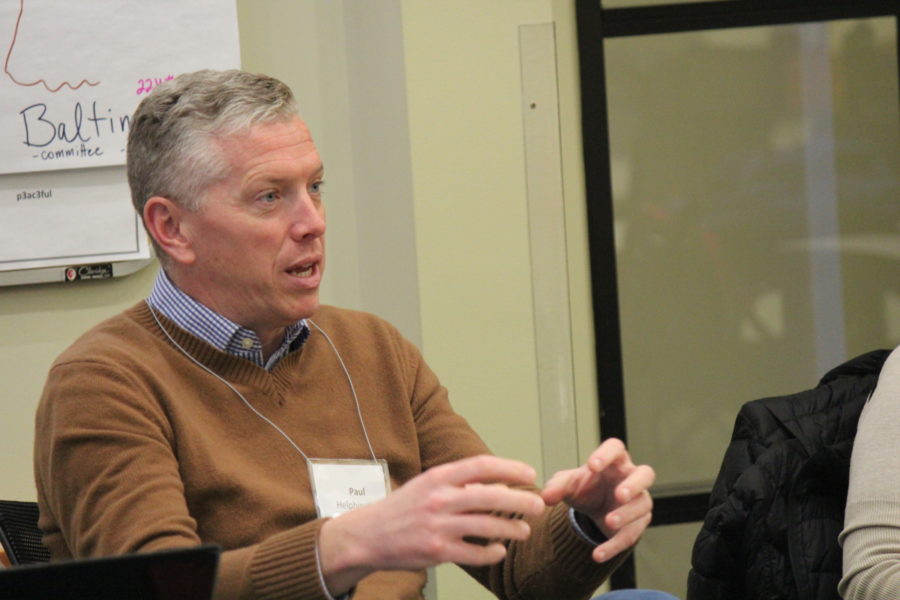
Part of the answer to that, said Paul Helphinstine from the Presbytery of Holston, may be that presbyteries participating in the pilot project would receive additional resources they find valuable – such as help explaining to congregations the denominational funding system – and could help develop resources and relationships that would be useful to Presbyterians at the local and regional levels. “The goal is that in the end, you have a presbytery that is actually healthier than it was before,” Helphinstine said.
Moving Forward Implementation Commission
The commission will meet in Louisville Jan. 23-24, to work on drafting its recommendations to the General Assembly. Representatives from the commission (co-moderators Marco Grimaldo and Larryetta Ellis, along with member Mathew Eardley) have been attending the special committee’s meeting this week.
Grimaldo told the committee that the two groups have some areas of common interest – for example, around the need to provide better resources for congregations regarding denominational funding. “A unified strategy for mission engagement needs to accompany a unified budget,” he said.
Grimaldo said the commission will be looking for areas where it might jointly support some of the committee’s recommendations – with the final reports all due by Feb. 21.
Some representatives of the special committee may attend the commission’s meeting next week, particularly to talk about recommendations on financial sustainability and possible denominational restructuring. Grimaldo urged those representatives to “think about deal-breakers” – things on which the committee would not be willing to budge, even if the commission goes another way.
He thanked the committee members, saying that even if they don’t reach full agreement on exactly where the church should go with these complicated issues, or if the assembly decides not to support their recommendations, “you will have done good work. Someone needs to wrestle with this.”