Guest commentary by Kathleen Dain
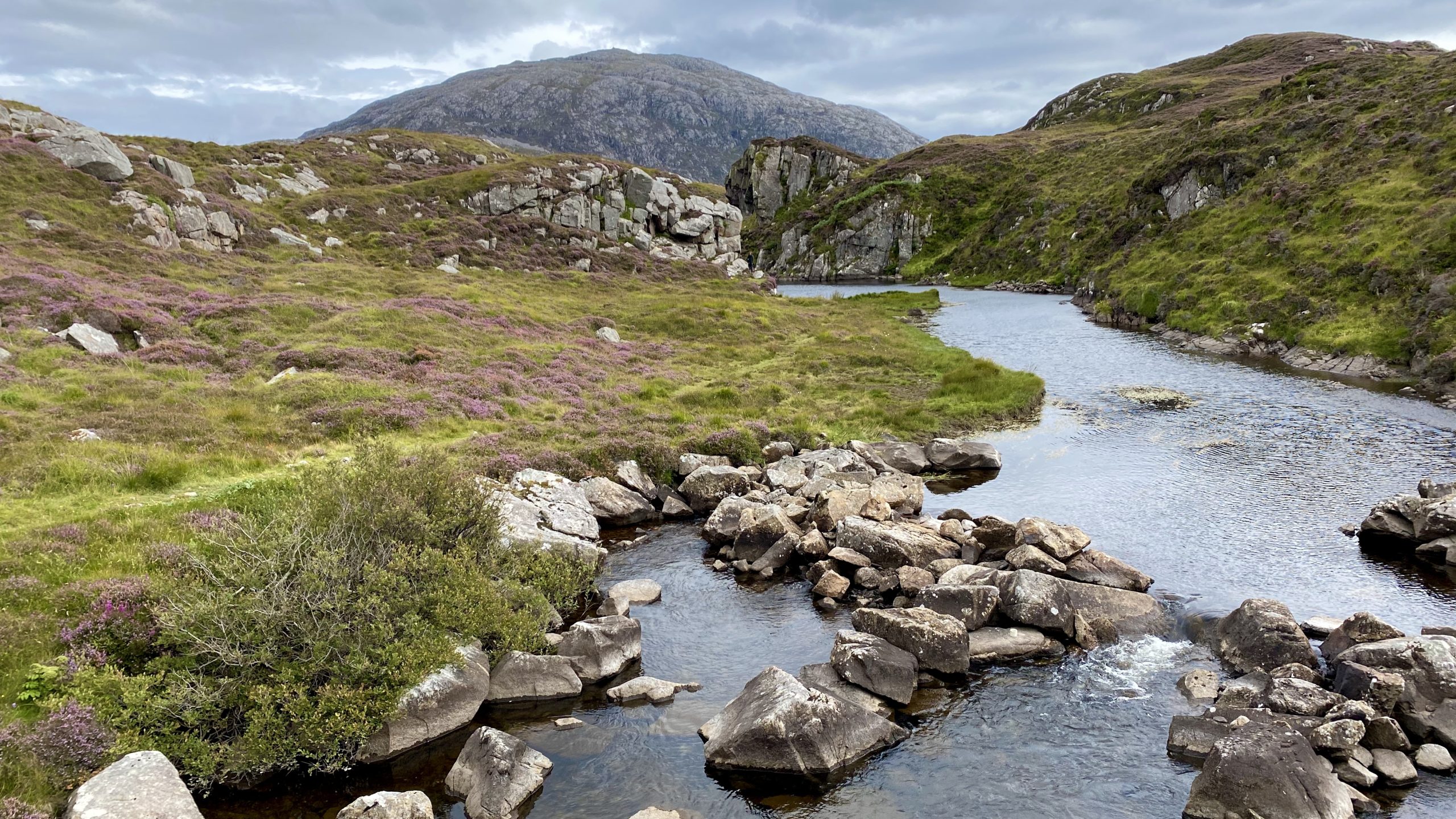
One of my objectives on a recent journey to the Isle of Lewis was to travel to the northern most point of the island, sit on a beach, watch the sun go down and wait. Then as darkness settled, and the sound of the rushing waves of the north Atlantic beat against the shore, I prayed I might see the elusive northern lights. The nearest land mass at that point to the north would be the Faroe Islands followed by Iceland – for me the edge of the world – a thin place in which to commune with God.
I did not, however, travel to the northern most point of the island. Instead, I found myself grounded in my own sense of vulnerability. How would I find my way back to my hotel in Stornoway along an isolated single-track road? What if I tripped and fell and injured myself? I am a natural tripper. What if I needed a restroom? What if … what if … what if the Almighty showed up? Now in my sixth decade on the planet, I find myself examining my decisions more thoughtfully and find my adventures a bit more subdued.
 For millennia humanity thought the world flat, that should one travel too far you might very well slip off the edge into the abyss. It was only after centuries of studying the movement of the stars that mathematicians and scientists determined the curvature of our sphere. The same arc bends the light on long summer evenings in Kinross and whose refraction makes the traffic lights in Manitowoc visible hundreds of miles away on the western shore of Lake Michigan. The world is a globe with no hard edge in which to fall off. Instead we spin.
We spin around the sun and moon as do the other planets in our solar system. We spin around our lives, assessing our own skills and willingness to take risks. We spin around our beliefs, our fears, and presuppositions until we find other like-minded people with whom to spin. We turn to the news and social media sites that spin in accordance with our orbit, until the light no longer bends, and the world is flat again.
“And so John the Baptist appeared in the wilderness, preaching a baptism of repentance for the forgiveness of sins. The whole Judean countryside and all the people of Jerusalem went out to him. Confessing their sins, they were baptized by him in the Jordan River.” (Mark 1:4-5)
The Gospel of Mark is perhaps my favorite account of the ministry of Jesus Christ. It is short and to the point (I like that). It has no birth narratives or genealogies, instead it begins with the proclamation of “Good News” and ends abruptly with the first witnesses to the resurrection fleeing in fear. (Many early sources have the Gospel of Mark ending at 16:8.)
I think all of humanity at the moment is rediscovering its own sense of vulnerability. Fear has crept into our vocabulary with every cautious breath we take. We are not the masters of our own fate, but spheres revolving within a fragile ecosystem. A virus, invisible to the naked eye, travels the four winds of mother earth. Long-held prejudices and racial tensions are erupting violently on our city streets. The hard edges of our world have come into sharp focus and we pray for our God to show up, yet are afraid of what that encounter might entail.
John the Baptist must have been a sight to behold. Dressed in camel hair and leather belt, one can almost hear the hum of locusts that dreaded his approach. Still, the Bible tells a story of the people coming to the wilderness not for John’s wild appearance, but for what he offered. They came with repentant hearts — willing to turn from the fruitless pursuits they had been following to the pathway that led to wholeness and reconciliation.
As most pastors during these COVID-19 days, I hear parishioners ask, “Is this the end?” I watch the scenes of violence erupting on the streets of my homeland and wonder, “God, in your mercy.” We have grown so intolerant, the hard edges of our world so jagged, that I hear the descent of the abyss calling. And yet… and yet, I can still see the faintest trace of light arc its way across our sphere. It shines in the simplest expressions of love toward our neighbor. It burns with its demands for justice, and it will not be quenched in silence. It resounds of the promise of Good News not based on a prosperity gospel, or minor tomes delivered in a major key, but in and through a suffering servant who lived and died and rose again.
The Gospel of Mark begins with Good News — with a call to repentance for the forgiveness of sins and concludes with the charge to share that Good News to a darkened world. The light of the world has come, whose arc enshrines and encircles all who follow and who turn and call upon Jesus’ name. The end of the gospel is just the beginning. What happens next is up to us.
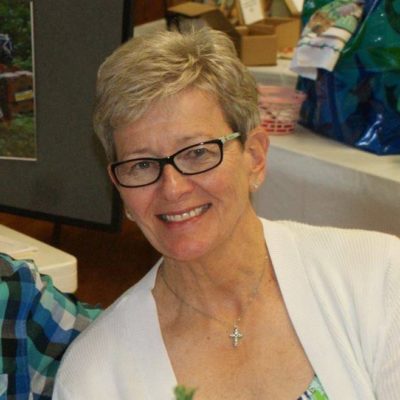 KATHLEEN DAIN is a member of the Presbytery of Tampa Bay currently serving in a one year familiarization within the Church of Scotland. She resides in Kinross.