I recently watched the troubling yet necessary documentary “The Social Dilemma” on Netflix. Let me first say, if you’ve not seen it, you must. A theologian once said that knowledge is the most painful pursuit of all. To watch this documentary is painful, but as Christians it is the kind of knowledge we must see and feel. The first step to solving a problem is recognizing there is one. The problems addressed in “The Social Dilemma” are seismic in scope.
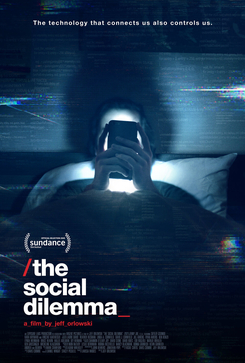 The documentary follows the voices and discoveries of a handful of Silicon Valley tech industry workers. I suppose the question the documentary poses is this: What exactly is technology – and specifically social media and the internet – doing to the human soul? To spin it biblically: What matter is it if one gains the entire world, if they forfeit their soul?
The conclusions these tech giants (one of them is the co-creator of the “like” button) come up with are terrifying. In brief, the dice of the social media world have been loaded against us. Advertisers are paying billions of dollars to tech companies who are giving away not just data, but, more specifically, giving away human agency. Perhaps the scariest moment in the whole documentary was for me the moment a tech-writer said: “The product of the social media world is not data. It is not even ‘you.’ The real product is the small changes of behavior that these social media services produce in human beings.” In other words, we are not the consumers of Instagram, TikTok and Facebook, they are the consumers of us. Our brains are quite literally being redirected toward ends and actions that have been hitherto unknown in human history. Yes, we are more connected than ever. Yes, globalization has produced a worldwide marketplace. Yes, social media has galvanized the overthrow of tyrants. But for every progress in human society, there is a concomitant cost.
We are beginning to see just how costly our consumption of social media truly is. The algorithm designed by tech geniuses that tracks our every search, like and even the duration of time we spend looking at a picture, is churning out endless amounts of information about us into the advertising ether. The results of our increased use of technology seem to be unprecedented increases in the rates of suicide, anxiety and depression. It is now commonplace for young girls to ask plastic surgeons to “make them look more like they do on their Instagram filters.” Devices that are more powerful than the supercomputers of the 1970s are now resting in the pockets and on the bedstands of adolescents whose brains are impressionable and ever-developing. And what’s more, we have all become addicted to our phones. Email, YouTube, Facebook, TikTok — these are the cigarettes of the postmodern world.
Some of us sleep with our devices, even have withdrawals without them. As I type, my phone rests just within arm’s reach. And this addiction is not really our fault. The designers of these devices have not only made the world’s functioning impossible without them, but they have also rewired our brains to yearn for technology in a deeply visceral way — in the way an alcoholic longs for another drink. To frame this philosophically, the guise of individual “freedom” we individuals of the modern world espouse is a farce. We are not free. Our human volition and agency have been purchased. And to quote musician Joe Purdy, “The more I’m bought, the less I cost.”
 While the first cost of our use of social media is a crisis of personhood – mental illness, addiction, etc. – the second cost is described by David Brooks as a crisis of community. This crisis concerns the very fabric that holds together our culture. What began as mechanisms for connection have become catalysts for chaos and conflict. Extremists, neo-Nazis and white supremacists are radicalizing young people on YouTube. Russia found a way to use FaceBook’s algorithm to meddle in American elections. “Fake news” has become a commonplace phrase to describe things that are both the factual and farcical alike. Which brings to mind the question: How does one determine what is true and what is fake? I’m not sure we know the answer to that anymore. Fans of the movie “The Terminator” may remember the explicit critique of the rise of technology and the telling of an apocalyptic doomsday when artificial intelligence (AI) takes over the world. The scary reality is that this apocalyptic day has already taken place — and it is pushing us farther apart than ever. Take a country who once killed one another in a civil war, add a pandemic, mix in the most political polarized election in recent memory and what you have is a societal explosion of anger, resentment and tribalism.
As pastors we are, whether we like it or not, social critics. As I look at all of this, I am reminded of Paul’s way of describing what we humans are up against. “Our battle is not against flesh and blood, but against the powers and principalities.” Biblically speaking, there are dark forces, known as capital-S Sin and capital-D Death, that are vying for control of our lives, not just personally, but societally. And now we churches are faced with the social dilemma: How do we pastor our congregations when being together demands social media and technology in ways we never thought possible or necessary?
There are certainly political and policy-making answers to the fissures and wounds caused by the social dilemma, but what of the place of the church? Though we can only see in part, my hope is that we might take heart that the battle against these dark forces has already been won on the cross. At the font we are baptized into a new way of being human, a new way of being connected — not via Wi-Fi, but as the unified global body of Christ. At the table we remember the death of death, and anticipate the day when we are no longer polarized, rather many shall come from east and west to dine in glory with the lovely host, Jesus Christ. In the word we are not consumed by technology but vivified by resurrection, not products of advertisers but priests of the sacred, not fractured by untruth but inspired by the Holy Spirit of God, the author of our life together. The answer to the social dilemma is the social gospel.
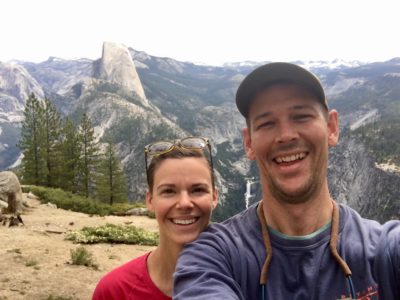 JOSHUA MUSSER GRITTER co-pastors First Presbyterian Church in Salisbury, North Carolina, with his wife Lara. They watch movies together with their dog Red.