As I wrote this article in my guest-room-turned-shared-office, the following distractions occurred:
- Screaming children refusing to do homework.
- Barking dogs.
- Lawn mowers outside my window.
- Multiple trips to the kitchen.
- Flipped through my high school yearbook after being distracted by a text message.
Maybe you can relate to this as many of us have moved from working in offices or coffee shops to the “comfort” of our homes.
We are experiencing, to varying degrees, these visible and physical distractions. Yet, we are also bombarded by emotions that might be distracting or that we might be avoiding as we are in survival mode and attempt to create new routines. “We’re not just working from home, we’re working from home in a pandemic,” says Danny Elenz, a LeaderWise staff counselor. LeaderWise, located in Minnesota, provides psychological evaluations for Committees on Ministry, offers counseling for pastors and is a support to presbyteries and synods. The counselors at LeaderWise have been essential in guiding church leaders through this difficult time.
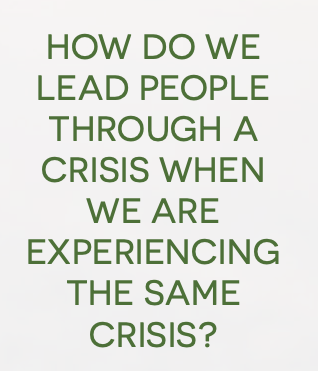
When will this end? What will life look like when the COVID-19 pandemic is over? These questions are asked frequently and no one has firm answers. So much is unknown – the stock market, financial security, job security – on top of the stress of social distancing. These factors can cause anger, sadness, grief, anxiety, frustration and loneliness. We do not know how long physical distancing will continue, or what life will look like when it is over. Much of the situation is out of our control. What is within our control is our response and how we care for ourselves during this stressful time. How do we lead people through a crisis when we are experiencing the same crisis? Pastors and mental health professionals point to resilience during this time — an important concept as we seek God in the daily chaos.
Resilience is a buzzword with weight. Many societal projects have the word “resilience” in the title, including Presbyterian Disaster Assistance’s “Building Resilience” programming and the movie about the effect of childhood trauma on the body, “Resilience.” The word is buzzing around because studies show the significance of resilience, not because it is jargon turned popular. Resilience means being intentional of how we come out of this, and that takes intention. It means self-care, self-compassion and mindfulness.
Self-care
Self-care, another trending term, is important not just for surviving, but thriving. Marriage and family therapist Daniel Stillwell, in North Carolina, says this about assumptions made about self-care: “To be assertive (about self-care) looks selfish. To be nurturing looks self-less.” The assumption in our society is that we should all be “self-less,” but we have to have a rhythm of caring for ourselves and others. As author Frederick Buechner wrote: “Pay mind to your own life, your own health and wholeness … . A bleeding heart is of no help to anybody if it bleeds to death.” We need to be able to recognize our needs, whether that is being able to reach out to people virtually, or to take some quiet time. We all have different emotional needs, in different moments. Once we know our needs, we must advocate for ourselves — which may look assertive, but is actually acknowledging those needs and not assuming others can read our minds.
 MaryAnn McKibben Dana is a pastor, writer, speaker and ministry coach leading pastors through this unprecedented time. She distinguishes between self-care and self-comfort, a distinction she credits to author Sarah Bessey. There is no judgment in either — sometimes we need self-care, and sometimes we need self-comfort. What is the difference? Self-comfort is when we sit on the couch, binge watch TV, eat a gallon of ice cream and do what makes us feel good. Self-care isn’t always comfortable. I think of one of the harder weeks for myself during this time. I try to run three times a week, but on this particular week my motivation was low. The first run of the week I convinced myself to run two miles, and take it from there. Five miles later I knew the run was what I needed. The second run of the week, I barely made it two miles, then went home, sat down and did mindless tasks for an hour. Self-care is part of knowing yourself, knowing what you need in the moment and being able to advocate for what you need.
Self-compassion
Recognizing needs and limitations leads into self-compassion. Not being able to do the things you typically do, like run a marathon or have a perfect worship service (not that such a thing exists), can make us feel low and down on ourselves. We aren’t able to do the typical activities that make us feel like life is normal but that also may give us identity or meaning. Think about how many tasks you are doing right now. Are you working? Are you homeschooling children? Are you trying to be a tech guru? Is your spouse now your IT department? “Pastors are going through a really challenging time and there is a lot of relevance in going easy on yourself. This is a crisis and I think in helping fields we are so motivated to be helpers right now and be in that role for others,” says Elenz. He describes an analysis that studied the competencies of jobs. The findings included that many pastors had 64 different aptitudes to succeed in their job — more aptitudes than astronauts. “Pastors are already doing so many things and wearing so many hats. There is a real role right now for self-compassion or grace. Let yourself off the hook. Pastors are set up to feel inadequate because this is a complex job,” he said. Ministers know that they are on call all the time and there is tremendous pressure involved in ministry. Even when ministers leave home to buy groceries, they are still pastors in the community.
 This study was done prior to the coronavirus — prior to all the new pressures of technology and balancing work and home life that ministers are currently experiencing. Elenz reminds pastors (and everyone) that self-compassion is key. The term “self-compassion” is linked to psychologist Kristin Neff. More than self-care, it is being kind and gentle to ourselves, realizing that we cannot do it all.
McKibben Dana agrees, saying Scripture reminds us that we are “enough.” In her pastoral care and coaching she uses the Exodus 16 passage about God’s gift of manna — remembering that it is enough food for one day. God has given us enough for each day – enough time, enough gifts – but more than anything, we are enough. We have to let go of the critics in our heads and forget the “Ministry Olympics” — our constant comparison to other online worship services. Our sound won’t be perfect, our video might be blurry, our lighting might be off and I know my stole is always crooked — but as a colleague has said over and over, our worship “won’t be perfect, but it will be faithful.”
We have to throw perfectionism out the window. McKibben Dana says that many of us want to be the prodigal son. We do the right things and complete our tasks and check off our to-do lists. Yet, in this time, our to-do lists are never completed. Our job is never done. Monday blurs into Tuesday and we moved from the month of March to “the endless month of self-isolating.” We can make the fanciest online services with slides and a light show, and still miss the mark on pastoral care. We can focus on doing the tasks we think are important, and miss the ones that actually are important.
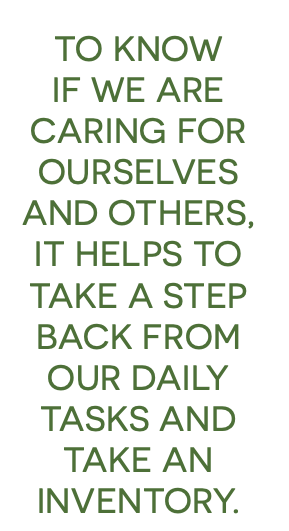
To know if we are caring for ourselves and others, it helps to take a step back from our daily tasks and take an inventory. Elenz offers up three questions we can ask ourselves to reflect: What am I thinking? How am I feeling? What am I doing? These can help us take small steps to care for ourselves, and put us on the path to resilience.
 Mindfulness
A major part of resilience is living in the now – being aware and having a meaningful life in the present, not in some abstract future – especially as our future seems more and more abstract by the week. To create meaning we must clear the way for the unknown. Stillwell states that in order to increase the positive in our lives, we must decrease the negative to make space. Mindfulness meditation goes hand-in-hand with resiliency as we take note of our emotional state. After asking ourselves reflection questions, we sit with those feelings. We don’t sit in them, but with them, acknowledging the pain, and “realizing pain doesn’t mean the end,” Stillwell says. Once we have acknowledged the pain, knowing everyone experiences pain, we can let it go, allowing space for other emotions to dwell within us, too.
Many of us might feel raw in this time. McKibben Dana mentions that many have been protected by privilege for a long time — a topic that has come up quite frequently over the years. For some this discomfort might be new, for others it is a different vehicle for a familiar isolation. There are still people who are marginalized without healthcare. For those who were already isolated and lonely (and especially those without internet access), this self-quarantine time is especially difficult. There is a growing awareness of the increase in domestic abuse during this time. The reality of losing a job and losing loved ones is a real fear. Also, a traumatic time such as the COVID-19 crisis might retrigger past traumas.
In his counseling experience, some with previous trauma are functioning well, says Stillwell, as they have heightened awareness on a regular basis — this feels “normal.” For some with post-traumatic stress disorder, trauma is a constant state. Everyone will respond differently. It’s important to know one’s self and what one needs in this time.
Vulnerability
Perhaps a marker of the resilience in the future is the adaptability of the present. For those who have been able to turn on a dime and make changes (imperfect as they may be) to their daily lives, it is important to recognize and celebrate. Consider what you are doing right, and be grateful for those gifts. McKibben Dana also mentions the vulnerability that is present in this time. “The curtain has been pulled back,” she says. Everyone is working from home. A college professor told me she was informed Zoom meetings or classes are more interesting with kids stumbling into meetings and with cat bottoms on the screens. Yet, as we laughed and talked, we agreed that what made these Zoom meetings most interesting was the humanity that was shown, because it was relatable. We’re all experiencing this together. For those few people who have said their lives have not been changed in the past months, I’ve wondered if they were honest with themselves, trying to deny some humanity. (Or perhaps they were living as monastics before this began.)
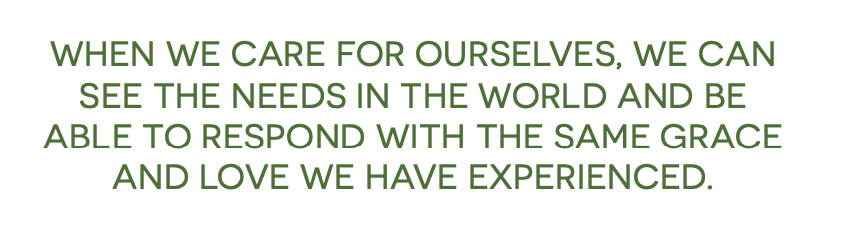
So, the next time your child walks into your Zoom meeting, instead of worrying, laugh and trust there is grace. When your sound system isn’t working or you feel you haven’t even qualified for the Ministry Olympics, be kind to yourself, because you’re doing enough. As I write about the obstacles of working from home, I’m also aware that I am working, and that is a privilege and a gift. So I will acknowledge the distractions – and even give thanks to God for some of them – because I wouldn’t be able to make it through this pandemic without the laughter and joy of the people who are distracting me. When we care for ourselves, we can see the needs in the world and be able to respond with the same grace and love we have experienced.
 Katrina Pekich-Bundy is minister at Hanover Presbyterian Church in Indiana. She is a runner and mother of two. She blogs at cairnlivingstones.wordpress.com.