When the COVID-19 pandemic wanes and congregations can be together again in person without restrictions, what will be different? What should change going forward?
Are there, for example, new ways of thinking about expanding the table to be more inclusive — so church isn’t just seen as whoever shows up to sit in the pews on Sunday morning? What about the idea of a sanctuary or community space that’s moveable and flexible, not tied to one place — that includes folks at home on the couch, or traveling or in assisted living, or off at college or living in another state, or sleeping in and watching later on the deck?
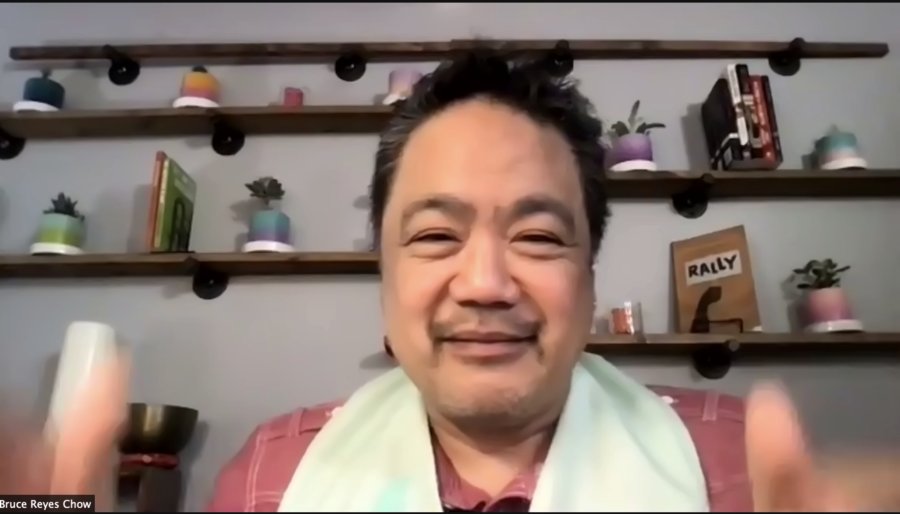
During the opening plenary of the Association of Presbyterian Church Educators annual event – being held virtually Feb. 4-6 with the theme “Anything But Ordinary Time”– Bruce Reyes-Chow challenged participants to think about what they’ve learned from the pandemic and what they want to intentionally make different in the time to come.
Reyes-Chow, who is a consultant and coach, pastor of First Presbyterian Church of Palo Alto in California, and a former General Assembly moderator, acknowledged that many church leaders are exhausted from the pandemic — dragging from a sort of emotional low-grade fever brought on by the pandemic, political upheaval, the national call for racial reckoning and, for many, personal loss as well. At first, many pastors and church leaders jumped right in and “managed the heck out of this,” he said — only to crash when it became clear the pain of the pandemic was dragging on and on.

Reyes-Chow said he wasn’t looking for silver linings – “too many people have suffered” from COVID-19 – but as church leaders “it is some of our role to help our people dream more,” and to consider what can be learned from the “new normal” the pandemic has brought.
Going forward, even when the pandemic doesn’t dictate it, can church leaders create and sustain some sort of welcoming digital space? With all that’s happened over the last year, “this is the time when folks are open to it,” he said.
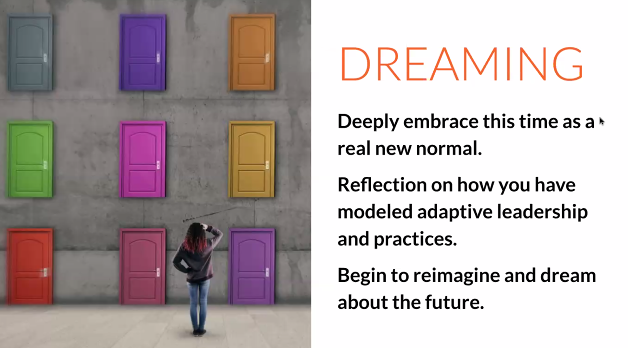
Reyes-Cow spoke of a range of options for congregations:
- In-person worship only, which was typical for many;
- Remote-only (“Let’s sell the building, have church online”);
- Two services every week: one virtual, one in person;
- Streaming worship from the sanctuary; or
- “Hybrid church,” where the leadership is not all in the building (Reyes-Chow said he plans to preach twice a month from home or somewhere else and twice in the sanctuary) and in which participants have essentially the same experience whether they’re present physically or watching from somewhere else.
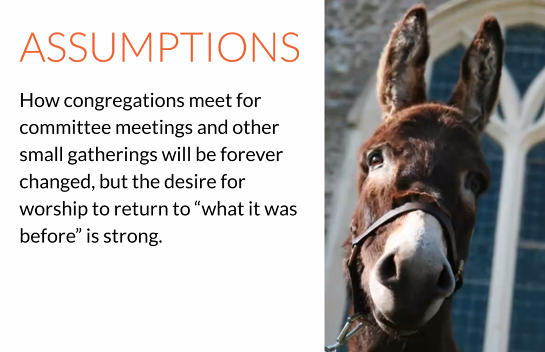
There’s no one right decision, Reyes-Chow said. A lot will depend on what a particular congregation and its leaders want; the church’s resources and capacity for taking on something new; and what people there consider to be most faithful. He acknowledged that in many congregations, the desire to return to in-person worship – with coffee-hour, hugs for friends and congregational singing – is strong.
In the Zoom chat, participants spoke of the realities in their home congregations.
One wrote: “I’m frustrated and tired. My community is anxious for things to get back to normal. My dog and cat are keeping me grounded right now.”
Another said: “Feeling exhausted from changing directions with my church, my family, school, etc., so many times.”
Others spoke of what’s going well.
Leigh Ellen Carson wrote: “My congregation has actually been incredibly grounding. They are so passionate about continuing ministry by any means possible. They bought live stream equipment that they will continue to use in the future after COVID!”
And Charlotte Nance-Albright of North Carolina said: “The older adults who refused to Zoom in the beginning and are now the most active Zoom participants — they keep me going.”
Whatever a congregation chooses, Reyes-Chow contends that it’s important to think through the implications of those choices – the benefits and the costs – and to consider how using technology and other approaches the pandemic has forced many congregations to lean into has sometimes meant a broadening of the table, so that more can be included.
In the church he serves, for example, three generations of one family worship together remotely: a grandmother in New York, a mother in Palo Alto, a son in Hawaii. The pandemic has made space for people to participate in worship who might not otherwise be able to: a recent college graduate, for example, who’s moved away, or a senior citizen who can’t get out as much.
The church Reyes-Chow serves is considering some sort of hybrid model – driven by a desire for a truly expanded table. Online worship creates possibilities for offering language interpretation and closed-captioning, or for virtual interaction with mission partners around the world. He’s intrigued with the idea of churches decentering geography in order to encourage participation from people who would otherwise be excluded.
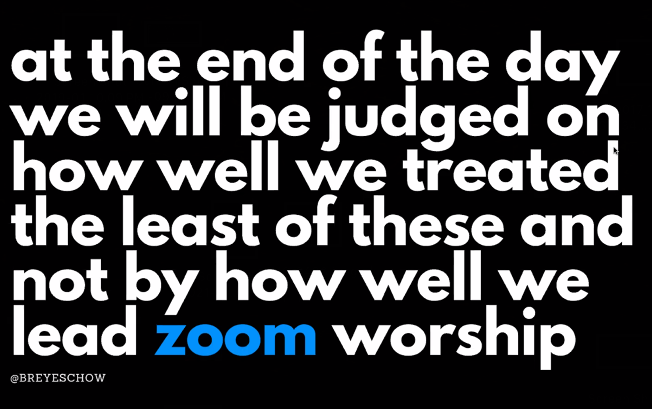 And these are questions not just for worship, but for other parts of church life as well — such as how the session or youth group meets. With a virtual format, Reyes-Chow has been able to invite people to lead Bible study who live in other places. “You have this local flavor from your particular congregation, but this global reach,” he said.
The hybrid approach does have difficulties. For one, it will take resources for equipment, staffing and training — and a lot of work, Reyes-Chow said. He encouraged congregations not to consider themselves in technological competition with other churches that might have more money or bigger staffs. “Don’t look fancier than you are — use what you’ve got,” he advised. What matters most is not the level of technology, but “how are we loving in the world? Where are we seeking justice? How are we caring for those who are isolated alone?”
And be honest in those conversations, he said. “With every choice we make, we leave somebody behind.”
During question-and-answer time, some participants raised questions about how hybrid or online worship would work well long term for smaller congregations or those in rural areas with unreliable internet access. One wrote in the chat: “And when you have no tech person and are doing it all yourself, burnout is even more likely.”
Reyes-Chow said he expects that, post-pandemic – when people are free to see friends and family and leave the house as they wish – “Zoom fatigue will not be as strong,” and the idea of a virtual presbytery or session meeting or evening Bible study might be more appealing, if people don’t have to get dressed up or travel across town to attend.
He also presented questions for congregations to consider as they sort through which approach to take. Among them:
- Will the church offer communion every Sunday, as some congregations do now with virtual worship?
- What are ways for collecting the offering without physically passing the plate?
- What can be done to invite participation regardless of someone’s stage in life, abilities or where they live? How are they invited into leadership?
- How can space be made in online or hybrid formats for personal interactions?
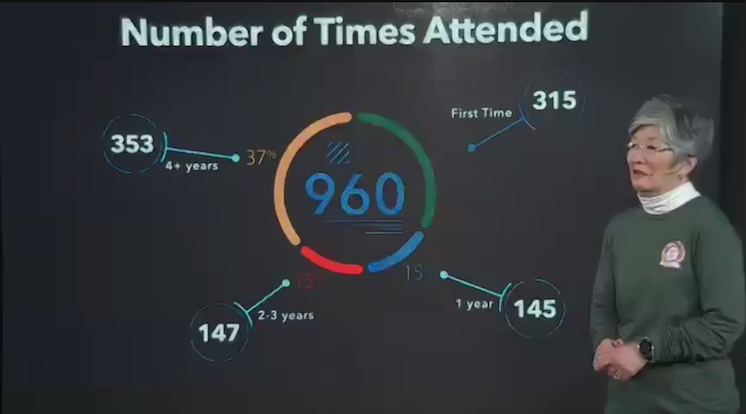
Anne Wilson, a member of the planning team, said that so far, 980 people have registered for the APCE annual event, with about one-third being first-time attendees. The event is held in partnership with five denominations: the Presbyterian Church (U.S.A.), The Presbyterian Church in Canada, the Reformed Church in America, the Christian Reformed Church and the Moravian Church.
Information on the event’s schedule can be found here.