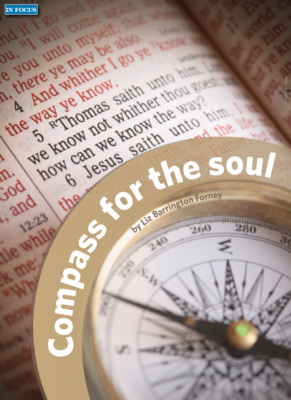
My journey into the art of spiritual direction began, surprisingly enough, in the Texas Hill Country. I was a newly minted pastor serving my first call outside of Austin. I had grown up in a Presbyterian church and fallen more and more deeply in love with God thanks to the rich and skillful ministry of the pastors who nurtured me in this tradition. Their willingness to sit with me in my questions, rejoice with me in my discoveries and hold space for me in my sorrow was sacred. Now, here I was a pastor myself — presiding at the Lord’s Supper, witnessing to the resurrection at the graveside and week after week proclaiming the gospel. It was not long before I started to realize I was going to need some spiritual food myself if I hoped to continue serving in a healthy way. But who does one talk to about matters of the soul? Who can one trust to explore the questions of doubt, suffering, call or even other traditions in a faithful way? These questions are what led me into spiritual direction.
My “discovery” of spiritual direction happened through Columbia Theological Seminary’s spiritual formation program. Until I began studying our Christian spiritual tradition more thoroughly, I had never heard of sitting one on one with another person who is trained in the art of holy listening. Spiritual directors are people who are skilled at companioning others as they navigate the dynamic waters of living faithfully before God.
This question of how we explore our faith and ponder the mysteries of God has been part of the life of people of faith from the beginning. In Scripture, we catch a glimpse of the origins of spiritual direction when someone seeks the counsel of a wiser person who has walked longer with God. Moses offering guidance to the Israelites in the desert and Eli helping Samuel understand that it was God speaking are two images of this sacred art of shared listening for the holy.
The Desert Mothers and Fathers, early Christian monks and ascetics who lived in Egypt, are perhaps the most readily recognizable predecessors of the contemporary spiritual directors. These people of faith fled to the desert in the third century to live an alternative lifestyle distinct from the empire.
 Thomas Merton, an American Trappist monk and writer, recognized the importance of this early, desert form of Christianity. In “The Wisdom of the Desert,” he described those who fled to the wilderness as people “who did not believe in letting themselves be passively guided and ruled by a decadent state,” who didn’t wish to be ruled or to rule. He continues, noting that they primarily sought their “true self, in Christ.” To do so, they had to reject “the false, formal self, fabricated under social compulsion ‘in the world.’ They sought a way to God that was uncharted and freely chosen, not inherited from others who had mapped it out beforehand.”
Faithful seekers from Alexandria would venture out into the desert to visit these wise ones in order to explore questions of faith and to cultivate a personal life-giving relationship with God. These communities slowly grew into the early monasteries with a primary focus of providing guidance to those looking to cultivate a spiritual life. Research has revealed that this tradition spread globally as monasteries began emerging in both the East and the West. In Ireland the early Celtic saints of the fifth century emphasized this practice of spiritual guidance and the importance of having an anam cara, a soul friend.
 Once I learned that there was such a person as a spiritual director and how work was grounded in the Christian tradition, the question became how to find one. I’ve learned that the most reliable resource for this search is a global community called Spiritual Directors International. From a small gathering of spiritual directors at Mercy Center in Burlingame, California, in 1989, the community has grown to include more than 6,000 members on six continents who represent more than 50 spiritual traditions. Their website allows you to enter your search criteria for location and tradition and find spiritual directors in your area (sdicompanions.org). In this modern era of virtual care and telehealth, it is also possible to work with a director remotely.
I wasn’t sure what to expect from my first visit with a spiritual director. What I discovered was a welcoming presence who would listen and respond without judgment. I discovered a contemplative posture to the world where silence was valued so that we might make space to listen more deeply to the inner whispers of the soul. As I met with my spiritual director, I was increasingly able to trust my own wisdom and to discern God’s voice in the midst of daily life. We worked together to experience authenticity and integrity as I learned to connect with God even more deeply.
Spiritual direction is not therapy. As you sit one on one with another who is listening deeply, they are not listening to analyze you; instead, they listen for the movements of the Spirit, who seeks to lead us into a deeper relationship with the holy. Anything can be fodder for a spiritual direction session: your work, your prayer life, how faith has seemed to dry up or a new energy surging in your life. All experiences are welcome before God.
 There are a few good practices and questions to consider as you seek out a spiritual director. Some directors charge for their services, while others see it as part of their ministry or will request a donation to their monastery or a charity. Many will offer a complimentary half hour “get to know you” conversation to see if there seems to be a good fit. Before you begin, it is important to have some clarity about what you seek from spiritual direction. Is there a particular tradition or theology that you want to have supported? Consider what questions you hope to ask of the spiritual director. I typically ask where they were trained, how long they have been doing this work, what they love about this ministry and whether they receive supervision.
It has been over 25 years since my first conversation with a spiritual director. About 15 years ago, I felt called to begin my training to serve in this way. I know for certain that my journey of faith and presence as a faith leader have been richly transformed from this ancient tradition. I have been companioned, supported, challenged and encouraged in my relationship with God over the years as I’ve sat with a companion whose presence serves to clarify the compass of my own soul.
 Liz Barrington Forney is a Presbyterian pastor, hospice chaplain and spiritual director living in Charlottesville, Virginia. She is co-author of “What is Your Practice? Lifelong Growth in the Spirit” with Norvene Vest.