A few months ago, I bought some tomatoes at the grocery store. My wife cut one open and discovered that some of the seeds had started to sprout inside the tomato. We were intrigued, because we had never seen this happen to a tomato before. We showed the sprouting tomato seeds to our kids, who were equally, if not more, curious about what was happening.
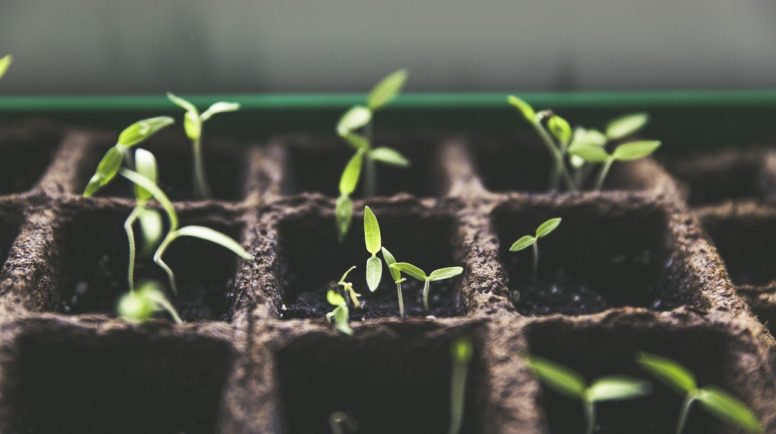
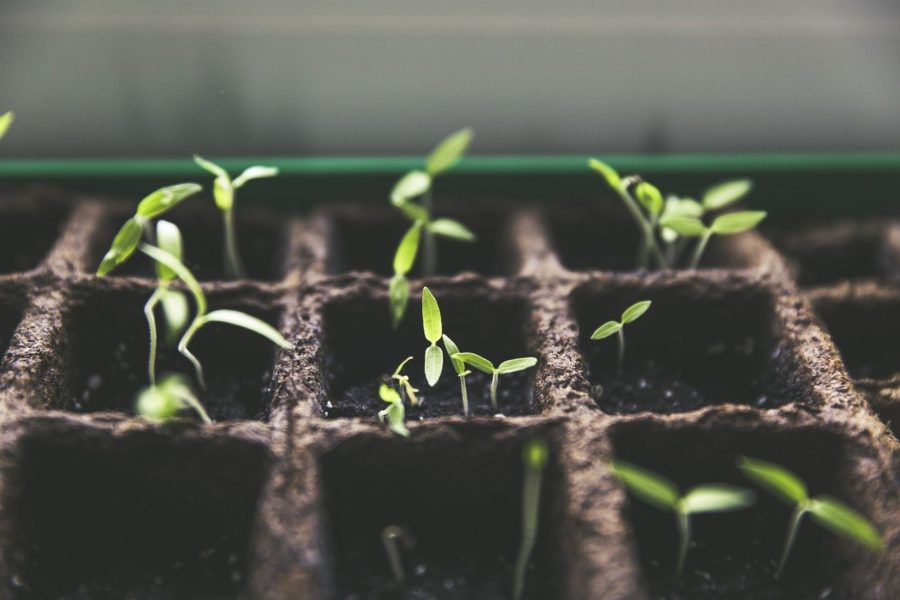
Partially because we wanted to conduct an at-home science experiment with our kids and partially because we were just genuinely interested in seeing what would happen, we cut the tomato into small chunks, planted them in some potting soil and put them on a well-lit window sill. We were all thrilled when just a few days later, about 20 tiny sprouts started poking through the dirt. We thinned the sprouts until we had five healthy looking baby tomato plants growing. We repotted the small plants into their own containers and watched with enjoyment as they continued to grow over the following weeks and months. Since then, we’ve had to replant them one more time because they had overgrown their containers. As strange as it seems, in the middle of February we had mid-sized tomato plants growing in our kitchen! We’re going to need to support them with cages soon, and we have no idea what we’re going to do when they get too big for the window sill and it’s still too cold to put them outside!
I have enjoyed watching them grow over these past few cold and snowy weeks. When I’m washing dishes right in front of the window where they live, I sometimes just observe them and see if I can notice any new growth. When I’m in the backyard playing in the snow with my kids, from where I am in the frozen white outdoors, I can see them in their window emanating a comforting green color. I had no idea that a simple store-bought tomato would bring me so much joy this winter. As much as they bring me the hope of enjoying a home-grown tomato in the middle of May, their life also brings me a different kind of hope.
In Mark 4:26-29, Jesus tells this parable: “The kingdom of God is as if someone would scatter seed on the ground, and would sleep and rise night and day, and the seed would sprout and grow, he does not know how. The earth produces of itself, first the stalk, then the head, then the full grain in the head. But when the grain is ripe, at once he goes in with his sickle, because the harvest has come.” It seems that Jesus tells this parable to mean that the growth of the kingdom of God comes through God’s work alone. God calls the church to discipleship, to follow Jesus with the hope of seeing God’s life grow in ourselves and in the world. There is specific work to be done (prayer, preaching, worship, fellowship, mission) but, ultimately, God causes that work to be effective.
I think part of the implication in this parable Jesus tells is that God is causing growth to occur even when we can’t see it happening. When I think about that in relation to my family’s container-gardening experiment this winter, a beautiful and helpful thought emerges for me, especially in the middle of a pandemic: God is causing growth to occur even while the conditions are unfavorable. For the past year, we have all been staying at home, working at home, schooling at home and worshipping at home. The conditions are unfavorable out there in the world; so, we’re forced to stay indoors. But like my tomato plants growing up healthy and strong inside while the temperatures are still freezing outside, our faith in Christ can still grow, even if the conditions are still harsh out in the world. You cannot force a tomato to blossom and grow its fruit. You must gently nurture it, giving it the environment it needs to grow, even if that environment is unnatural and unconventional. Then… let God get to work.
This year in a pandemic has certainly been unnatural and unconventional, but God can still work in our lives and, indeed, is working in our lives. Hang in there, everyone. Spring is coming. But don’t wait until then to work in cooperation with what God is doing now.