Guest commentary by William McConnell
My younger sister is a successful real estate agent. But no matter her skills, there is one barrier my sister can’t climb. If the house she is showing is in a location her client doesn’t like, there is no amount of salespersonship that will change their mind. The old adage is true: the three most important factors in selling residential real estate are location, Location and LOCATION!
Location matters. Location defines us. Where are you from? Location can trigger memories of happy, sad or deeply tragic events in our lives. Where were you when – name your event – happened? A sense of place is one of our most important identifiers.
But sometimes we don’t realize the significance of location until its reality jumps up and catches us in the moment.
I recently participated in leadership for the online conference of the National Black Presbyterian Caucus hosted virtually from Charleston, South Carolina. While we were preparing to open the conference, we enjoyed the amenities of a comfortable hotel in Charleston’s historic district, where we were blessed with the city’s stunningly beautiful mid-June weather. It wasn’t until I ran an errand that the old adage came to mind. I suddenly became aware that we were proximate to a deeply holy location.
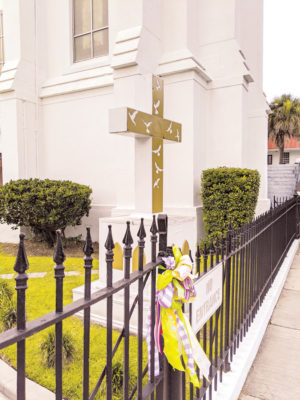
Just across Calhoun Street from the hotel stood Emanuel African Methodist Episcopal Church. Mother Emanuel — the location where almost exactly six years earlier, a young, white man, invited into the church to participate in Bible study, brutally murdered Pastor Clementa Pinckney and eight members of the Mother Emanuel congregation. In one action by a young man with a gun, nine precious children of God were murdered, and a location sanctified for a congregation’s corporate worship would never be the same again. This location is now etched indelibly in our memories as the site of yet one more murder of Black bodies by a white murderer.
As has been said by many, racism is America’s original sin. This murderer, whose name I choose not to honor with mention, acted from his deepest core, manifesting the pervasive, communal sin of insidious and structural racism endemic in our society.
Realizing our location was so close to that sacred and now infamous site, I was stopped in my tracks. As I stood at the gate leading to the church building, my mind was immediately taken to news coverage of the first worship service at Mother Emanuel after the murders — one day after those nine souls were viciously killed. I remembered a congregation in a filled-to-overflowing sanctuary with obvious police presence, beginning their regular Sunday worship with the most deliberate, powerful, unapologetic and, dare I say, defiant rendition of the Doxology I had ever heard.
Praise. God. From. Whom. All. Blessings. Flow.
It was almost as if there was an extra thought embedded in that familiar text: NO MATTER WHAT.
Despite violence, hate and murder. Despite all that had happened. Despite all that this community had suffered. Despite all that people of color throughout our country have suffered at the hands of citizens and police acting from their racist cores. Despite everything, praise God — no matter what.
The congregation of Mother Emanuel, devastated by the murders of their pastor and eight members of the congregation known to them all, came together to worship, pray, grieve and forgive the murderer of their friends and their spiritual shepherd. Yes — forgive.
What an amazing example of deep and unshakeable faith, bound up forever in a sacred location on Calhoun Street in Charleston, South Carolina.
For the members of Mother Emanuel, this location – this place where they gather weekly for worship, dedicate their children and celebrate life’s events of school graduations, marriages and home goings – will also now forever speak of the horrors of mass murder answered by deep faith and nearly unimaginable forgiveness. This church building has become a location inexorably transformed.
Location matters. Location defines us. Location teaches us. What can the location known as Mother Emanuel AME Zion Church teach us? What can an unexpected encounter with this sacred location teach me?
We are called to prayer and to action. As a white man, I am called to recognize and respond to the privilege I enjoy that was built on the backs and by the labors of generations of Black people, long since passed. How am I complicit in this continuing violence? When have I chosen not to use my privilege to stand against racism, white supremacy and systems of injustice and violence? How can I now do my part to dismantle the racism baked into the societal, political, governmental and church structures of this country?
How can my actions – how can our actions – undo the racism that allows Black and brown bodies to continue to be murdered in the streets by a system that sees them as somehow less than human, while white perpetrators are dismissed as having “anger issues”? The time to sit back, shake our heads in disgust and do nothing is gone.
It is time to stand up. It is time to stop just reading about racism, but to confront it. It is time to confront systems in our church and in our society that continue to undervalue the contributions of our Black and brown siblings. It is time to shake ourselves loose from our comfortable locations of power and privilege to make places for others to be protected, heard and valued.
As the writer of James reminds us, “Faith without works is dead” (James 2:26). From our location – from any location – it is past time to get to work.
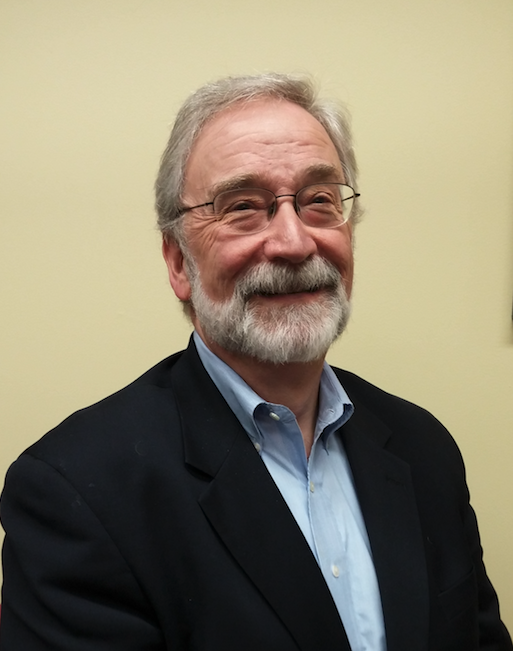
WILLIAM McCONNELL works in Louisville as a mission engagement advisor in the Presbyterian Mission Agency. He is a lifelong Presbyterian, church musician and bowtie aficionado.