 As a hospice chaplain, I provide emotional and spiritual support to patients and loved ones as they approach an end-of-life event. We usually meet for the first time after every life-saving medical opportunity has been exhausted, and friends and family have moved into the unfamiliar new role of being caregivers.
The Merriam-Webster dictionary describes a caregiver as “a person who provides direct care (for children, elderly people or the chronically ill).” What I have discovered is that the real definition also includes always being ready for the unexpected.
I didn’t fully understand the role of the caregiver until two years ago when I looked after my cousin, John. After years of surviving battles with addiction, incarceration and a mechanical aortic valve replacement, his heart and body began to fail. During John’s fourth visit to a hospital within a month, I heard his doctor tell him, “John, if you get high one more time, you’re going to die.”
Later, his doctor turned to me in the hallway outside John’s room, knowing that I worked for Houston Hospice, one of only a handful of nonprofit hospices remaining in the state of Texas. He shared: “John is going to die anyway. There’s really nothing else we can do.”
That night I didn’t get much sleep. I tried to think of ways to care for John while still continuing to see my patients. I needed to find a balance to make sure my family responsibilities were not neglected.
I entered into what I refer to as “task mode.” I acted as if every item that I needed to accomplish was a priority that had to be done immediately. I made phone calls and initiated John’s application for Medicaid. I also tried to figure out how to tell him there wasn’t anything else that could be medically done for him and that his doctor felt hospice was the best choice for his care. These new responsibilities can make a caregiver feel overwhelmed, and in my role as chaplain I’ve heard many express that they were not equipped for their new role.
When a patient is first admitted to hospice, they are assessed by a team that includes a medical doctor, registered nurse case manager, social worker and chaplain. Each discipline will conduct an assessment to determine both the requirements of the patient and the needs of those providing care. The hospice team will often discuss the “role strain” the caregiver is experiencing and will attempt to find ways to lessen or alleviate whatever is causing the caregiver anxiety and exhaustion.
Caregivers cannot fix people. And they can’t always know how to navigate this new world. It’s all right if they don’t have all the answers. While caregivers learn to expect the unexpected, they also quickly discover that even if they cannot think of the “right” words to say or the “right” thing to do, simply being present is often enough.
My emotions betrayed me as I tearfully shared the doctor’s prognosis and told John that I had made an appointment with the hospice agency to meet us at the hospital with admission paperwork. While I felt equipped to take care of John’s immediate needs, it wasn’t until I was talking to him about what he wanted me to do and as I understood that he would be unable to make his own medical decisions that I began to feel overwhelmed and anxious — two very distinct feelings that I’ve heard many caregivers express and are often part of role strain.
In the weeks that followed, I worked tirelessly to ensure that John’s final weeks were his best. I ordered his favorite meals, picked up Sudoku puzzle books, decks of cards and comfortable clothing. I even found my great-grandmother’s chocolate pie recipe and baked it for John and the entire staff at the hospice facility. One afternoon while talking with the social worker, I described all the projects I was working on for John. She said: “You do know that you can’t fix all of John’s problems, right? Sometimes life is just messy.”
One of the hardest things for caregivers to realize is that the person experiencing the end of their life is the one who should be allowed to decide the journey. I have been called to the bedside of so many patients who were comfortable with their faith, only to realize that the real reason I was there was because the caregiver needed the patient to believe, or express or profess something that was not part of the patient’s own personal faith journey.
 Again, caregivers cannot fix people. If there’s one thing the pandemic has taught us, it’s that so much of what we experience in life is outside our control. Trying to maneuver through an illness is one thing. Trying to maneuver through a fatal, long-term illness is another. Trying to maneuver through a fatal, long-term illness with restrictions caused by a pandemic can consume all the energy a caregiver has to offer.
Years ago, I pastored a new church development in an area of Houston where many of the people we served – including some of our own members – were experiencing homelessness. It took me several years to realize that when I met someone for the first time, that person came to us with a history. And we needed to learn about their past in order to best care for them in the present.
It’s the same with providing hospice care. As much as we think we know everything about the loved one who needs assistance, everyone has a unique history. Because of this, caregivers must allow for grace.
For example, one of my patients was a well-known oncologist, a man with a wife and two teenage children who suddenly found himself diagnosed with an aggressive form of cancer. With his professional knowledge, he was able to create a timeline of how long he thought he would have before the cancer overtook him. The day we met, he was replacing all the toilets in his home. “I knew this would need to be done in the next five years,” he explained. “I wanted to go ahead now so my wife wouldn’t have to deal with it alone.”
Over the next two months, I was present as maintenance schedules were drafted, future birthday and Christmas gifts were ordered and personal letters were written celebrating upcoming milestones. One of the things that the man worried about was not being present for his daughter’s wedding. He often commented: “I won’t be there when the father is supposed to dance with the bride. It’s going to be so hard for her.”
One afternoon, I found myself with my patient and his daughter at a small venue near their home. I placed my camera on the tripod I had brought and watched as the man stood, took his daughter’s hand, and walked to the center of the room. Music began to play from a boom box, and we all watched as the two had their “father-daughter dance.” On the drive back to the house he said, “Now my daughter has something to play at her wedding and won’t feel like I abandoned her.”
The word “abandoned” struck me. I answered: “You’re not abandoning her. You’re dying from cancer.”
Within our society, we struggle with the subject of dying and death. I always tell people that the church does a terrible job of preparing us to die. Even when it comes to the death of Jesus, we remember the crucifixion, but we focus more on resurrection and the empty tomb on Easter morning. I can’t even guess how many times I’ve heard caregivers tell a dying friend or relative, “When you get better…”
 In my own experience as a hospice chaplain, many of the people I meet are indeed facing a life-limiting or life-ending illness. However, I try to remind people that as long as we’re breathing, we are still living. Some of the most incredible memories I have of caregivers are the times that they remembered to laugh; when they realized they could still experience joy, and that it wasn’t wrong to embrace the reality that life – for them – would go on.
My family would tell you that I’m a horrible patient. That when I’m sick I get ill-tempered and can be very demanding. As much as I’d like to deny this, within my spirit I know there’s a lot of truth in what they say. Some of the best caregivers I’ve met are caring for people who no longer act or behave as the person they once knew. There’s nobody to blame for this. Illness changes us.
I try to remind caregivers that we all get tired. It’s a known fact. People who are exhausted have a hard time caring for themselves, never mind caring for someone else. I remind them to step away. To take the time and space that they need. After all, a caregiver is only as good to others as they are to themself.
 One evening while I was caring for John I began to think, “How can God expect this from me?” I stepped out of the room and went for a walk around the block. As I walked, temporarily free from my responsibilities, I began to realize that God did not expect me to do what I was doing. This was something that circumstances, my own choices and the love for my cousin created in my life.
God did not expect me to care for hospice patients and their families all day on top of caring for my own dying cousin. In that moment, I realized it was okay to admit that I was overwhelmed and that I really could use a break; it is our own perceived expectations that drive us to a place of impossibilities.
Caregivers cannot be everything to everybody. We are simply not created that way. I’ve watched as people become frustrated or depressed or as they simply walk away and quit, all because they allow themselves to become overwhelmed. People are not perfect and caregivers are not perfect either.
What I have learned is that no matter what role they take on, caregivers often possess something that sets them apart from anyone else in the life of their friend or relative. It not only defines their caregiver role but evolves into a relationship unlike any other. Two years ago, I began to focus on what I needed to do in order to ease the burden for whoever ends up caring for me in the future. I have also been examining how I behave when I’m ill and I hope that when the time comes to require regular assistance, I am a much easier person to care for.
 In my kitchen pantry there is a box with a label that reads, “Todd’s recipes for the future.” It’s just a regular recipe box with a “mini snapshot” of what a caregiver might need for me — such as a copy of my driver’s license, insurance card, social security card and more. If I’m injured in an accident or incapacitated in any way, everything that a hospital might need will be available in the box.
At any time, one of us might be called to be a caregiver. Living into that role does not mean that we surrender everything that we are, and we need to remember to take the space we need for ourselves and have grace for us and our needs while we also give the gift of time and care to those we love. As I always share with those I meet who are caring for others, “You are enough.”
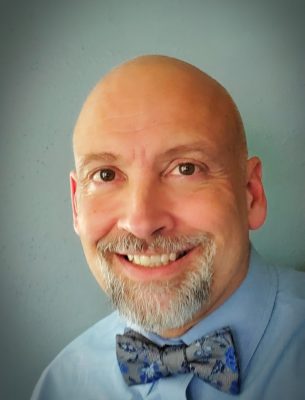 G. Todd Williams is a hospice chaplain at Essential Hospice in Webster, Texas, and the stated supply pastor for Westminster Presbyterian Church in Galveston, Texas. He is the author of a new book, “Remember Me When… Creating Memories to Last a Lifetime,” a legacy book for children to help grandparents talk to their grandchildren about dying and death, and how they would like to be remembered.