 Like many of my clergy colleagues, my “terms of call” (a very Presbyterian term that essentially means compensation package) sets aside two weeks each year for continuing education. Though my presbytery does not have a policy about what precisely constitutes “continuing education,” such days are often taken to participate in a conference or seminar, work towards an additional degree/certification or go on a spiritual retreat.
It goes without saying that taking these days has been challenging during the pandemic. For me, at least, it is much more difficult to take a continuing education day for an online conference. With no physical separation from my job, my email inbox just sucks me right back into work. What’s more, many of the continuing education experiences I anticipated when I first became a pastor haven’t taken place since I was ordained.
A few months ago, I along with some unknown number of my recently ordained colleagues were invited to register for CREDO Sabbath, an experience from the Board of Pensions that brings the concepts of “rest, reimagine and reconnect” into a virtual setting. However, very few cohorts for CREDO Sabbath were available. Come registration day, I along with all of my other newly-ordained friends were unsuccessful at securing a place in the conference.
I was frustrated. But then, one of those friends messaged me and said, “I already requested that week off for continuing education. How about we make our own retreat?”
And so, we did, along with two others. These four close friends from seminary hopped on Zoom one night and began dreaming up a retreat. Our vision was sky-high: “Wouldn’t it be nice to be led in worship?” “Should we do some exegetical study?” “What about a day of silence?”
About three weeks out from our planned “not-CREDO” retreat, though, our lofty goals felt a bit out of reach.
“I’m exhausted.” “Me too.”
“I’ve got this huge stack of books building up.”
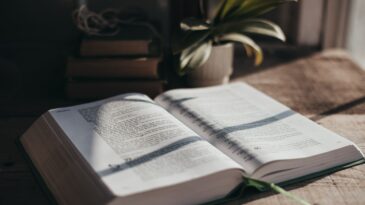
“What if we just… read?”
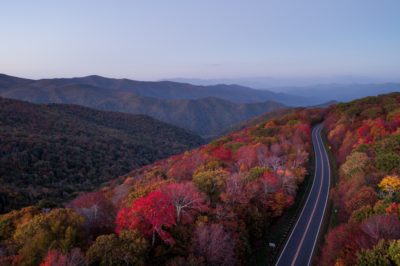
And so, a few weeks ago, I found myself in the mountains of Western North Carolina (okay, yes, we’re Presbyterian so of course we were at Montreat). With a tote bag full of church-y texts and a grocery bag full of snacks, my friends and I eschewed a rigid schedule and accomplishing goals to … live.
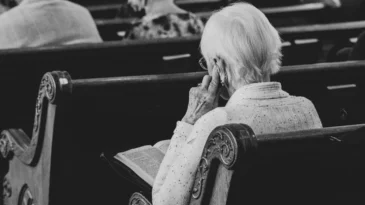
We sat at the feet of a few colleagues we admire as they led us in devotion, discernment and discussion.
We went on a hike. Gasping for air (at least I was!) as we climbed a mountain, the struggle was made worthwhile when we arrived at the peak and could gaze at all of fall’s glory.
We patronized local eateries – places with heated patios and local brews – and broke bread together for the first time in more than three years.
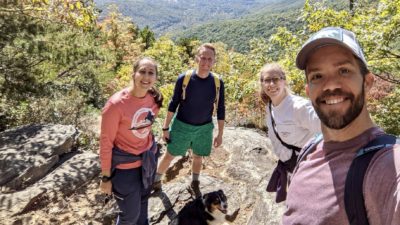
We talked, laughed and cried. We shared the vulnerable places in each of our hearts and tried to encourage one another. (Why is it that your dearest friends can see your gifts and sense your call more clearly than you can?)
And yes, we read – mostly those church-y books, but some novels, too.
At first, I felt guilty. Did resting and hiking and eating good food really count as continuing education? Soon, I realized that the answer was yes. And thank goodness. Thank goodness my friends aren’t obstinate rule followers like me and can model living into restful time set apart. My continuing education served as a lesson in permission-giving.
Permission to enjoy precious time with dear friends and colleagues — time we don’t get enough of anymore.
Permission to love and be loved by some of the people who know me best.
Permission to read, but also rest my body, mind, and spirit after more than 18 months of pandemic-induced overdrive.
Permission to see time in creation as spiritually nourishing.
Permission to see my worth not in doing but in being.
Before we left, we each named one or two things that we wanted to try, enact or do differently in our lives and ministries — things to which we promised to hold one another accountable in the coming weeks and months. And thus, our unstructured, slow-paced, not-CREDO time together lives on.
Now? I commit to giving myself permission to deviate from what’s expected – or at least my perception of what’s expected – of me as I continue to travel God’s path for me.