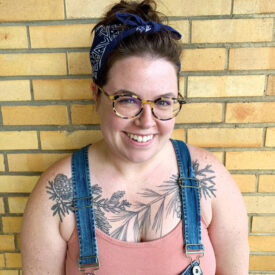
On this hot, sunny day there are four teenagers strewn around me — two of them swing in my hammock, another lounges casually in my camp chair and I share a picnic blanket with the last. We’re comfortable with each other, not necessarily because we’ve been at camp together all week, but more so because we’re all queer. There’s something holy that bubbles up around you when you’re with your people. We might have different backgrounds and gender expressions and there might be a significant age gap, but we all know the struggle. We’ve all had to wonder about who we are based on feelings we can’t seem to control, we’ve all worried about our parents’ feelings as children and we’ve all felt like a sooty smudge on a pristine canvas. I considered starting our session with an icebreaker question from my hygge game for “cozy conversation,” but there’s no doubt we’re already working from a foundation of intimate familiarity.
I teach a workshop at Trinity Youth Conference at Camp Living Waters in Schellsburg, Pennsylvania. This is my second year with the conference after an apparently resonating stint last year teaching its “Tough Questions” workshop. I was asked back by the student organizers and they’ve let me run absolutely wild with the class content. They OK’d me to teach a workshop called “Queer Saints of the Church.” The curriculum is based on the work of my dear friend and soon-to-be pastor Jason Dauer, who also encouraged me to run wild with the work he began. The Holy Spirit was loud and clear. So here I am, ready to engage these 15- to 21-year-olds with the five figures of the church who, to me, have embodied what it looks like to be queer in the church, and I might be more excited than the students.
Some of the figures I’ve chosen were confirmed queer Christians like Bayard Rustin, some of them are believed to have been queer like Julian of Norwich and others are figures from the Bible who embody queer theology. It is, in part, a lens of the disruptive inbreaking of God as the vehicle for justice and love – often written by queer authors – that seeks to challenge harmful norms for the benefit of the marginalized. Until this week these young people didn’t even know queer theology existed, and you should have seen their eyes when I told them. Wonder, joy, relief and happiness swept through them like a soft wind. I’m sure there’s a word for it in another language, but in English, it just comes out as “holy” again.
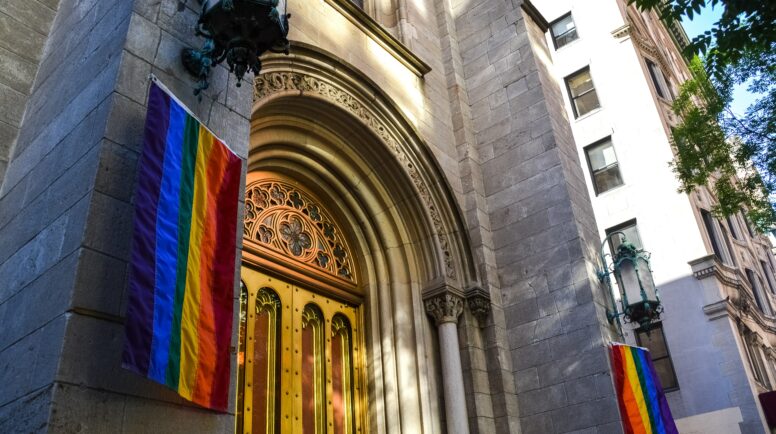
In one way or another, each of these young people circled around me has been told by the church the way they were created by God is tolerable at best and damning at worst. Often, this is repeated and prolonged over many years throughout their development. They don’t know that within Christendom there are whole churches out there trying to find them. I work for a church plant in Pittsburgh called Commonwealth of Oakland, and in our fellowship, this theology is woven into the fabric of who we are.
We regularly encounter college students in our neighborhood who are in the same position as these students and, unfortunately, even worse. The abuse aside, they don’t know they have a history within the church that centers and celebrates them. They don’t know that the mother Mary is one of our beloved saints, or that she sang of her child turning the world’s cruelty and injustice on its head. They don’t know that the queer identity shows itself like a flame in the night throughout the great story of the church. Now, with the help of an illustration by Ben Wildflowers, the students sitting around me do. Now, no one can tell them they don’t belong here. When we write a curriculum that not only includes people but centers them, they can’t be pushed into the margins again. When you’re taught you have a history, you can’t be erased.
At the end of class, I let each student pick out a small stone angel, symbolic of Rustin’s “angelic troublemakers.” They write on these angels which of his four burdens of queer and other marginalized communities (fear, self-hate, self-denial and political engagement) they work to address before we break for free time and their next workshop. As we part ways, I’m already looking forward to tomorrow.