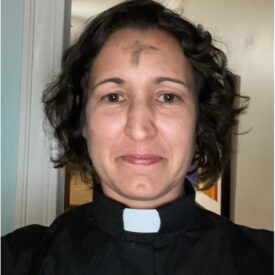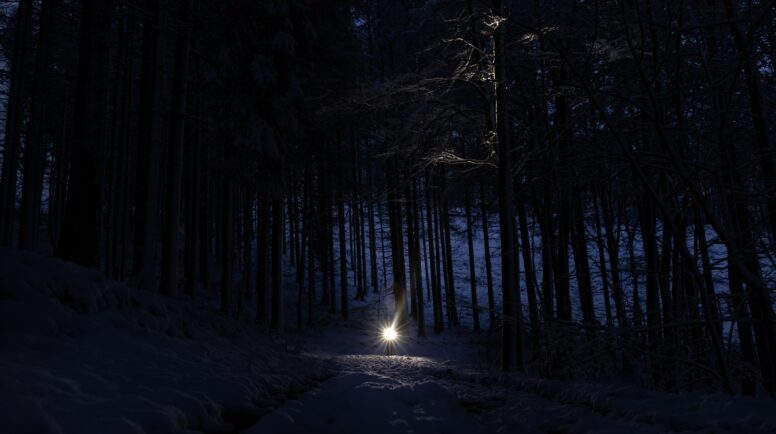
The uninvited guest just appears — entitled, bossy and critical. They follow me incessantly, knowing just what to say to keep me isolated:
“It’s warm here in bed and you can’t make things worse from here.”
“You’ll have to contrive a smile to disguise the true mess inside.”
“Forget about brushing your teeth; just get new ones in a few years, when I’m gone.”
“Today is a loss anyway. Why try?”
Have you heard the uninvited guest’s cruel voice? This is one glimpse of what depression feels like to me, and it may feel different to others. The uninvited guest can take many forms. For example, the anxious variety – the fear monger and nay-sayer – arrives just in time to tell you all the reasons not to go where you need to go or do what you need to do. Sometimes there is more than one guest: depression, anxiety, addiction, eating disorders and other mental health variances often travel in pairs. Whether singularly or together, the uninvited guest thwarts our ability to thrive. They impede our capacity to love God. They hinder our ability to love ourselves and see ourselves as beautifully and wonderfully made by God. They wreak havoc on relationships and communities. And they are rarely spoken about, especially in churches.
So, what are Christians to do about the uninvited guest?
It would be inhospitable to kick them to the curb. They are a part of ourselves, deserving of compassion. Healing often starts with understanding.
 It would be life-giving to acknowledge them in our churches. It would be healing for our pastors, elders, deacons and presbyteries to acknowledge the realities of living with mental health variances. (This is the term I have collaboratively created to speak about mental illness because it allows for lighter days and darker days without feeling stuck in a label.) It would be redemptive as a community, to stand together in learning to live with our uninvited guests. And it is difficult to figure these things out alone in the darkness, which is raison d’être for the 1001 New Worshiping Community that I lead, Light for the Darkness (L4TD).
After nearly 30 years of struggling with treatment-resistant major depressive disorder, I have survived many lonely, dark periods, which inform my work through L4TD. I am privileged to have tried most every pharmaceutical and therapy modality. I kept looking for the therapist, medicine or treatment that would make me happy. I have finally learned that finding happiness is a binary goal, and it is rarely achieved.
There is not one magical thing that moves us toward happiness. It is a combination of all the things we do to care for ourselves in concert with the love of God and our community. The four most important tools in my mental health journey have been caring for pets, practicing non-binary thinking, yoga and communal faith.
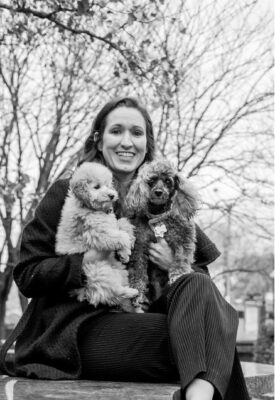
For me, pet ownership reminds me of God’s unconditional love through my dogs Francis (2018-, on the left) and Mr. T Rex (2006-2020, on the right),. Non-binary thinking allows me to appreciate the less bad days instead of waiting until we arrive at the elusive “happy” to begin life. Yoga reminds me to breathe through life’s difficulties, that situations do not last forever, and that I have the agency to change these situations. And God has used communal faith, the faith of those around me, to remind me of God’s promises when darkness kept me from feeling God’s presence.
L4TD is one such place of communal faith. We exist, as our mission statement says, “to lift up individuals with mental health variances toward light, peace, and hope through a deeper connection with God, themselves, and their neighbors.” L4TD is not a replacement for therapy or psychiatry but does help members find referrals when requested. We are spiritual, emotional companions amidst the variances — one piece of the total well-being plan that helps buoy the spirit.
And this healing seems to meet a need. Through the support and wisdom of 1001 New Worshiping Communities and the Presbytery of Giddings-Lovejoy, L4TD has grown from one weekly group in 2017 to three distinct groups that meet a total of eight times per month. Our core group is L4TD Fellowship, a Zoom-based, weekly, worshipful support group. Being Zoom-based allows members to connect without leaving home, which is vital to those living with uninvited guests such as depression and anxiety. Our monthly Fireside Spirituality chat offers a safe space to come just as we are to explore faith and doubts, even and especially without the label of Christian. This is an inclusive space as many of our community members are post-church and post-Christian. Our most recent addition, Grounded Gardening, offers a place to connect to God through creation and experience some relief through gardening, weeding, meditating and creating bouquets. Lastly, Our Selah is L4TD’s offshoot for clergy led by Deborah Viveros, which meets as a worshipful support group twice monthly.
Living with an uninvited guest is more prevalent than we realize. According to a survey by the World Health Organization’s World Mental Health Survey Initiative, more than half of us will live with mental health variances at some point in life. And 21 percent of adults in America are currently experiencing a mental illness (“The State of Mental Health in America 2022,” Mental Health America). While there is no simple solution, we are invited as individuals and as a faith community to work together for health and L4TD is one place this happens.
Deborah Viveros, executive director of Our Selah, was a partner in creating this essay.