Food insecurity affects approximately one out of every four college students in the United States. As research for this field continues to develop, it’s apparent that the causes for this statistic vary, but contributing factors often include financial barriers paired with tuition increases, lack of access to transportation and restricted dining hall hours.
Across the country, colleges and universities are launching programs to combat student hunger. The national nonprofit Swipe Out Hunger, for instance, includes a network of 850 campuses. Yet, it can be hard to keep shelves stocked, and many people don’t realize food insecurity is a pressing issue on campuses. As college chaplains, we witness both the real needs of students and the powerful opportunity for churches to love their neighbors. Here’s what we’ve learned in our work overseeing food pantries and basic needs hubs.
Think about the continuity of missional efforts
The Rev. Eliza Smith DeBevoise
Converse University
Many churches pick several key issues to mobilize around when it comes to mission. Perhaps problems like hunger, homelessness or addiction are at the forefront of your congregation’s call to action and the focus of your volunteer work. When I speak to churches in my role of college chaplain, I often encourage them to examine their efforts to see if there is continuity in their care. I frequently find that college students are a demographic that churches unintentionally overlook.
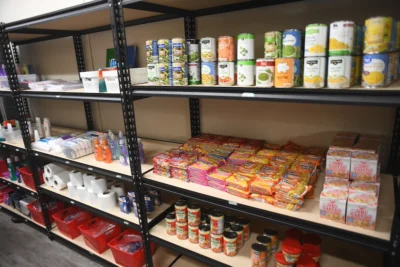
For example, if a church devoted to alleviating hunger in their community provides weekend meals for elementary students and also volunteers at a soup kitchen serving mostly families, a helpful question might be, “Who are we missing?”. In a scenario like this one, the answer very well could be “people ages 18-22”.
If a child in the meal packing program grows up, graduates and attends a college, the need for additional and supplemental support does not usually go away. Donating to local college food pantries is a great way to bridge that gap between resources designed for childhood and adults, continuing to allow a church to live into a missional commitment to a problem they are already passionate about eradicating.

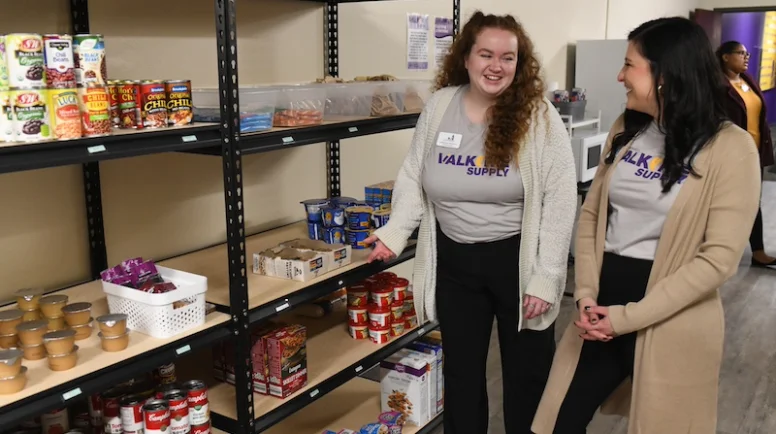
At Converse University, 12 congregations have stepped up to help us since opening Valkyrie Supply, our basic needs hub, in 2023. Some host monthly drives on a recurring annual basis, while others have invited me into their pulpits to preach and teach about this growing need. We’ve been the recipient of grants from churches, which help keep our shelves stocked in the summer months, and the beneficiary of an annual “pass the plate” offering, which covers food for many of our students unable to go home during long breaks. Churches have sent their youth mission teams to help us reorganize and count back stock, and others have sent pallets of hygiene products to our students in the aftermath of Hurricane Helene. These partnerships, in no small way, help to sustain us. As churches live out a call to “love thy neighbor,” we see real results: students who can show up confidently to academic, professional and co-curricular opportunities that come their way.
Simple missional efforts multiply the loaves and fishes
The Rev. David Coffman
Newberry College
When I interviewed for campus pastor at Newberry College, I was asked what the Office of the Campus Chaplain could do to help meet students’ increased needs for food, toiletries and school supplies. I did not know the extent of the issue and suggested a simple “blessing box” outside my office. A participant in my interview process quickly informed me, “That is not big enough!” After a few months on the job, I learned they were right.
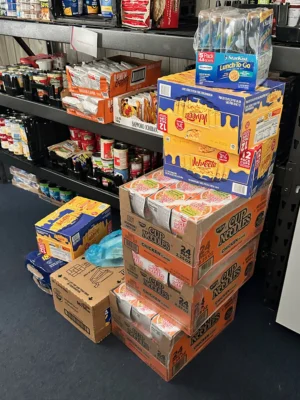
Just as Jesus took a lunchbox of fish and bread to feed over 5,000 people, a simple gift of notebooks, pens, pasta, containers of nut butter, or lo mein noodle meals will feed students who find themselves struggling. As campus pastor, I speak to various church groups often as a part of my role. In this work, I always encourage financial gifts, but I also challenge groups to consider monthly collections of specific items. Small competitions between peanut butter and jelly or brands of mac ‘n cheese can boost donations. Don’t worry, they will be used, and most won’t reach the expiration date because the need is so great.
As churches, we find ourselves striving to live out stories of faith and care for our neighbors. Let me tell you about Sam, a starting lacrosse player at Newberry who was couch surfing and struggled to get enough food. As a result, his game suffered. His buddies occasionally snuck him into the cafeteria, but he realized he was “stealing” food and eventually asked the administration for help. Campus did not have a food pantry (at that time) to fill in the gaps, but his financial package was amended based on his need and he was able to finish the season as a starter and graduated.
Even the simple action of collecting food items can help others.
Removing barriers to flourishing
The Rev. Tim Drum
Spartanburg Methodist College
College is a time of discovery and growth for all young people who attend. They have many different goals — attaining a job, making more money, supporting their family, taking a step towards their educational aspirations. Our three colleges all focus on providing students with the tools they need to learn and grow towards a degree or career. We believe that students’ courses and experiences will prepare them to flourish in their life after college. However, all the classroom work in the world can be undermined by something as basic as hunger.
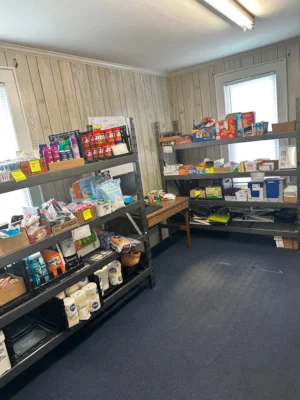
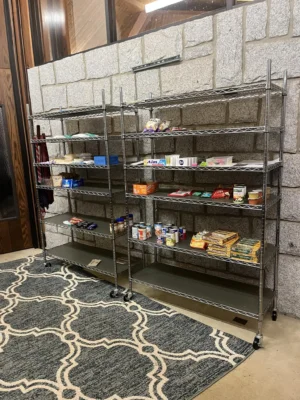
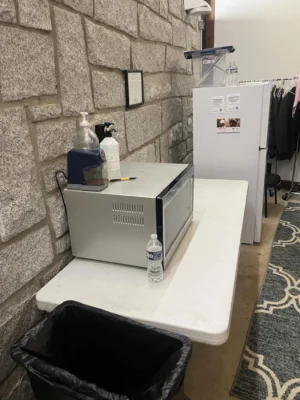
When I arrived at Spartanburg Methodist College, many students shared their food insecurity struggles with me. For some, their academic, work or athletic schedules were so packed they didn’t have time to grab a meal in the cafeteria. Others were commuters who either could not afford or had not purchased a meal plan. Still more lived on campus but chose to go without meals for financial reasons. Thus, it was no surprise that I encountered students losing attention or falling asleep in class. Spartanburg Methodist College’s Pioneer Pantry was developed to remove the barrier of hunger for our students. Whether they grab a breakfast bar, fresh fruit or some Vienna sausages, they are able to recharge for their next class, practice or work shift.
“The glory of God is [a person] fully alive.”— Irenaeus
So, how does this relate to congregations? Irenaeus, the early church father, said that “the glory of God is [a person] fully alive.” I know our congregations share this conviction about the young people in our communities. We want them to not only survive but to thrive. It often seems like societal issues such as poverty, social mobility, or hunger are so big that our congregations can’t make a difference. The best news is that a small collection of non-perishable goods to your local college pantry or a love offering for their ministry makes a huge impact when combined with other faithful communities and individuals, all offering what they can. In fact, the pantry at my college is fully supported by donations — most of which are small amounts.
Each congregation, no matter how small, no matter the age of the members, can be a part of removing barriers that could keep a student from reaching their goals. How wonderful to have partners like your congregations! How wonderful to be able to help our young people become their best selves!
Learn more about food insecurity alleviation efforts at Converse University, Newberry College or Spartanburg Methodist College: