On June 12, 2016, a gunman opened fire at Pulse, a gay nightclub in Orlando, killing 49 people and wounding 53 others in what remains one of the deadliest mass shootings in U.S. history.
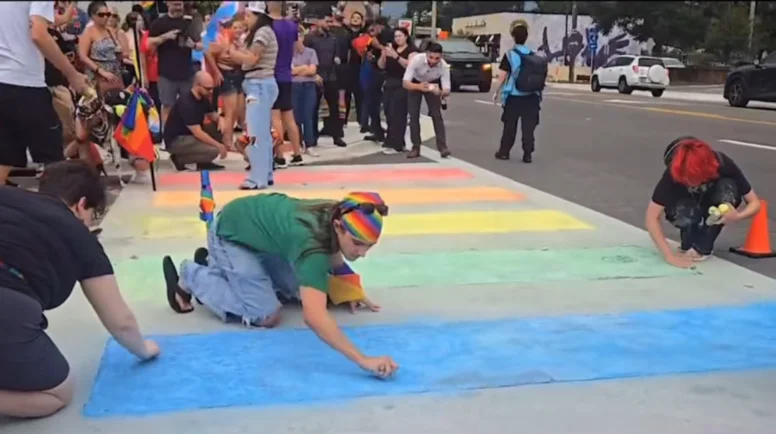
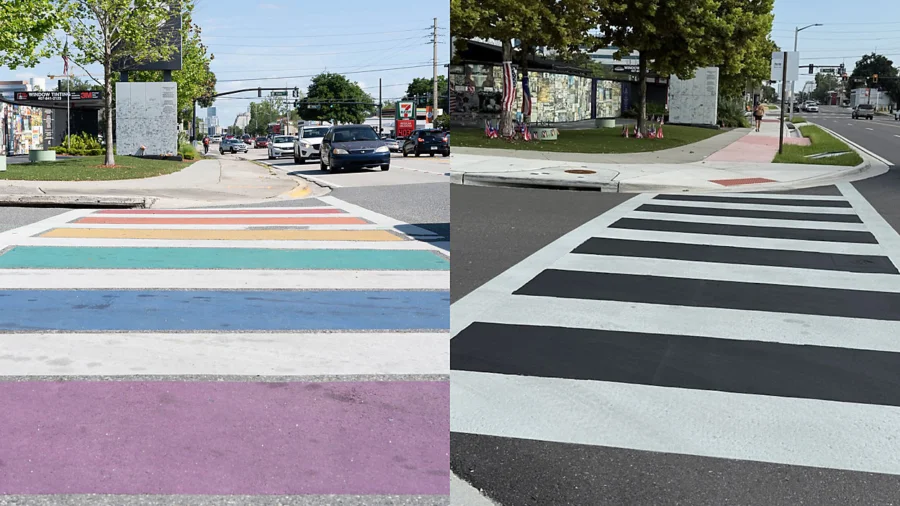
In August 2025, the Florida Department of Transportation removed the rainbow-colored crosswalk that had served as a memorial outside the former club, repainting it in black and white to meet new state guidelines.
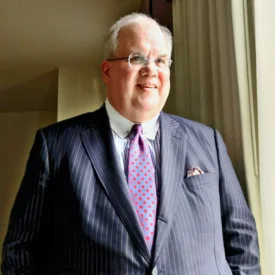
The following reflection, written by the late William Horton — a healthcare attorney and long-time member of Independent Presbyterian Church in Birmingham, Alabama — recalls his experience at a vigil one year after the tragedy and the lasting power of remembrance. It is shared with the permission of his sister, Linda Ellen.
At almost exactly this time of night, exactly a year ago, I left my office and walked the three blocks to Linn Park.
The fact that I was doing that took even me by surprise. I’m not a “vigil” kind of guy. I’m certainly not a “march” kind of guy, especially on a 90-degree June night in Birmingham. But I had to go. I had to go because of the 49 of them, the 49 people Omar Mateen had shot in the Pulse nightclub in the small hours of June 12.
There was a vigil at Linn Park. Just like dozens, probably hundreds, of vigils all over the country that day and night, there was a vigil in response to the shooting. I don’t go to those sorts of things, you know? It’s not me. But I felt something leading me there. This one, this one I had to go to.
I felt distinctly uncomfortable when I got to Linn Park. I was a middle-aged, straight, Republican guy in a dark suit. I wasn’t like anyone else there. Hell, there probably wasn’t anyone else there who fit in more than two of those five categories. Maybe, I thought, maybe this wasn’t a good idea.
Maybe, I thought, maybe this wasn’t a good idea.
I moved with the crowd toward the county courthouse, where the organized memorial would be held. Someone pressed a candle into my hand. In the heat, it melted quickly, and they had run out of those little cardboard holders you use to keep the hot wax from burning you. I took a business card from my jacket pocket and punched a hole in it; that became my candle holder.
One by one, people read out the names. Stanley Almodovar III, age 23; Amanda Alvear, age 25; Luis D. Conde, 39; Kimberly Morris, 37; Franky J. Dejesus Velazquez, 50; Akyra Monet Murray, age 18. My God, age 18.
There were prayers. Then people took their candles and started the long, slow, walk around the perimeter of the park. Maybe I should leave now. There were Pride flags and banners, not the sort of accoutrements I was used to having around. It was one thing to be in the crowd by the courthouse steps. But to walk? To march? Maybe to be caught on a news camera, maybe to be seen by someone who wouldn’t understand why I was there? It seemed like a sort of commitment, one that I didn’t know I was making when I left my office to go to the park.
I fell in behind someone, candle in hand, and walked.
At some point, I realized the truth. All of us there – young and old, gay and straight, believers and nonbelievers, men, women and children – all of us were there to say a prayer for the dead, to say a prayer for a world where the sort of hate that had raged through the Pulse a few hours before could exist, to say in some way to the 49 souls whose earthly lives had been snuffed out that they weren’t, and wouldn’t be, forgotten. To say that their love would burn on, longer and brighter than hate could hope to.
I was exactly like everyone else there. And after that night, after such knowledge, I would never be the same again.
There, in my suit and tie, with hot wax dripping through my makeshift candle holder, I realized that I had been wrong. I was exactly like everyone else there, a child of God created in his image, striving if only for a moment to show that these lives mattered and that the light would overcome the darkness.
I was exactly like everyone else there. And after that night, after such knowledge, I would never be the same again.
Rest in peace.