I did not know who Charlie Kirk was until an assassin’s bullet struck his neck and ended his life. In the hours that followed, my social media feeds and news sources were filled with clips of his speeches.
What I heard sent me into a lengthy reflection on the choices I make when I open my mouth to speak to anyone. I strive for my process to reflect the wisdom of Indian sage Sri Sathya Sai Baba: “Before you speak, ask yourself: Is it kind? Is it true? Is it necessary? And does it improve on silence?”
I cannot cry for Kirk after hearing the unkindness that so easily flew from his lips. Instead, I weep for a country that appears not to understand that the devastation of human lives begins with words.
I cannot cry for Kirk after hearing the unkindness that so easily flew from his lips. Instead, I weep for a country that appears not to understand that the devastation of human lives begins with words. At the event where Kirk was speaking, some people witnessed in real time a bullet ending the life of a man. But who will follow the path of harm caused by words strung as weapons, words with the ability to murder spirits and create generations of agony?
Growing up Black in a country built on racism
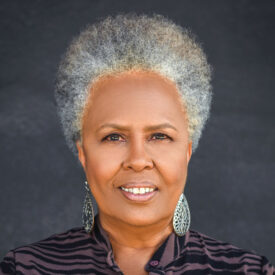
I am a Black woman, a child of the 50s growing up when words were hurled at “colored” people like me. These words were repeated to reiterate to everyone that “colored” people are worth less than White people, and on this platform of beliefs, a country built and sustained a system of racism.
People – Black and White – were assassinated for believing differently, for participating in a Civil Rights Movement built on words like “love” and “equality.” Mississippi civil rights activist Medgar Evers was assassinated outside his home in 1963. In 1964, James Chaney, a Black Mississippian, along with Andrew Goodman and Michael Schwerner, White New Yorkers, were abducted and murdered during the Freedom Summer campaign to register Black voters. Martin Luther King Jr. was assassinated on the balcony of his Memphis hotel room in 1968 because he was considered the leader of the Civil Rights Movement.
Words spoken by Kirk over the last couple of years drew me back to this bloody time in the 60s.
When language becomes a weapon
Kirk said, “MLK was awful. He’s not a good person.”
He called the passing of the Civil Rights Act “a huge mistake” and considered it the precursor to modern diversity, equity and inclusion policies, which he deplored.
He said on his podcast, “If I see a Black pilot, I’m going to be like, ‘Boy, I hope he’s qualified.'”
He called Supreme Court Justice Ketanji Brown Jackson “a diversity hire.”
Kirk mocked and devalued me and those who look like me. When he expressed his disagreements, I did not hear compassion or love for every human being in his words.
I will not weep for Charlie Kirk, though I feel deep sorrow for his family.
Even before I attended seminary, my life taught me the meaning of Proverbs 12:18: “The words of the reckless pierce like swords, but the tongue of the wise brings healing.” And Proverbs 18:21: “Death and life are in the power of the tongue.”
The day I lost my innocence
At the age of 10, long before I knew I would become a writer, I learned that adults could do whatever they wanted with words, even change a funny idea into a shield of shame that clung to you for years.
My family had moved South because my father, a Marine, was stationed at Parris Island, outside of Beaufort, South Carolina. It was 1959; I was in fifth grade. I was with my mother and siblings when we walked past a water fountain with a sign on it that said: “Colored Water.”
I was so excited! I had never seen colored water. I went over to the fountain to push the button.
“Get away from there!” my mother yelled.
“Please, please, please,” I begged. “I want to see the colored water!”
“You can’t,” my mother said, snatching my hand.
Later that day, she would try to explain to me what “colored water” meant. She would try to make her daughter understand the senselessness of calling water “colored” when it really wasn’t — and that the name came with equally senseless beliefs about who I was.
This was the first time I realized that adults could – and would – change the meaning of words to suit them and their beliefs.
This was the first time I realized that adults could – and would – change the meaning of words to suit them and their beliefs. Adults could intentionally turn a fun word like “colored” into a harsh word that harmed people. I was a kid who had been taught to respect all elders, and so I did not dare tell my mother what I was thinking: Some adults are stupid.
The responsibility of words
I have never forgotten that day, that water, that sign. I mark that incident as a day I lost the innocence that children should be allowed to hold onto for years past the age of 10. It was the beginning of my being forced to pay closer attention to the words people used to describe me. It was a hint of the days to come, when I would leave my somewhat protected, integrated environment on the military base to go to school in the town of Beaufort, during segregation.
In Beaufort, my young ears would hear brutal, hateful words that I did not know existed. The pain caused by these words planted in my elementary school mind the idea that I, too, must be careful in choosing the words that come out of my mouth. My tongue possessed the power to either taunt and belittle my classmates or show them kindness and compassion.
I did not know that one day, as a journalist, I would be left nearly breathless, as I recognized the magnitude of responsibility that accompanied a job that allowed me to choose which words to use to tell other people’s stories.
It is real and constant work to live in a “free speech” society and always rise to the level of compassion that demands you criticize with respect, even those with whom you vehemently disagree.
It is real and constant work to live in a “free speech” society and always rise to the level of compassion that demands you criticize with respect, even those with whom you vehemently disagree. As a young woman sporting a big afro, I called police officers “pigs.” It was a word that seemed reasonable to me at the time, as I lived through one case after another of police abuse.
Spitting out that epithet gave me a false sense of empowerment. In actuality, my choice of language broke my long-held knowing that angry words are weapons, that a lack of empathy can kill.
Language as a salve
The Black teachers in my segregated school in Beaufort used their words as salves on us children, who they knew could be wounded by names and distortions hurled at us almost daily. White children on new yellow school buses screamed the N-word, as we nicely put it today, when they passed our school. The White woman who taught South Carolina history on the TV rolled into our classroom only mentioned us as slaves.
Meanwhile, our teachers told us, “You are capable of greatness,” “You are talented,” “You are smart.”
And their salves worked on me, at least for a while. But wounds caused by hateful words are deep and take years to heal.
“The tongue wounds more than a lance.”
There is an adage that says, “The tongue wounds more than a lance,” meaning cruel words can inflict longer-lasting pain than physical injuries like those caused by weapons. Therefore, healing the damage – and forgiving the ones who hurled the words – may be more difficult.
Choosing compassion in a divided world
It would take more than my teachers’ loving affirmations to restore me to the child who believed she could do anything, to return me to the innocent kid who moved South.
I am old enough now to spare the 10-year-old child inside me the pain caused by words that devalue her humanity. My mother is not here to snatch away my hand, so I do it on my own, cutting off the television, not following some people on social media.
But the words Kirk blew into the air landed in the hearts of thousands of people. His words remain like an infinite field of live mines, waiting to be hurled at “the enemy.” The antidote is to recognize that we belong to one body and therefore must speak to one another with gentleness and compassion rather than cause unnecessary hurt. As Ephesians 4:15 tells us: “Instead, speaking the truth in love, we will grow to become in every respect the mature body of him who is the head, that is, Christ.”
I fear we will blow off our own arms or heads, not recognizing we are destroying the body of Christ.
My worry is that we do not have the will to disassemble the mines left behind by Kirk. Each part of the body must work correctly for the whole to mature. I fear, instead, we will blow off our own arms or heads, not recognizing we are destroying the body of Christ.
The Presbyterian Outlook is committed to fostering faithful conversations by publishing a diversity of voices. The opinions expressed are the author’s and may or may not reflect the opinions and beliefs of the Outlook’s editorial staff or the Presbyterian Outlook Foundation. With every submission, we consider clarity, accuracy and respect. We also consider if the position adds additional perspectives to the discussion. You can join the conversation on the “write to us” page.