Every so often, a book changes how we see the world. Rarer still is the experience of two books doing so in conversation. This is what happens when Braiding Sweetgrass meets the First Nations Version of the New Testament. One reframes creation as a teacher and relative; the other reframes Scripture through Indigenous storytelling. Together they pull our attention downward – to soil, sun, water and kinship – inviting a profound reorientation of the heart: from consumption to gratitude, from domination to reciprocity, from abstraction to presence.
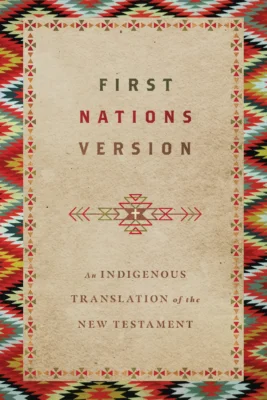 The First Nations Version: An Indigenous Translation of the New Testament is a rendition of the New Testament dedicated to the Indigenous peoples of Turtle Island (North America). Faithful to the original languages yet shaped by Native oral storytelling traditions, it captures a simplicity, clarity and beauty often lost in more formal translations. Lead translator and general editor Terry Wildman – a Native Methodist pastor of Ojibwe and Yaqui ancestry – spent nearly 20 years exploring how Indigenous storytelling might give fresh expression to the biblical witness.
In 2015, Wildman gathered a council of 12 Indigenous elders and younger leaders from diverse tribal heritages and regions. Their collective work, alongside leaders from OneBook Canada and Wycliffe Associates, produced a translation published in 2021 by InterVarsity Press. The First Nations Version honors Indigenous artistry through its naming conventions: Jesus becomes “Creator Sets Free (Jesus),” Paul “Small Man (Paul),” Mary “Bitter Tears (Mary),” Elizabeth “Creator Is My Promise (Elizabeth).” The familiar English names remain in brackets, allowing both identities to stand together in reverent tension.
Enter Braiding Sweetgrass: a complementary voice
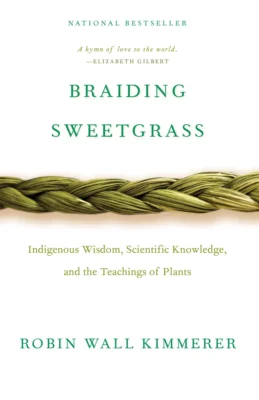
My appreciation for the FNV was enhanced through my reading of Robin Wall Kimmerer’s Braiding Sweetgrass years earlier. As a Potawatomi botanist and SUNY distinguished teaching professor, Kimmerer interweaves her passions for science, creation and community in this book. As reviewer and theologian David R. Weiss reflects, “her work straddles worlds and worldviews, weaving together story and wisdom and science, braiding them . . . like sweetgrass.”
Though Kimmerer does not identify as Christian nor reference the Bible, her reflections often inadvertently recall biblical charges, such as Genesis 1–2’s call for humanity to attend, tend and delight in God’s creation. For example, in the Thanksgiving Address recited at her childhood Indigenous school, she invokes “the Creator, or Great Spirit” as the one to whom the children express thanks “for all the gifts of Creation.”
Franciscan priest Richard Rohr hears in Braiding Sweetgrass a reminder that God’s incarnate presence did not begin 2,000 years ago with Christ’s birth but 13.8 billion years ago — in sun, moon, stars, land, plants, trees and every creature that preceded us. Kimmerer’s work, he writes in Yes, And …, returns us to that older, sacred, enchanted universe where creation is the first revelation of God’s goodness.
Shared themes of gratitude, reciprocity and sacred earthiness
The harmony between these two works becomes especially vivid in their shared vision of gratitude as a counter-cultural way of life. Braiding Sweetgrass frames thanksgiving from a one-day event to a daily posture — a radical reorientation to abundance, reciprocity and responsibility. And gratitude begets stewardship.
Consider this condensed excerpt from the Thanksgiving Address shared in Braiding Sweetgrass:
 “We send greetings and thanks to our eldest brother, the Sun. We also give thanks to our oldest Grandmother, the Moon, who lights the nighttime sky. We give thanks to the Stars, who are spread across the sky like jewelry… For all the love that is still around us, we gather our minds together as one and send our thanks to the Creator.”
This vision resonates deeply with the First Nations Version, which theologian Walter Brueggemann praised for drawing readers “closer to the wonder of an earthly spirituality that is present in the text as it is present in the life of the world.” The translation’s earthy, relational language grounds sacred truth in the soil, sky and waters of creation.
As the First Nations Version translation of 1 Corinthians 15:40–41 communicates:
“There are bodies in the sky above and on the earth below, but each of them has a special kind of beauty. The sun shines with its own blinding brightness, the moon reflects the light of the sun with a beauty all its own. The stars have a bright-shining tapestry that has no rival, and each star is beautiful in its own way.”
Separated by genre and belief systems, these texts nevertheless speak to one another. Both affirm a world suffused with divine presence, where creation teaches, reveals and invites gratitude.
Getting to know to Creator Sets Free (Jesus)
Wildman has said his greatest hope is that the First Nations Version will reveal Jesus anew, especially to First Nations peoples who have experienced the gospel as a tool of coercion rather than liberation:
“It has already broken down some of the walls that exist because of the horrific way the gospel was most often forced on our Native peoples. I hope stories like this will multiply as more people read the First Nations Version.”
For readers formed within Western cultural perspective – religious or otherwise – the First Nations Version opens up previously unrealized possibilities. No single translation is able to convey fully the majestic and universal truth of Holy Writ, but the First Nations Version shines a new light on its eternal message. It invites us into a scriptural imagination shaped by gratitude, kinship and reverence for creation — an imagination Braiding Sweetgrass likewise nurtures.
Together, these two works encourage a rediscovery of the sacredness woven into the world and the Word — an invitation to look again, listen more deeply and give thanks with renewed hearts.