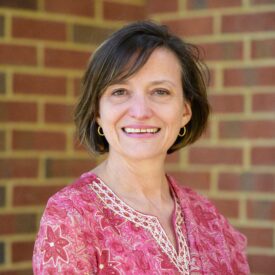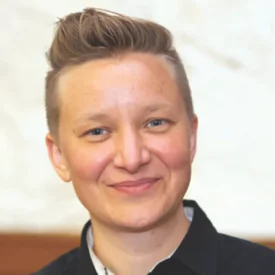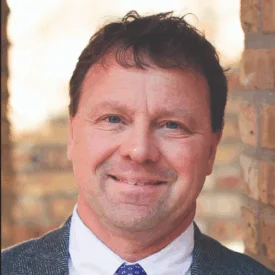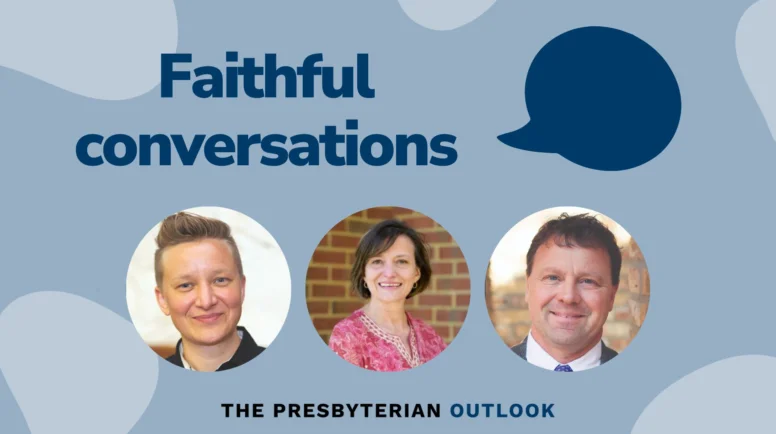
David Jensen, Martha Moore-Keish and Hanna Reichel teach theology at different Presbyterian-affiliated seminaries in the U.S. The Presbyterian Outlook invited them into a conversation about the nature and task of teaching theology today.
How do you explain the work and the value of theology to someone you are meeting for the first time?
David: I believe the value of theology is reflected in this dictum: words matter. Christian faith is grounded in the claim that the Word becomes flesh. The words that we use to respond to God’s Word can sustain hope or squash it; they can heal as well as harm. The church has a mixed record in using words, but if we study the words that our ancestors and contemporaries used to express that faith, our words and actions might contribute to the mending of the world. I hope my teaching encourages faithful, life-giving conversations on questions that matter for the life of the world.
Hannah: I always say that theology is about God and the world. It stems from a curiosity to understand God and the world better. By giving language to our and our community’s experience of God’s work in our lives, by digging deeper into the Scriptures and the cloud of witnesses that has come before us, by clarifying our concepts and critiquing them in light of other things we hold true, we aspire to get a better understanding of who this God is and what this God is like that allows us to better love this God who loves the world. That’s the wager.
Martha: I struggle with this question every time it comes up, and I’m grateful to David and Hanna for helping me with language to respond. Theology is about Word made flesh and seeking words to witness to that mystery. It focuses on cultivating a deeper understanding of and love for both God and the world God loves. Yes! And I would add: the work of theology is an ongoing pilgrimage, more about questions than final answers, always done in company with others. In doing theology, we join a colorful, raucous procession of folks from many times and places arguing together about matters of faith as we journey homeward to life in God.
What led you into the field of theology?
Martha: For as long as I can remember, I have wondered at the mystery of the world and have sought to understand the ways that humans encounter the Holy amid both beauty and brokenness. Also, for as long as I can remember, I have found explanatory power and a nurturing home in Christian community. When I encountered theological study, it felt like a door opened to a land where I could hold these two things together. I could keep asking questions about “varieties of religious experience,” from a posture of faith — the sense that the mysterious presence we call God is not just a theoretical construct, but a communicative being who desires to be known.
Hannah: I grew up moving around the world as the kid of two Lutheran pastors working in international partnerships. From that time on, I’ve had this appreciation of a body of Christ that is highly contextual and diverse, yet at the same time also more capacious than any of its individual expressions. My decision to study theology came after working with grassroots organizations in Argentina, where I was inspired by the militant faith of people working for a better world, but also disconcerted about so many historical entanglements of the Christian church with power. I wanted to go into ministry, but I have not been able to shake the urge to go deeper into questioning, reading, exploring. Hence, I’ve gotten stuck in the academy!
David: I almost didn’t follow a theological calling. I imagined many other worthwhile paths – high school teaching, coaching cross-country, the foreign service, and law – before discovering a passion for theology. My church youth group was a mixture of good and not-so-good experiences, but in college, I took a New Testament course from a renegade Catholic, and suddenly the text was opened for me in ways I’d never witnessed before: the narratives were larger, more inviting, more open to questions and discovery. What drew me to theology, ultimately, were the stories: stories that shape a faithful life, stories worth a lifetime of retelling and reexamining.
What about harmful forms of theology?
Hannah: My rule of thumb is that good theology brings us closer to God and one another, allows us to love God and each other better. But Christian theology has often had the opposite effect. Knowledge about God, interpretation of Scripture, and ecclesial teachings have often been wielded as claims to authority and power, as instruments of shaming and gaslighting or even as instruments of conquest and oppression. That’s a perversion and corruption of the word of God who became flesh to dwell among us, to heal and nourish, to love and connect. We must liberate both God and human beings from such harmful theologies.
David: The most harmful theologies, across history, engage in “othering.” Theologians and communities that pursue this kind of theology perceive a problem in the world and then focus the blame on some other group or person. Such communities readily glimpse sin in others while absolving themselves of any responsibility. When pursued by folks with significant power and privilege, these theologies become toxic and turn away from the Gospel by despising bodies, demonizing marginalized communities and ignoring the claim that we all fall short of God’s glory. Lives are at stake in resisting such theologies and promoting faithful alternatives.
Martha: I resonate with what Hanna and David are saying. To oversimplify, theology is harmful when it fails to love God and neighbor, and this has happened far too often in Christian history. In my context, many 19th– and 20th-century theologians defended slavery and then racial segregation in ways that caused lasting harm for my current students. Another example of theological harm: the teaching on “dominion” (Genesis 1:28), which fed the misconception that humans are created with power over
the earth and its creatures. We spend much time in theology classes now, seeking to undo those harms and explore life-giving alternatives.
What brings you the most joy in teaching theology?
Martha: Joy wells up in the unscripted classroom “aha!” moments of new illumination. I recall the moment when a student in the front row of Reformed Theology suddenly lit up in recognition that justification by grace through faith had implications for HER. I remember the moment when a Liberian student resonated with the approach of queer theology by connecting it to the “queerness” of twins in her own culture. Joy also arises when someone asks an unexpected question – or when I try to clarify an old concept for a new classroom – and I step out into an answer that I have never had to devise before. Since I began teaching over 20 years ago, the joy of such illumination has not changed, but the diversity of the students has multiplied, bringing fresh questions.
Hannah: Teaching tests my ability to rearticulate what I think I have understood; time and time again, it challenges me constantly to consider new perspectives and experiences. If you find this excruciating, teaching is not for you! But for me, this is what has made teaching always a rewarding experience. And if I find anything has changed, it is probably the readiness of students to act in turn as co-conspirators and mentors, through critique and contestation, through engagement and construction. In the meantime, my greatest source of joy has become when I see former students putting insights, resources and connections they found in the classroom to uses that I could never have imagined.
David: Like Martha, I would highlight students. In this vocation, I journey with students (in the classroom, in the dining hall, on a travel seminar) and grapple with things that matter – the mundane as well as the extraordinary – and am changed because of these interactions. Each student brings a unique voice to the church and the world, a voice that’s needed even when it’s challenging to hear. I’m grateful for students who discover their theological voice, for students who show me how much more there is to learn. That brings me joy.
What has changed the most since you started doing theology?
David: When I first started teaching at Austin Seminary, an overwhelming majority of our students were preparing for parish ministry, but now their range of vocational aspirations is stunning: in addition to teaching, counseling, chaplaincy and parish ministry, our graduates are pursuing meaningful careers as coaches and attorneys, non-profit leaders and community organizers, small business owners and farmers. Theological education shapes their calling in all these arenas. That tells me the impact of seminary extends far beyond what we’d previously imagined. It might even suggest that the world needs theological education for its flourishing.
Hannah: In my professional journey, I have moved contexts several times: from Buenos Aires to Heidelberg to Beirut to Halle-Wittenberg to Princeton. Seeing how the different contexts come with different curiosities as well as assumptions, different pressing concerns, different requirements for what a theology worth its name would have to be and do, has been a constant source of amazement for me. It has helped me learn more by insisting less on what I think I know. And beyond my journey, it seems academic theology is increasingly taking different experiences into account as sources of genuine insight, and is more open to cross-contextual and ecumenical learning than it was 20 years ago. This is not across the board, but seeing this happen is a source of hope and inspiration for me.
Martha: David and I teach in similar settings, so I have witnessed a similar expansion of diversity in the student body at Columbia Seminary in the 20+ years that I have been teaching. Most striking to me is the shift from being a majority Presbyterian (and majority White U.S.) student body to being a majority-minority population, with about 30% of our current students being international. This means that the “cross-contextual and ecumenical learning” that Hanna names is no longer optional; it is the only way we can do theology today.
What does it mean to teach theology in a time such as this?
Hannah: One of theology’s essential tasks in all times is to distinguish the spirit of the time from God’s spirit, and the conditions in which we live from the kingdom of God. In “a time such as this” (the wording of the question gave me special joy because this wonderful quote from the Book of Esther is literally the title of a small book I am in the process of publishing) when publicly dominant forms of Christianity form close alliances with nationalism and authoritarianism, with narrowing loves and even narrower understandings of what forms of individual and community flourishing are “natural,” in such a time it is especially important that we teach theology in a way that empowers individuals and communities of faith to practice discernment, call out false gods and uphold the witness of another gospel which is good news for the poor and downtrodden, and another world into which many worlds fit.
David: This is a difficult time to be a Christian theologian. Hanna rightly notes that the publicly dominant forms of Christianity in the U.S. are overtly authoritarian and nationalist. I believe I am called to gather around Christ’s table with people I disagree with, but also to name their betrayal (and I don’t use that word lightly) of the Gospel when they ignore the cry of the immigrant, demonize queerness, or celebrate coercive power. In this atmosphere, I can’t just teach against what I sense is wrong; I have to offer a more holistic expression of Christian faith and stay in relationship with those whom I believe are misguided.
Martha: When the three of us were invited into this conversation on the work of teaching theology, I wonder if the editors expected us to present such a shared vision! These days are challenging for those of us seeking to teach theology in a way that resists authoritarianism. It places us in the paradoxical situation of trying to adamantly defend humility, insist that we do not know everything, and remind one another (and all other humans) that we are not God. The trick is how to do this while maintaining staunch hope that the future belongs to God, and therefore, we need not fear.