In early 2025, the Presbyterian Church (U.S.A.) eliminated 54 mission co-worker positions, closed the nearly 200-year-old World Mission ministry, and required those dismissed to sign agreements that conditioned their severance on refraining from speaking critically about their dismissal.
But some former co-workers are starting to speak publicly about their experiences.
Related reading: The Outlook’s complete coverage of the PC(USA)’s recent mission cuts
Joshua Heikkilä served as a mission co-worker and later as a regional liaison in West Africa for 16 years before losing his position when the Interim Unified Agency (IUA) – recently renamed Presbyterian Life and Witness – closed World Mission last year.
On Feb. 6, he shared a post in the PC(USA) Leaders Facebook group, which has more than 6,000 members – his first public statement since the severance conditions lapsed. It drew more than 50 responses within days, including comments from other former co-workers, denominational staff veterans and church leaders. He has given the Outlook permission to quote the post from the private group.
“For years and even decades, mission co-workers developed close, personal relationships with presbyteries, congregations, and PCUSA members,” Heikkilä wrote.
“When our jobs ended, we were threatened that if we tried to maintain any connections, we risked losing the pay, pension, and health coverage that IUA was ‘generously’ giving us as part of a severance package…” — Joshua Heikkilä
“When our jobs ended, we were threatened that if we tried to maintain any connections, we risked losing the pay, pension, and health coverage that IUA was ‘generously’ giving us as part of a severance package. Furthermore, they told us that if we shared anything that could portray IUA in a negative light… we also risked losing severance. Thankfully, this period has come to an end.”
At the time of the elimination of mission co-workers, Presbyterian Life and Witness (then known as the IUA) said the changes reflected financial pressures and a shift toward a new model of global engagement called Global Ecumenical Partnerships.
Related reading: “Financial sustainability is a critical component of changes in PC(USA) global engagement” by Presbyterian News Service
When asked about Heikkilä’s post, Presbyterian Life and Witness provided a written statement through Mari Evans, its digital and marketing manager. “We recognize that those affected by the decision regarding the church’s global ministry were hurt,” the statement said. “Every effort was made to ensure that they were properly cared for and compensated after their service concluded.”
“We recognize that those affected by the decision regarding the church’s global ministry were hurt… Every effort was made to ensure that they were properly cared for and compensated after their service concluded.” — Presbyterian Life and Witness
The statement continued to defend the decision as financially necessary. “The model on which World Mission was built was financially unsustainable,” it said, adding that the new approach “will enable us to better respond to global dynamics and build deeper connections with faith communities worldwide.”
Presbyterian Life and Witness also said it “is and has been committed to both learning from and honoring the histories of its legacy agencies and building a just culture for the future that aligns with the values of the PC(USA).”
The statement did not address former co-workers’ characterizations of the conditions attached to their severance agreements.
Was the mission co-worker model really ‘colonial’?
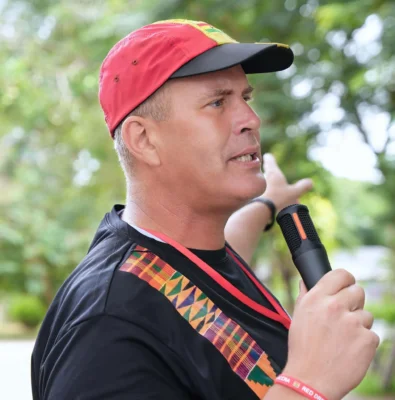
Heikkilä contested the framing Presbyterian Life and Witness used to justify the elimination. “When announcing the closing of the office, leadership told stories about how we were agents propagating an outdated colonialism,” he said during an interview.
According to several former mission co-workers who spoke on the condition of anonymity after their dismissal, Presbyterian Life and Witness did not consult or inform international partners before announcing the closure of World Mission.
“It was about as ‘colonial’ a move the denomination has ever made,” Heikkilä wrote in his post.
In an interview, Heikkilä elaborated on where that framing came from, saying, “I think [Presbyterian Life and Witness] thought that that was the language being used right now in the church. If you speak of something as colonial, people will think it’s bad … I think it was an excuse to justify what they were doing without having to really look at the hard issues.”
Heikkilä’s Facebook post described an openly hostile institutional environment. “To be honest, Louisville was an incredibly hostile environment,” he wrote. “I still find myself wanting to experience God, but seeing the Presbyterian Church (U.S.A.) as a place where I might only encounter further dehumanization.”
“I’ve been greatly consoled by the incredible support that has come from individual PC(USA) congregations and members.” — Joshua Heikkilä
He remains in Ghana, where partner churches have asked American Presbyterians to continue engaging at the grassroots level and Twin Cities Presbytery and Lake Erie Presbytery are collaborating to establish and fund a new mission position for him.
“I’ve been greatly consoled by the incredible support that has come from individual PC(USA) congregations and members,” Heikkilä wrote. “If anything, it’s helped me see that they are the real church, with incredibly deep faith and wisdom, certainly not GA or Louisville.”
What does it cost to stay?
Some former mission co-workers have found other funding sources and continue to work for former mission partners.
Karla Koll, a former mission co-worker who continues to teach at the Latin American Biblical University in Costa Rica as a volunteer – drawing on her pension earlier than planned – said the anger among former co-workers has not faded.
Koll is a member of the coordinating committee of With You Always, a grassroots initiative that has helped at least 17 former co-workers secure arrangements to continue international service outside the denominational structure.
Related reading: “Presbyterians organize to continue international mission sending” by Pat Cole, Presbyterian Outlook
“I wish I was not still as angry as I am,” she said in an interview. “I really thought by now I would be less angry, but no.”
Koll said she encountered the global reverberations of the decision firsthand. At the October 2025 World Communion of Reformed Churches General Council meeting in Thailand, she said, “Every day, people were coming up to me from different parts of the world to say, ‘What’s going on with the PC(USA)? Why did they do this? Why aren’t they talking to us?’”
She pushed back on the continued use of the colonial framing. Working to overcome colonialism – placing co-workers under the supervision of host institutions, operating by invitation from partner churches rather than imposing personnel – had been central to the model for decades, Koll said.
“[Since] the 1960s, working to overcome colonialism has been part of what the church has been doing for decades.”
She also questioned the institutional logic of the restructuring. “What organization fires their best communicators and their best fundraisers?” she asked. And in response to suggestions from PC(USA) leadership that part of the decision to eliminate mission co-worker positions was financial, Koll said, “We were the only staff people who were raising money for our positions.”
Despite that anger, Koll said she and many of her colleagues retain a genuine stake in the denomination’s future. “Generally, I think there’s goodwill toward the denomination,” she said. “We would like to see our witness internationally not be completely lost.”
Philip Lotspeich, general presbyter of the Presbytery of Transylvania, responded publicly to Heikkilä’s post, saying the pattern he saw reflected a long-standing problem with national-level culture rather than the conduct of individual staff. “You can’t do ministry if there’s no trust,” Lotspeich said later in an interview.
What will GA227 ask of the church?
The 227th General Assembly, meeting in Milwaukee this summer, will consider two overtures from the Presbytery of the Cascades that would move the denomination toward institutional reckoning with the 2025 decisions.
If adopted, OVT-005 would direct the co-moderators to form a commission to review the decision-making processes that led to the closure of World Mission and the elimination of all mission co-worker positions, assess whether those processes conformed to prior General Assembly actions and the denomination’s constitution, and report to the 228th General Assembly with recommendations for “acknowledgement, confession, repentance, and reparation.” At the time of publishing, 13 presbyteries have concurred.
A companion overture, OVT-006, proposes directing denominational staff, accompanied by an advisory group named by the GA co-moderators, to develop a new missiological statement addressing what Reformed missiology requires, who engages in PC(USA) global mission and how, and what funding and safeguarding frameworks are needed. At the time of publishing, 13 presbyteries have also concurred with that overture.
Related reading: “Dismissed mission co-workers, denominational officials draft new theology of mission” by Eric Ledermann, Presbyterian Outlook
Heikkilä said accountability, for him, begins with transparency, “being more transparent about how the decisions were made, in what context they were made, what information was used to make them.”
He has not resolved whether the denomination he served for 16 years still holds a place for him. “After this experience, it often feels like leaving church would be the smartest and healthiest thing to do,” he wrote. “‘Why do I put myself through this?’ I ask. But for now, I’m trying to stick with it.”