A proposed new confession will come before the 227th General Assembly in June, as leaders in the Presbyterian Church (U.S.A.) seek to articulate “the truths that the church must speak” in a changing world, said Margaret Aymer, co-moderator of the Special Committee to Write a New Confession.
The 225th General Assembly in 2022 directed the 16-person committee to create this new document in response to three different overtures, all calling for a confession of the church in this new millennium. The stated purpose of a new confession was to “strengthen the witness of the PC(USA) in the world.”
Related reading: “A turning point in the church’s search for a new confession” by Harriet Riley, Outlook reporting
“This document gives voice to our denomination-wide confession of sins – many of them committed since time immemorial, many of them specific to the times in which we live,” said Jack Haberer, retired PC(USA) pastor and special committee member. “We wrote what amounts to both a declaration of our faith and a confession of our sins.”
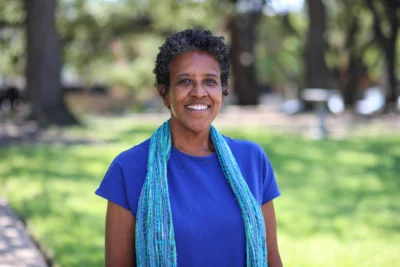
Aymer, professor of New Testament studies at Austin Seminary, said, “Our task as a committee was to ‘discern what God might be calling the church to declare in this particular time and place,’ and to try to put it into words.”
She said the committee, which has been working on this for four years, was guided by the specific overtures that explicitly name social injustices and divisions in the church community.
Related viewing: “Confession Conversation with Teri McDowell Ott and the Special Committee to Write a New Confession,” Presbyterian Outlook’s YouTube
The proposed confession addresses contemporary issues, including racism, intersectionality, the impact of colonialism, and ecological justice, with the goal of renewing the church’s commitment to social and theological justice.
“Our confession was specific in the naming of certain sins, both because a confession should be truthful and because the theological documents to which we were directed for guidance were even more specific than we were. I believe we would have been less faithful to the charge of the assembly had we been less explicit in naming corporate sin directly,” said Aymer.
When the committee’s report, COM-052, reaches the General Assembly this summer, a separate committee of 15 will be appointed to study and possibly amend it before bringing the proposed new confession to a subsequent assembly. From there, two-thirds of the denomination’s presbyteries must vote to include it in the Book of Confessions.
“The process for adopting a new confession is such a long one that we knew even if adopted the confession might not become a part of the church’s constitution until the very end of this decade or the beginning of the next, so we wanted to say things that are true and that would remain true for generations,” said Aymer.
Related reading: “Why the PC(USA)’s Book of Confessions is too long — and how to fix it” by Charles Aden Wiley, III
If eventually approved, the new confession would become only the third written by Presbyterians in the United States. The first, The Confession of 1967, emerged during the turbulent civil rights era. The second, A Brief Statement of Faith, was drafted in 1983 and approved by the General Assembly in 1991.
The new confession would become part of The Book of Confessions, which is the first part of the PC(USA)’s constitution. The Book of Confessions comprises the denomination’s 12 confessional documents.
“At the same time, like every other confession in the Book of Confessions, what we have written is reflective both of the timelessness of God and of what it means to be faithful in this time and place. We write not from Barmen or from Belhar, not from the U.S. in the 1960s nor Scotland in the 16th century,” Aymer said.
“We write during this century in response to the call of God reflected in the voice of our church assembled and in the voices of the overtures that came to the assembly from across our denomination. We write informed by a 21st-century historical sensibility, one that our earlier siblings of faith would not have shared,” said Aymer.
“For me, personally, the most poignant question raised came from the overture, TWE-08, from the Presbytery of Arkansas, which asked, ‘What does it mean to be human in the 21st century?’ which, for the committee, became the question, ‘What does it mean that we are made in the image and likeness of God?’” Aymer said.
Related reading: Read the full proposed confession on PC-Biz
The proposed new confession has four parts. Aymer said the committee wrote the new confession guided by the structure of the Eucharistic Prayer offered before the Lord’s Supper. It begins with grounding in Scripture and the character of God, then turns to an assessment of what threatens the integrity of God’s Word today. From there, it articulates what the church believes in response to those challenges and concludes with a call to live out that faith through concrete practices of discipleship and public witness.
“Three-quarters of the document (parts one, three and four) profess the great news of the amazing grace of Jesus, the tender love of God and the intimate fellowship of the Holy Spirit. Part two confesses sins that Christians of all political persuasions have been guilty of committing – and, tragically, often rationalize instead of naming as sins,” said Haberer.
Related reading: “Why a 50-year-old Presbyterian confession still matters” by John Williams
“We are calling all of us to name those sins, own them, seek forgiveness, and – as forgiven children of God – to resolve to amend our ways.”
Committee member Kristy Rodgers, commissioned pastor at First Presbyterian Church of Bartlesville, Oklahoma, in encouraging Presbyterians to read the confession carefully, said, “If you find yourself uneasy because of the content, perhaps sit with that for a bit. Be willing to be uncomfortable long enough to identify specifically what is the root cause of it.”
“Discomfort presents opportunities to learn and grow, so ask God for eyes to see and ears to hear in your spirit what you might learn from the discomfort. What might God be showing or telling you?”
“This is a time of discernment for the church,” Aymer said, “And we need everyone’s voices and prayers as the church decides what next steps it will take with what we have written.”