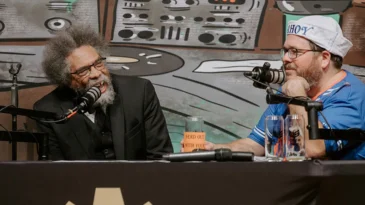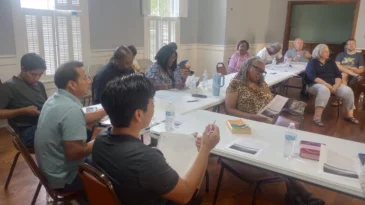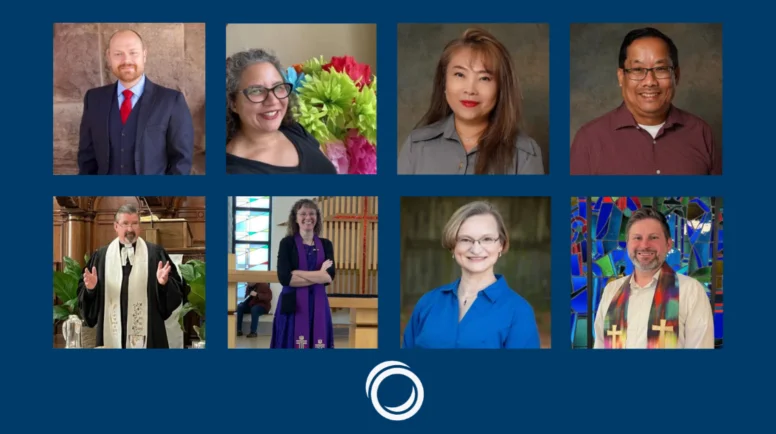
All four pairs standing for co-moderator of the 227th General Assembly gathered for a webinar hosted by the Presbyterian Outlook to discuss their candidacies and some of the issues facing the Presbyterian Church (U.S.A.).
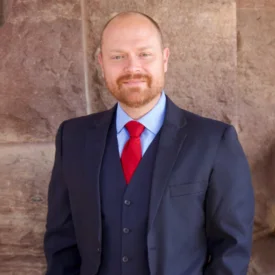
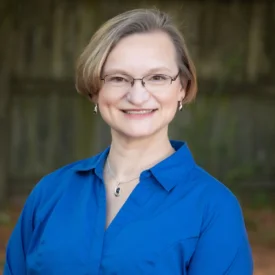
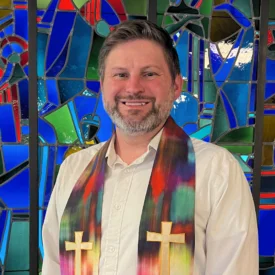
Marta Pumroy-Cordero – border ministry coordinator with Tres Rios Border Foundation – and Kristopher D. Schondelmeyer – pastor and head of staff at First Presbyterian Church of Davenport, Iowa – were the first pair to announce their candidacy. They began their time by sharing how God has continually crossed their paths since 2020, and how, during that time, they have developed a meaningful friendship and shared sense of call. According to Pumroy-Cordero, Revelation 22 guided their call, even before it was announced as the theme for GA227.

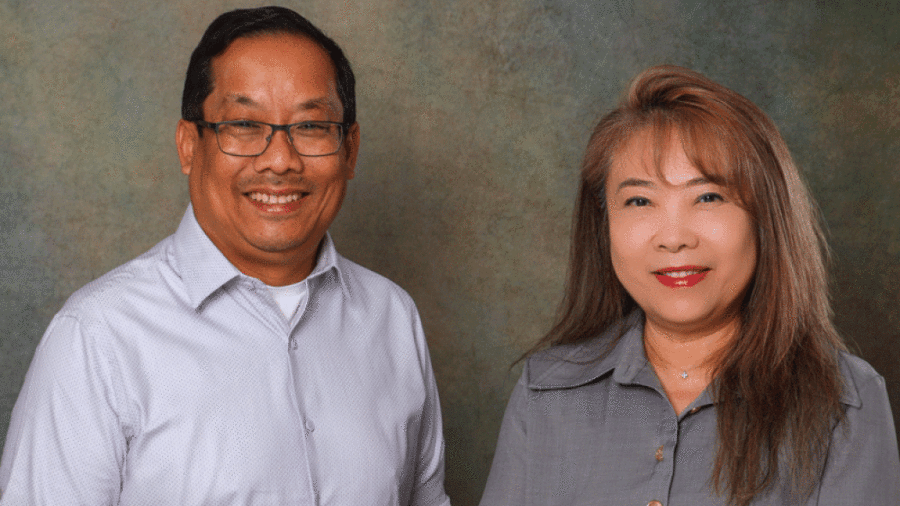
Frances Lin and Sean Chow are a pair from Southern California. Lin, presbytery leader of Riverside Presbytery, began by sharing her pride in her presbytery and her desire to tell stories, including the story of God’s love for the church and God’s people. Chow, executive director of the Presbytery of San Diego, expressed both disbelief and gratitude for the doors God has opened in his ministry and emphasized his desire to welcome back young people who have left the church.
The third pair of candidates standing for co-moderator both serve congregations — Barbara Barkley, pastor of Clayton Valley Presbyterian Church in the San Francisco Bay Area, and William (Bill) C. Myers, pastor of First Presbyterian Church in Charleston, West Virginia. Barkley emphasized calling people into conversation and relationship, rather than calling people out, while Myers lifted up the church’s call to faithfulness, rather than survival.
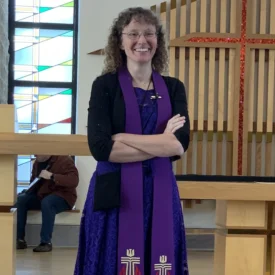
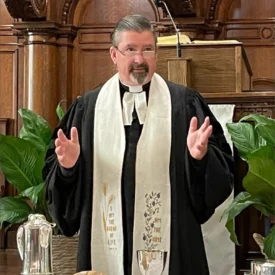
Rebecca Luter and Chris Peters are the final pair. Luter, pastor of Farmington Presbyterian Church of Germantown, Tennessee, described the experience as “humble-whelming,” and shared stories from two congregations she served. Peters, who is pastor of Westminster Presbyterian Church in Lincoln, Nebraska, said he wouldn’t be the same without the PC(USA) and shared how the church supported him in times of grief.
Teri McDowell Ott: Imagine you’ve been elected co-moderator and, on one of your many airplane flights, you’re seated next to a stranger who wants to talk and knows nothing about Presbyterians. What do you tell this person about the Presbyterian Church (U.S.A.)?
Barkley emphasized scriptural commitments, such as loving God and loving neighbors, and the call to do justice, love kindness and walk humbly with God. She also said she would share the choices the PC(USA) has made, including its Matthew 25 commitments. Following that, Myers described the Presbyterian Church as a community seeking to follow Jesus and discern God’s will. He said he would explain that the church is made up of congregations across the country trying to follow Jesus in a complicated world, while remaining in relationship with one another.
Schondelmeyer said he would start with the parable of the Good Samaritan, noting that Presbyterians would help the person in need, and then likely form a committee to explore how to prevent it from happening again. “Presbyterians like to go deeper in our faith and our understanding of brokenness,” he said. Schondelmeyer emphasized that Presbyterians do things in community, and that, while faith is personal, it’s never private. Pumroy-Cordero echoed that sentiment, saying Presbyterians discern in community and are called to be active participants as Jesus’ hands and feet in the world.
Ott: Drew Strait, author of Strange Worship: Six Steps for Challenging Christian Nationalism, argues that we need to normalize and de-stigmatize the importance of preaching to the choir.
He quotes Jemar Tisby, who writes, “The subtler threat of Christian nationalism is a kind of ubiquity that leads to invisibility. For so many white Christians, Christian nationalism isn’t Christian nationalism. Rather, it’s just Christianity. People don’t even see it, and that’s the deadliest threat.”
In this day of rising Christian nationalism, what would your message be to “the choir” as co-moderators?
Luter said the church must preach and teach about Christian nationalism so people can recognize it and avoid becoming acclimated to it. Peters added that honesty and directness are needed to push against the status quo and that Jesus Christ, the head of the church, provides the foundation for resisting other idols.
Lin said Christian nationalism creates an “us versus them” mentality and that she finds comfort in alternatives such as Galatians 3:28, which declares that there’s no longer Jew or Greek, nor male or female, but that all are one in Christ. Chow emphasized that marginalized people are often targets of Christian nationalism and that Christians are called to stand up for their brothers and sisters in Christ rather than remain idle.
Related reading: “PC(USA) to consider policy rejecting White Christian nationalism” by John Bolt, Outlook reporting
Ott: In light of the elimination of the PC(USA)’s mission co-worker positions and the renewed call for the denomination to articulate a clear theology of mission, what do you believe should guide the church’s missiology now?
Several candidates expressed sadness over the elimination of the mission co-worker positions. Luter, who envisions the church as a chrysalis preparing to emerge, described the decision as the “darkest part” of the chrysalis. There was a shared emphasis on listening for God’s voice as the church discerns the future of mission partnerships.
Lin lifted up the belief that God’s presence precedes all of us and said the church should enter mission contexts with gratitude for what God is already doing and seek to join that work.
Both Schondelmeyer and Pumroy-Cordero emphasized relationships – doing mission with others rather than for others – and remembering mission’s contextual and relational nature. Schondelmeyer highlighted the incarnational heart of faith, stating that God walks with us in vulnerability and that the church is called to show up in vulnerability so it can walk alongside a hurting and broken world.
Related reading: “Three overtures ask 227th General Assembly to reckon with the end of World Mission” by Eric Ledermann, Outlook reporting
Ott: Presbyterians pride ourselves on our “connectionalism,” but many feel a growing disconnect between the local church and the national body. How can we bridge these relational gaps? How can we maintain (or rebuild) our connections as the body of Christ?
Barkley and Myers highlighted the need to rebuild connections, show up for one another, help others feel valued and seen and share stories. “We belong to one another because we belong to Jesus Christ,” Myers said.
Peters centered transparency, conversation and accompaniment — walking alongside one another at a grassroots level. Similarly, Luter emphasized unity, saying the gaps in the church present opportunities for conversation.
Schondelmeyer and Pumroy-Cordero described connectionalism as shared life and a way of living out our calling. Schondelmeyer pointed to the importance of sharing spaces, such as the GA Exhibit Hall, and envisioning new ways of connecting that are not primarily “organizational.”
Lin and Chow emphasized connectionalism as belonging to one another, being brothers and sisters in Christ, and walking alongside each other with compassion and genuine care.
Ott: Finally, tell us about your co-moderator partner and why he/she/they would be great in this elected role.
Lin described Chow as genuine and possessing a heart for innovation, while Chow praised Lin’s gentle warmth and ability to step into uncomfortable spaces.
Myers described Barkley as a bridge builder and appreciated that she shows up in communities beyond her own. Barkley praised Myers’s ability to stay at the table even amid disagreement and said his steady presence helps people feel valued.
Luter, although she hasn’t met Peters in person, praised his integrity and non-anxious presence. Peters likewise described Luter as a non-anxious presence and said she is calm, creative, thoughtful and authentic.
Pumroy-Cordero described Schondelmeyer as someone who keeps her grounded and praised his balance, passion, humor and care for both his family and all God’s children. Schondelmeyer said that “this denomination needs to know [the] Rev. Marta Pumroy-Cordero” and that her advice to listen to the heart of a person, not just their words, is a good representation of who she is.
Commissioners will elect the next co-moderator team on July 2, the final day of GA227. The elected pair will assume their roles immediately and oversee the business of GA228 in 2028, a change in practice instituted at the previous assembly. GA226 co-moderators Tony Larson and Cecelia Armstrong will moderate the business of this year’s assembly.
To follow all of Presbyterian Outlook’s reporting on GA227, visit pres-outlook.org/ga.
You can find the full recording of the webinar in our store archives.