As commissioners considered several overtures concerning the closure of World Mission and the future of global engagement in the Presbyterian Church (U.S.A.), grief and frustration are understandable. Mission co-workers lost jobs. Long-standing relationships were disrupted. Many raised important questions about process, accountability and consultation. Those questions deserved honest attention.
Related reading: “Assembly creates commission to investigate World Mission closure” by Eric Ledermann, Outlook reporting
But I wonder if there is another question worth asking: What if we looked at the future with hope?
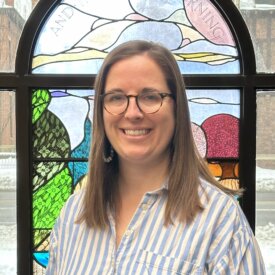
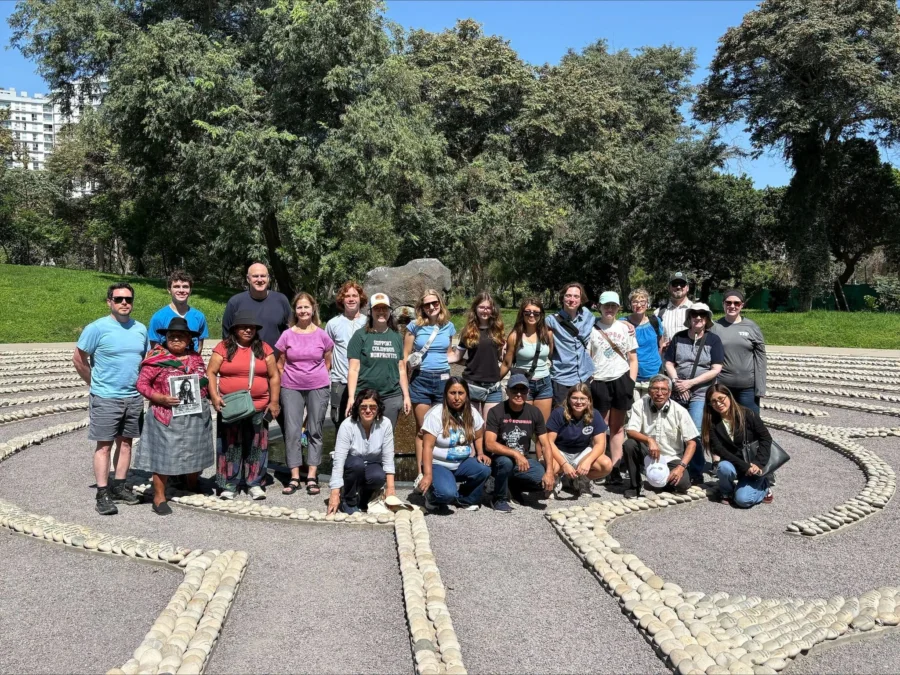
I write not as a denominational leader or policy expert, but as someone who just returned from Peru with a group from Broad Street Presbyterian Church. We traveled not to build anything, lead anything or fix anything. We traveled to visit friends and to listen. We traveled because we belong to one another.
Our congregation’s relationship with Peru stretches back more than two decades. It began through the ministry of mission co-workers Hunter and Ruth Farrell. Through them, we learned to question the colonial assumptions that often accompany mission. We learned that mission is not about saving, fixing, and doing. Rather, it is about companionship, mutuality and allowing ourselves to be changed by the people we meet. Mission co-workers taught us that.
And perhaps that is why I find myself wondering whether the only way to make global partnership whole is not simply to preserve old structures, but sometimes to begin again.
Beginning again is painful. It involves loss, requiring lament and accountability. It asks hard questions about what we inherited and what we have left undone. But as Christians, we are people who believe that resurrection rarely means returning things exactly as they were. New life is often recognizable but different.
Perhaps the invitation before us is not to choose between the past and the future, but to carry forward the gifts we have received while remaining open to the new thing God might be doing among us.
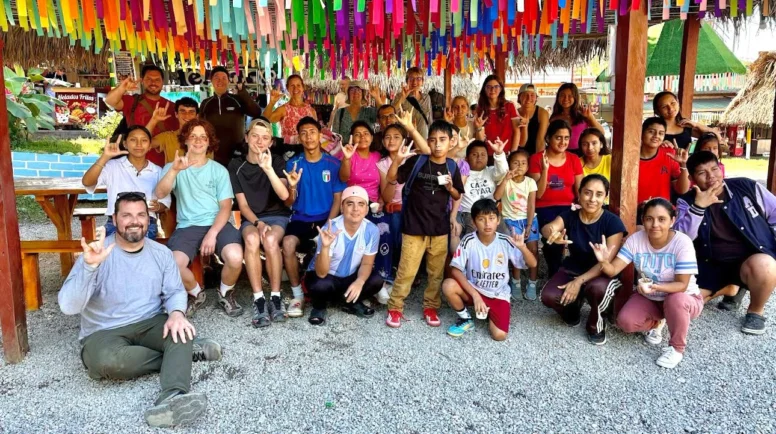
This summer, our church once again visited Jed Koball, now serving as a Global Ecumenical Liaison, and Jenny Koball, Young Adult Volunteer site coordinator for Peru. We witnessed firsthand a model of accompaniment rooted in long-term relationships and solidarity. We met Indigenous leaders protecting land and culture, learned from Afro-Peruvian communities preserving ancestral wisdom, and played with children and teachers at a school for the deaf in Moyobamba. We painted murals, splashed in the river, sang and laughed and received hospitality.
Peru did not need us, but we needed each other.
That conviction makes me wonder whether something hopeful might be emerging in Global Ecumenical Partnerships.
The language of accompaniment, anti-racism, decolonization and mutuality is not new. Those values are deeply embedded in the witness of countless mission co-workers. But Global Ecumenical Partnerships asks other questions:
What might it look like to engage not only through one ministry area, but through a web of relationships connecting disaster response, hunger work, advocacy, young adult volunteers, racial justice ministries, Native congregations, diaspora communities and global partners?
What if Native Presbyterians in North America and Indigenous Christians in the Amazon learned from one another?
What if Afro-Brazilian theologians and Afro-Peruvian women seeking healing from the legacies of slavery collaborated together?
What if immigrant congregations in the United States helped shape our understanding of global mission?
What if solidarity begins not with airplanes, but in our own neighborhoods?
None of these questions diminish the losses experienced by mission co-workers or the concerns expressed in the overtures before the General Assembly. Accountability matters. Listening matters. Relationships matter — but so, perhaps, does hope.

The church has always been changing. Presbyterianism has always been transnational, belonging to one another across borders. The question before us is not whether we will engage globally but how.
I find myself returning to something Jed Koball recently shared. The role of local congregations in global engagement, he said, is solidarity.
Solidarity begins in our own backyards. — Jed Koball
Solidarity begins in our own backyards, growing through relationships. It requires humility, courage and deep listening — asking not what we can do for others, but how we might discern together what faithful presence looks like.
I do not know exactly what Global Ecumenical Partnerships will become, but I know what I experienced in Peru.
I experienced laughter that needed no translation, hospitality that humbled me. I experienced the Spirit already at work long before we arrived.
And I came home convinced: Peru does not need us, but we need each other. Because in Christ, we always have.