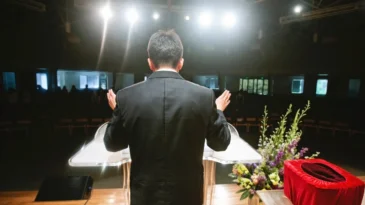
I was a church-less pastor for almost three years after my sabbatical became a transition away from church work, and now I’m back in the pulpit with a new perspective on what it means to be a pastor.
While I was without a church, I met regularly with a therapist and a spiritual director, and each of them have been helping me to deal with burn out. My therapist has been encouraging me to set boundaries especially around things that drain my energy. My spiritual director has been encouraging me to do something creative that is just for me and not a “product” for someone else.
At first, saying no to the well-meaning people who wanted to fill my empty schedule with volunteer activities and job opportunities that were way out of my field of expertise felt awkward and rude. I have gold medals in people pleasing gymnastics, but I needed to retire. I did consider for a second operating a pallet jack at a warehouse… But instead, I went through my craft supplies and found a butterfly embroidery project that I could do just for me. Carving a few hours out of my week to do something just for me felt scandalous at first but by the time the project was finished, I realized how life-giving having time for me could be. With each tiny stitch I was regaining my creativity and wondering what other parts of me I could reclaim.
My home office, which in the past was the creative space I loved to be in, wasn’t feeling like it used to. I’ve been practicing sitting with my feelings and being curious instead of judgmental, but it took a few days of being in the room to figure out why, in this room, I was still feeling overwhelmed and weighed down. I realized that the books on my shelves, and the files that I was holding onto were draining me.
I want to start a fresh story about who I am, but I can’t do that while the old story is still taking up space. I need to let go of the stuff. Specifically, I needed to let go of the books I accumulated to make me look like a pastor. I’m deconstructing my early ideas of pastor.
One of the old stories I told myself was that pastors are well read and have tons of books on hand. I was accumulating stuff to fit into an identity of pastor that was based on attributes of capitalism: buying, accumulating, and hoarding. But these practices were in direct conflict with my desire to travel through life like a pilgrim, living a simple life with less stuff and more awareness of God’s presence. I want my pastoral work to reflect the abundance of God’s gifts and our ability to share. We have more than enough resources available at the seminary library, church libraries, and through online resources like The Presbyterian Outlook. And I have colleagues, friends, and neighbors to network with.
I started by decluttering my Amazon wish list and eliminated books that I no longer wanted so they didn’t trickle into my life. Next, I grabbed the obvious books that needed to go. I had a few copies of the BOO that I had annotated over the years. I kept only the most recent. I tossed old, outdated curriculum. I put books I read once but wouldn’t read again in a box to go to Half Priced Books.
After that I knew the commentaries were next. I had a set of the Interpretation Series and New Interpreters Bible Commentaries that can be found in most church libraries. I took them off the shelves and moved them to the dining room while I thought about how I felt if they were to really leave. Then I moved a few other reference books to the dining room that I hadn’t used outside of a specific project years ago. It felt spacious, lighter, and there was a glimmer of future possibilities when I wiped away the dust.
I left the commentaries at home in the dining room for several days. It was hard to let them go. They were expensive. My family had purchased many of them over the years as encouragement for my vocation. I decided I would feel better if they went to a good home. I sent messages to two clergy group texts and was able to rehome some of them. A few days later, the rest went to Half Priced Books. I sold them so it didn’t feel like a book loan that I could call back from the borrower. This needed to be permanent so I could move on to the next chapter of my life, although I was not sure what that was.
Here’s what I do know. At first, I felt guilty for discarding the books, but once I sat with those feelings and dealt with them, it was easier to let go. I realized that my family wouldn’t want me to hold onto stuff that drained my energy, and that the quality of a pastor is not measured by books on the shelves. Now, my home office feels cleansed and the tension I’ve been holding in my shoulders has released. I can see books that I’m excited to read and projects I’m looking forward to. And I’m living with less; less stuff and less stress. And I have more; more love for myself and my community and more creativity to share.
With a clean office and an open heart, I was ready to experiment with newish vocations. I began working towards certification in spiritual direction but ultimately decided it wasn’t for me. The practice of trying something and letting it go proved invaluable when it came time to downsize my involvement with a ministry that shaped my previous pastoral role. Transitioning out of a heavily involved leadership role allowed me to travel, to write and to advocate for period-positive workplaces (and churches).
Eventually, I agreed to cover pulpit supply for a pastor on medical leave, and that led me to revisit the idea of being a pastor. Over the last few years, I learned how to watch and wait, so discerning which church might be a good fit felt like a familiar spiritual practice. And now, I get to reconstruct what kind of pastor I will become.