Introduction
The Presbyterian Church (U.S.A) experienced a reunion in 1983 of what are commonly referred to as the Northern and Southern Presbyterian churches. This article gives a brief account of what has happened in ecumenical relations in the PC(USA) since its reunion in Atlanta, Ga., June 1983.
The common designation of the previous churches as “southern” and “northern” is an inaccuracy. The northern Church, UPCUSA, was a national church with congregations and presbyteries spanning the USA territory. One can surmise that this designation began at the time of the separation of these churches in the 1860’s over issues relating to the holding of Negro slaves, a subject of great interest, though this article is not intending to address it.
Ecumenical Activities during the 1980s and 90s
It is not a long stretch to say that the Presbyterian Church (U.S.A.) has shown leadership in ecumenical relations. The most persuasive evidence of this is the effort of Eugene Carson Blake, stated clerk of The United Presbyterian Church, USA, with Bishop George Pike of The Episcopal Church, issuing a call for the mainline Protestant churches to join together in search for Christian unity among them. Their call was for organic union of these churches. This gave new momentum and energy to the Christian unity movement in the U.S.A., and probably, influenced unions of other similar churches around the world. This phase in the search for Christian unity prepared the way for significant ecumenical activities during the 1980s.
The call for a committee by Blake and Pike to search for organic union of the mainline churches became the Consultation on Church Union, COCU, continuing Christian unity activity under this title until around 2000 at which time the group expanded to include more churches. The name was changed to: Churches Uniting in Christ.
Dialogues with other churches, usually selected along confessional alliances, became popular during the 1980s. It was during this time that significant progress was made in confessional discussions with the Lutheran Churches in the U.S.A. These discussions were conducted prior to the 1980s, having begun in 1962. A Common Calling records the beginning of Lutheran and Reformed dialogues thusly:
“Official conversations between representatives of the Reformed and Lutheran churches in the USA have been held since 1962. The first round of such official dialogue occurred in 1962-1966 under the sponsorship of the North American Area of the World Alliance of the Reformed Churches (WARC) and the US National Committee of the Lutheran World Federation (LWF).” 1
In a report to the National assemblies of these churches, it stated: “As a result of our studies and discussions we see no insuperable obstacles to pulpit and alter fellowship and, therefore, we recommend to our parent bodies that they encourage their constituent churches to enter into discussions looking forward to intercommunion and fuller recognition of one another’s ministries.” 2
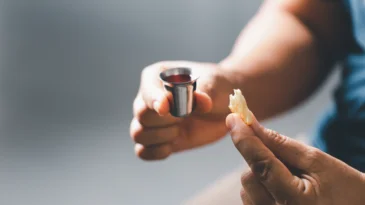
These conversations with Lutheran and Reformed churches continued with the successor Lutheran church, the Evangelical Lutheran Church in America, into the 1990s. It was my good fortune to shepherd the adoption process of A Formula of Agreement among the Reformed Church in America, the United Church of Christ, the Evangelical Lutheran Church in America, and the Presbyterian Church (U.S.A.). This was a significant accomplishment, though all churches have yet to claim the results of the approval of A Formula of Agreement, a regrettable commentary to make. These churches have agreed that they are one in ministry and they share full Eucharistic communion. In the past, members of these churches called each other names and were not accorded Eucharistic hospitality. These barriers have been swept away by the tides of these new agreements: May God be praised.
Dialogue with the U.S. Conference of Catholic Bishops on several challenging ecclesial subjects started in 1967. These discussions included the Reformed churches already mentioned above, and continued through 1998. Note, these dialogues transpired since the II Vatican Ecumenical Council of the Roman Catholic Church, Rome.
Over this period, some exciting subjects were addressed: Theological conversation on Scripture, the Ministry of the Church, Women in the Church, The Unity We Seek, Ethics and the search for Christian unity, Partners in Peace and Education, and Laity in the Church and in the World. 3
As exciting as all of these dialogues were with the Conference of Bishops, the one that generated the most energy was two official dialogues with the Catholic Church, Vatican, with Edward Cardinal Cassidy, president of the Pontifical Council For the Promotion of Christian Unity, and his associate, Monsignor John Radano. One dialogue was held in Louisville, Kentucky, December 6-7, 2000, and the other in the Vatican, March 2001. This was an exciting time for the Presbyterian Church (U.S.A.). The December 6-7 dialogue was held in the PC(USA) Church Center in Louisville. Ky.
Clifton Kirkpatrick, PC(USA) stated clerk, invited all of the Formula of Agreement churches to be represented and they were. The co- chair of the Reformed and US Catholic Church Dialogues was present, and The Episcopal Church, USA was represented also. Religious and secular press observed the discussions.
The General Assembly Committee on Ecumenical Relations prepared a 24-page paper on the topic: “The Successor to Peter” that was widely distributed to participants and guests. This paper elaborated on the ecclesial, theological, and confessional stances of the PC(USA).
A more comprehensive report on this dialogue is presented in The Journal of Presbyterian History 80:2 (Summer 2002), pp. 83-115.
A follow-up dialogue with the Pontifical Council was held in the Vatican, March 2001. In this dialogue, the PC(USA) representatives were given a full view of the ecumenical work of the Catholic Church, Vatican, taken on a tour of St. Peter’s Cathedral and the Vatican offices.
There were no official agreements between the PC(USA) and the Vatican resulting from these discussions. Both churches held their respective ecclesial stances. The Vatican extended to the PC(USA) delegation genuine Christian hospitality. Pope John Paul II greeted the delegation.
Presbyterians and Reformed churches began talking with The Episcopal Church in America through the COCU dialogues during the 1960s. Both churches were met with conflict over the episcope, meaning where authority for ministry is lodged. The Episcopal Church holds that the ministry of Christ’s Church is embodied in the clergy, not in the laity. Of course, the Reformed churches hold that both lay and clergy embody the ministry of the Church of Christ. In an effort to overcome this barrier, the Episcopal and Presbyterian churches started a dialogue during the late 1990s to discuss issues confronting them in understanding the ministry of the Church of Christ, believing they could discern a way forward in their historic differences in the definition of Christian ministry and ordination. This dialogue continues.
There is a group of churches of the mainline Protestant ilk with which the PC(USA) has not had a one-on-one ecclesial dialogue: the Historic African American Churches. The PC(USA) has participated in dialogues with these churches through the Consultation on Church Union. It must be stated early on, these churches gave life to the COCU dialogue process. They took the dialogues very seriously, providing fervent leadership to the COCU debates.
During the late 1990s, the Historic African American Methodist churches started dialogues among them: the AME, AMEZ, and the CME. During one of their dialogues held in Louisville, Ky., Clifton Kirkpatrick and I visited with the dialogue participants, urging their continued progress.
An event occurred during my work in ecumenical relations that may surprise some, when an unofficial group met with representatives from the Presbyterian Church in America, that was unplanned and unexpected. This incidence happened in Louisville under the cover of darkness. It was a cordial discussion. There were no expected results anticipated. It felt like we were kinfolks that we had reasons to know this, but no basis to act on the acknowledgment.
One other dialogue started around 1998 with the Moravian Churches, conducted jointly with the United Church of Christ, Christian Church, Disciples of Christ, and the Reformed Church in America. The report given me by the OGA Ecumenical office is that these discussions have been productive and the final results will be reported to the 2008 Presbyterian Church (U.S.A.) General Assembly.
Summary
The Christian unity movement is a very slow process, acknowledged by most. The Presbyterian Church (U.S.A.) believes it is an ecumenical church. It is a rare instance in the PC(USA)’s witness to itself and to the world that it assumes it is the whole church of Christ without an acknowledgement of being the Church of Christ only through and with other churches. This understanding of itself has given courage to General Assembly stated clerks over the decades to lead in the Christian unity movement. One would pray that this understanding is sustained into the future. The period of 1983 to present shows no exception to this principle in ecumenical relations.
Eugene Turner is retired PC(USA) associate stated clerk for ecumenical relations.
1A Common Calling, Keith F. Nickle and Timothy F. Lull. p.10
2 Ibid.
3Interchurch Families, John C. Bush & Patrick R. Cooney, preface, and p. viii