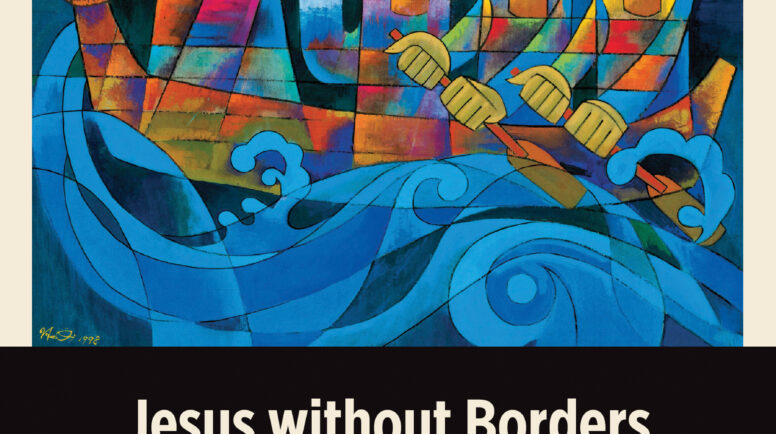
 Gene L. Green, Stephen T. Pardue and K.K. Yeo, editors
William B. Eerdmans, Grand Rapids, Mich. 193 pages
The full-grown humanity of Christ,” wrote missiologist Andrew Walls, “requires all the Christian generations, just as it embodies all the cultural variety that six continents can bring.” The Majority World, now 70 percent of all Christians, is beginning to make contributions to the Christian understanding of God and the universe that will enlarge our vision of the fullness of Christ. Eerdmans’s “The Majority World” theology series will help us to keep pace with this remarkable development of our time. “Jesus without Borders,” the first book in the series, is a collection of eight articles from Christian thinkers around the world. The first four articles present Christological perspectives from the West, Africa, Asia and Latin America.
Kevin J. Vanhoozer does a fine job summarizing the development of Christology in the West, from Chalcedon to current themes of theologians such as Karl Barth and Jürgen Moltmann. Victor I. Ezigbo presents and critiques three Christological models from Africa: Neo-missionary Christologies, ancestor Christologies and Revealer Christology. Timoteo D. Gener offers a variety of Christologies from an Asian perspective, including Hindu and Buddhist conceptions, and perspectives influenced by the Chinese culture. Jules A. Martínez-Olivieri covers various aspects of liberation theology and Protestant theology from Latin America, noting the need to avoid “toxic Christologies” that support an unjust status quo.
The second four articles are written by biblical scholars who examine specific biblical texts for Christological reflection. Yohanna Katanacho analyzes the Gospel of John, contrasting its inclusive vision of Christ with the exclusive particularism that characterizes the Palestinian-Israeli conflict. Aída Besançon Spencer analyzes the cult of the Virgin Mary in Latin America in the light of various scriptural passages and cultural contexts, seeing her as a liberator, not an intercessor. Andrew M. Mbuvi looks at cultic language in 1 Peter from an African perspective, suggesting, among other things, that the harrowing of hell (1 Peter 3:18-22, 4:6) may help to assuage Africans’ concern for ancestors who never heard the gospel. Finally, K. K. Yeo examines Chinese Christologies, pairing the Greek concept of logos with the Chinese concept of dao, the Greek agapeēwith the Chinese renren, and Confucian ethics with biblical Christology.
This book can be frustrating at times. Most of the authors, for example, treat the Chalcedonian Definition not as a springboard for further inquiry but as a straw man to be knocked down. Many have embraced trends such as the emphasis on the historical Jesus and liberation theology that have been developed or derived from the West, but this is not acknowledged. In fact, much of the theology emerging from the Majority World, while rooted in indigenous contexts, is well informed by Western theological developments.
This book might be characterized as introductory rather than comprehensive, suggestive rather than exhaustive. Its eight chapters are meant to provide the reader with tantalizing tastes of a multicourse meal. For those left wanting more, the authors are careful to cite key thinkers and provide suggestions for further reading at the end of each chapter.
I look forward to future installments, but I hope that contributing writers will deal more even-handedly with the Western ideas to which they are so obviously indebted.
MICHAEL PARKER is a PC(USA) mission coworker who serves as the director of graduate studies and professor of church history at the Evangelical Theological Seminary in Cairo, Egypt.