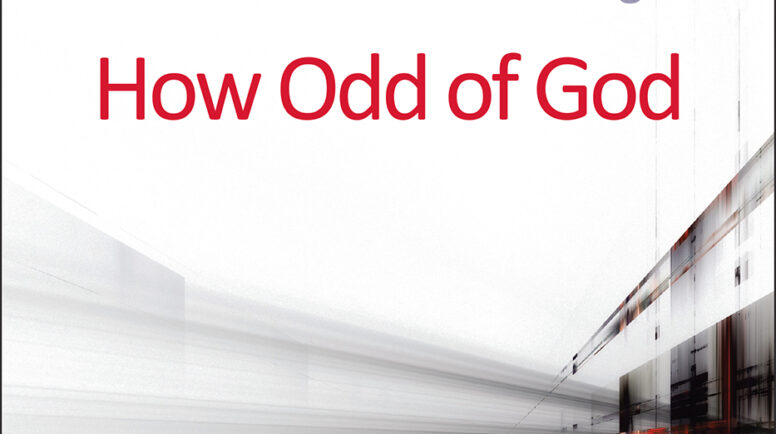
 by William H. Willimon
Westminster John Knox Press, Louisville, Ky. 160 pages
Willimon’s book is the print version of his 2014 Macleod Lectures on Preaching given at Princeton Theological Seminary. Don’t imagine that this is another book on sermon technique. Rather, it lays a theological and biblical foundation for preaching. Surprise! Preaching is theological and needs to be biblical, and the preacher who takes the role seriously will be deeply attentive to both, and that attentiveness does not require a Ph.D.
The word “chosen” in the title leads to Willimon’s treatment of the doctrine of election, for which he is heavily indebted to Karl Barth, whose thoughtful presence may be felt throughout the book. “Election is the plotline of the whole Bible,” meaning that it is always God who makes the first move. God has made such a move in Christ to embrace us without any help from us, electing a people: first Israel, then adding the church. Election is not to have been awarded a prize, but to have been commissioned to be a servant people, a blessing “to all the families of the earth.”
American Protestant culture, the author notes, is deeply Pelagian. “Election is counterintuitive for those of us who have been taught the fiction that our lives are self-constructed.” In other words, we imagine that it is we who are responsible for saving ourselves, saving the church and saving the world. Without our “decision for Christ,” God, apparently, would be helpless. The God who makes the first move is the God who calls some to preach. The preacher is one who has been “sent.” Preaching “must be an exposition of holy scripture.” That’s because “you cannot think up the gospel on your own.” Willimon testifies that “bright, young clergy realize that only by being biblical do they have anything significant to say.” He argues that preaching must be “unashamedly partisan in behalf of the God who summons.”
Clearly, Willimon is skeptical of efforts to “grow the church” that presume that all we need is the right technology, technique or strategy. Willimon scorns the notion that we are in control and is suspicious of our busy attempts to remake the gospel hoping to recover the halcyon days of mainline success. He reminds us of Kierkegaard’s charge that trying to make the gospel “plausible” leads to “a distortion of Christianity by domestication.” Willimon says, “We cannot make Christ relevant; our listeners, through Christ’s work in our preaching, are summoned to be relevant to him.” Preachers need to resist the temptation to imagine that the gospel is “breathtakingly simple.” Willimon writes, “We cannot help preaching sermons as complex as the trinitarian God of whom we speak.”
One of my favorite sections of the book is the treatment of the necessity of what he calls “apocalyptic” (i.e., eschatological) preaching. “All promises are in future tense.” This book serves as a multivitamin shot for preachers, particularly today when it is easy to doubt one’s calling or for preaching to be discounted. Committees on preparation for ministry should be guided by it in their deliberations, and distribute it to inquirers and candidates; and ministry committees/commissions should commend it to colleagues.
 RONALD P. BYARS is professor emeritus of preaching and worship at Union Presbyterian Seminary in Richmond, Virginia.