 Chris Jennings
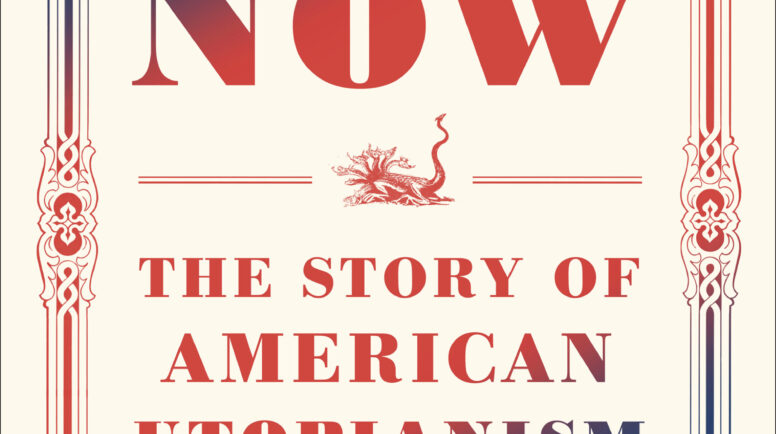
Random House, New York. 512 pages
Americans can hardly imagine utopia anymore. Instead, we are awash in dystopian fantasies like “Divergent” and “The Hunger Games.” Today, when Americans dream of the future, what usually comes to mind are bleak images of a planet devastated by global warming, an economy in decline due to shrinking resources and overpopulation and moral decay resulting from the loss of traditional values and the relaxing of communal and religious restraints. As Chris Jennings phrases it in the concluding chapter of this book, “The future ain’t what it used to be.”
Jennings reminds us, however, that the pessimism that characterizes our time is a departure from the outlook of most Americans of previous eras. In the year 1630, John Winthrop led a large group of Puritans to the New England shore, proclaiming that they were establishing “a city upon a hill” – an ideal Christian community. This optimism, moreover, was not limited to Christians. In the more secular age of the American Revolution, in “Common Sense,” Thomas Paine (later to become a notorious atheist writer) gushed, “We have it in our power to begin the world over again.”
In the early-modern era, Western people looked at the vast wilderness of North America and dreamed of a better future. In the 19th century these dreams were heightened by the success of republicanism, astounding technological advances and the general sense that the century would be one of unbroken human progress – progress that some believed would even lead to the millennium. Others, however, sought alternatives to the emerging social horrors of the new industrial age. Surely, they thought, the marvels of the factory system could be put to better use than enriching a greedy few while impoverishing the mass of humanity.
Nineteenth century America saw the establishment of over 100 utopian communities. Jennings gives the history of five of the most memorable of these: the Shaker communities launched by Ann Lee; New Harmony, founded by Robert Owen; the phalanxes envisioned by Charles Fourier, the most famous being Brook Farm; the Icarians, inspired by the popular French novel “Voyage en Icarie” by Étienne Cabet; and the Oneida Community, established by John Humphrey Noyes.
These were, admittedly, very strange places in which the Shakers may initially have engaged in “nude dancing;” the Owenites dreamed of establishing secular communities called “parallelograms;” Fourier fantasized of the oceans turning to lemonade; and Noyes taught his people to practice “complex marriage,” otherwise known at the time as “free love.”
Clearly these communities were eccentric on many matters and nearly mad on others. But, as Jennings observes in his clear, uncluttered prose, they were far ahead of their times in some areas and actually got quite a few things right, including the equality of women, public education and the desirability of a social safety net. Most important for today, they remind us that there was a time when the future was not as clouded with despair as it is now, when some Americans were so heady with optimism as to dream of a golden age that, they imagined, might lay just around the corner.
Michael Parker is Presbyterian World Mission’s interim coordinator for Europe and the Middle East. He lives in Louisville, Kentucky.