FORT WORTH, Texas – The timeline is tight. The work is immense. And the questions being explored go to the heart of the concerns of local Presbyterian Church (U.S.A.) congregations — most of which are small and struggling with money.
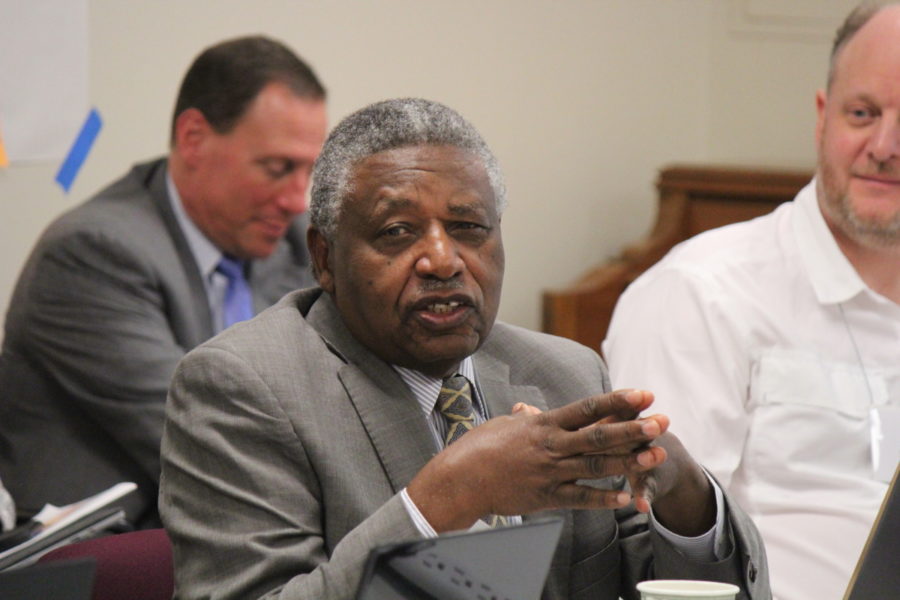
The PC(USA)’s Special Committee on Per-Capita Based Funding and National Church Financial Sustainability is holding its first in-person meeting May 13-15 in Fort Worth – beginning to dig into its work and to unpack both financial details and big-picture implications.
The 2018 General Assembly, which created the committee, gave it two big tasks:
- By the end of 2019, “to provide a comprehensive resource projection analysis and summary assessment — in conjunction with the Presbyterian Church (U.S.A.) Foundation and representatives of all other agencies — of national church assets and income for financial sustainability review.” The deadline for that was set early so that the analysis would be available to other groups (such as the 2020 Vision Team and the Moving Forward Implementation Commission) that face deadlines in February 2020 to submit their own recommendations to the 2020 General Assembly.
- By February 21 (the deadline for reports to be submitted to the 2020 General Assembly), to review the current per capita funding system “for financial sustainability into the next ten years.”
At this meeting, the committee began receiving summaries of financial positionsfrom the six PC(USA) agencies —hearing from four of the six agencies on the first day. Those presentations necessarily included a lot of details, but also began to surface some of the underlying issues for a denomination that has been losing members for decades (down another 62,375 members from 2017 to 2018) and thatstill relies on a per-member funding system, producing a per capita rate in 2019 and 2020 of $8.95 per member.
Interlocking pieces
Repeatedly, concerns surfaced at the 2018 General Assembly about the burden that per capita puts on small congregations and mid councils. Those funds are essential to support the work of the national church —particularly the Office of the General Assembly, which has already endured staff layoffs and expects toexhaust its reserves by 2020.
So there are big questions in this conversation with implications for the financial health of the national denomination, of mid councils and of local congregations.
There are a lot of interlocking pieces.
For example, committee member Mark Hong, executive and stated clerk of the Synod of Southern California and Hawaii, pointed out that it’s mandatory for a congregation to pay to support a pension for its pastor. “Pension is mandatory,” and “the reality is that many of our churches are very small,” Hong said.
In the old Hanmi Presbytery (a former Korean-language presbytery, dissolved in 2014), some congregations felt they couldn’t pay both the pension costs for pastors and per capita, “so they chose to withhold per capita to meet the needs of the pension,” he said. “I wonder if that’s becoming common scenery around the church … a reality we are slowly moving into.”

Committee member Kevin Veldhuisen, transitional mission coordinator and stated clerk for the Presbytery of South Dakota, said that “40 of our 60 churches cannot afford a full-time pastor.” And sometimes when they lose that full-time pastor, “they then have a sense of bitterness towards the denomination and hold off per capita and mission giving because they were forced to lose a full-time pastor because of denominational requirements.”
The Board of Pensions offers a relatively new Pathways to Renewal program intended to try to bring young ministers into the benefits plan – reducing the dues that congregations have to pay for pastors’ participation for congregations with 150 members or fewer that have been without an installed pastor for at least two years (there are some other requirements as well).
Veldhuisen suggesteda Pathways for Renewal program for congregations on the brink of being unable to afford a pastor — rather than waiting to provide that support until after a congregation has endured the pain of losing its pastor.
Frank Spencer, president of the Board of Pensions, described a funding system based on an old corporate model — a model still in use in a denomination in which more than 60% of the congregations have fewer than 100 members. In the current system, “you’ve got your own church, you’ve got your own budget, you’ve got to come up with the money,” Spencer said. “We’re going to have to get much more creative.”
Spencer said he doesn’t think the answer is to say: “We shouldn’t give ministers pensions, therefore they’re cheaper to hire. That seems to be going in the wrong direction.” But there may be value, he said, in exploring other options — such as some sort of yoked system, in which a cluster of churches would be considered an employer and could pool funds.
Pastors need and deserve benefits, Spencer said. “Let’s figure out a way to pay for them.”
Work teams
To do its work, the committee has created two work teams — one on per capita funding and one on financial sustainability, both of which have been meeting in recent weeks via conference call.
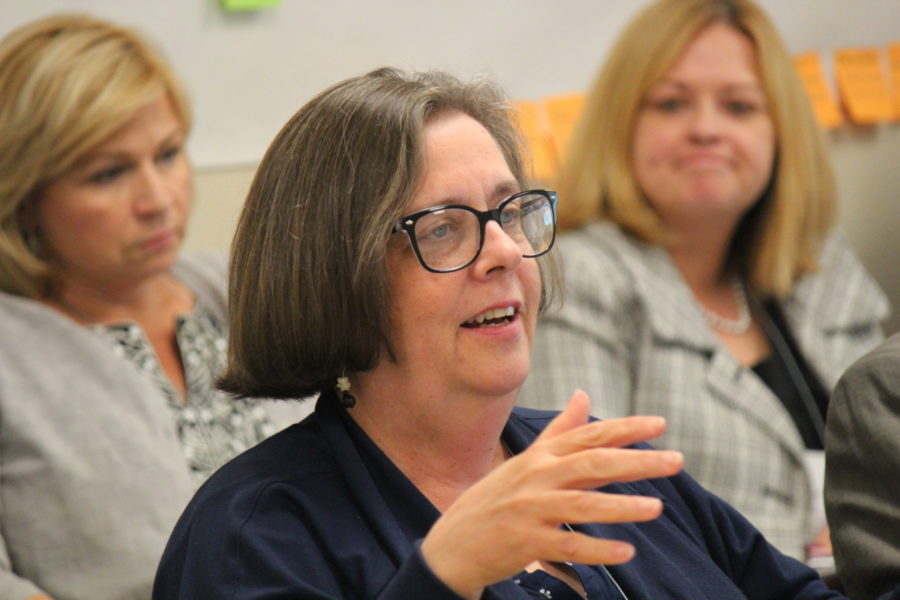
Jeanne Radak, the presbytery leader for the Presbytery of Newton (which in 2018 sent an overture to the General Assembly seeking a review of the per capita system) provided an update on the work of the committee’s per capita team. She said the task force plans to hold listening sessions and wants to gather “the stories of per capita” from the people who collect it, who interpret it for the church and who come up with the money to pay for it.
The per capita team wants to develop a full picture of “this very complex, very old and very deep-rooted-in-our-being” system, Radak said —one that“sometimes feels like a deep-rooted tree in my back yard.”
Paul Helphinstine, a committee member who’s a minister in Tennessee, said later in the discussion that the work funded by per capita “is several levels removed from those who are giving it,” and asked: “How do we do that better?” — to help Presbyterians in the pews more clearly understand what the Office of the General Assembly and the Presbyterian Mission Agency do with the per capita funds they receive.
Scott Lumsden, a committee member and co-executive presbyter of Seattle Presbytery, said the financial sustainability team is aware that “so much has changed in the last two years” in the PC(USA), in part from changes involving the governance of the PC(USA), A Corporation, which is the corporate expression of the Presbyterian Mission Agency and the Office of the General Assembly.
“Perhaps it’s a really good time to ask these questions,” Lumsden said.
Agency reports
Along with providing detailed financial information, the reports from agency representatives also surfaced trends and ways in which the PC(USA)’s membership trends affect the individual agencies.
Spencer, for example, described a series of strategic shifts the board has made since 2015 —changes intended to make the benefits plan accessible to more people who work for Presbyterian-related entities, and to give workers for the church more choices in part by shifting from a single dues structure to a menu of options, Spencer said.
The board has seen a growth in active members in recent years from 12,000 to more than 15,000 — all of which has come from the decision to expand participation in the plan beyond ministers to other employees of congregations and to entities such as Presbyterian retirement homes and Presbyterian-related colleges.
Previously, “we told ourselves the myth that we had one plan for everybody,” but it essentially only served ministers, Spencer said. “What we really had was an executive plan for those who were lucky enough to be in it, and nothing for everybody else.”
Representatives of the Presbyterian Foundation described the $1.1 billion in assets they manage on behalf of the church — including a lot of small accounts and “a lot of restrictions to keep track of,” said Greg Rousos, the Foundation’s executive vice president and chief operating officer.
Part of the discussion: Who makes decisions about what restrictions apply and how the money can be used, particularly if the original stipulated use is no longer directly applicable?
The committee will need to look at “who gets to make decisions about what,” Lumsden said. “This directly affects sustainability and program and decision-making in the church about money. … We’re in the middle of that whether we like it or not.”
Membership losses
Agency representatives also described ways in which declining PC(USA) membership affects them, even if they don’t directly receive per capita.
Clare Lewis, vice president for sales and marketing with the Presbyterian Investment and Loan Program, described the services that PILP provides, including construction and renovation loans for congregations and Restoring Creation loans to improve energy efficiency, helping reduce Presbyterians’ carbon footprint. PILP can only make loans to PC(USA) congregations or organizations, Lewis said, so having fewer Presbyterian churches has an impact.
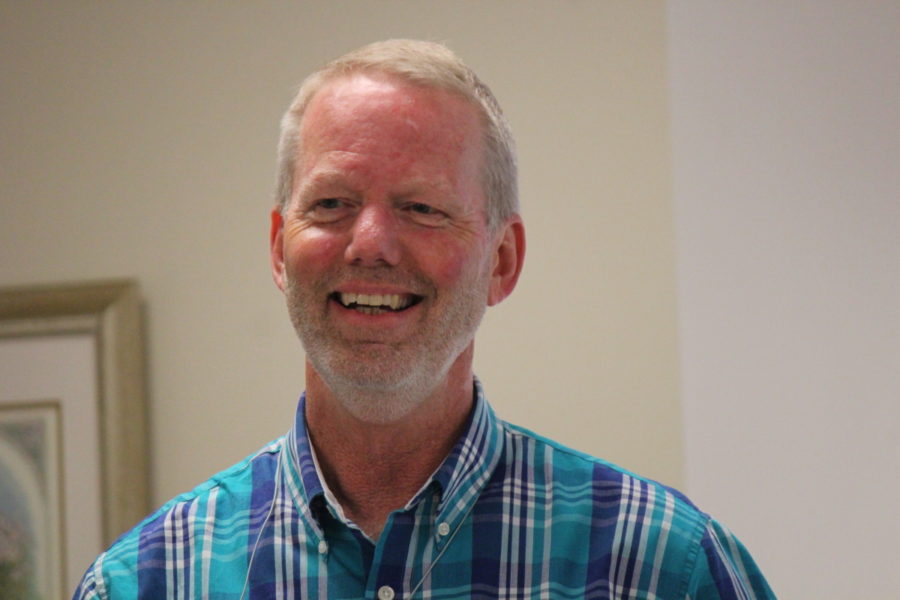
David Maxwell, a vice president with the Presbyterian Publishing Corporation, said his agency is small compared to the Board of Pensions and the Foundation.
“We’re kind of like the bakery across the street from the church,” Maxwell said. “We sell to everyone who comes by, but mostly to the church. We produce only what we think we can sell.”
Asked if a decline in denominational membership affects the Publishing Corporation, Maxwell responded: “Hugely. That’s our main market. … We’re the bakery that has fewer customers coming in from across the street. So we have to go find other customers and reduce our staff and be very careful about what we’re making.”
Seminaries were “our bread and butter for a long time, for textbooks,” Maxwell said. But seminary enrollment has declined, so the Publishing Corporation has created a new imprint, Flyaway Books,with children’s books that are intentionally multicultural and reflect themes such as inclusivity, kindness and compassion.
While the Publishing Corporation sells most of its books to Presbyterians, about 40 percent of its sales are outside the PC(USA). “That’s where we’ve had to grow” as Presbyterian membership slides, Maxwell said.
These are complicated issues – all those interlocking pieces – and “we’ve got to figure this out for the church,” Maxwell said.
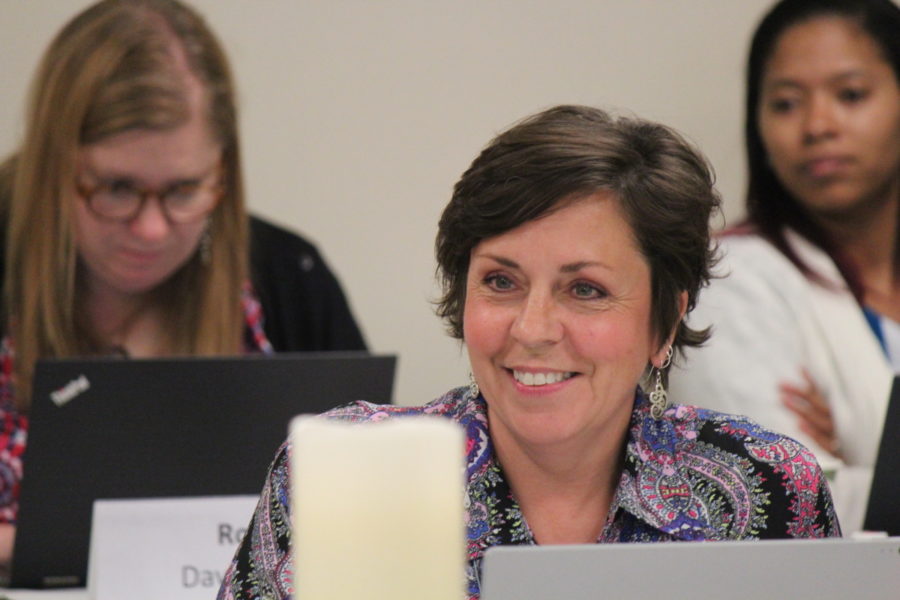
“No pressure,” quipped Valerie Young, synod leader and stated clerk of the Synod of the Sun, who serves as co-moderator of the committee along with Laura Cheifetz, a PC(USA) minister who has been working as deputy director of systems and sustainability at the National Asian Pacific American Women’s Forum.
The committee will continue its meeting through May 15.