

(Matthew 13:1-23. Mark 4:1-20, Luke 8:4-15)
I never actually heard him speak that day,
although, over the next few months,
I listened to him many times.
It was the early springtime - don't you see? -
and I had spent the first part of that week
stumbling along behind my stubborn mule.
We were ploughing up a whole new section,
yes, that hillside that sits above the Sea of Galilee,
digging out and carting off old tree stumps,
roots and rocks and boulders,
preparing the virgin soil
to receive the precious seed.
I observed recently that the PUP Report had not changed anything. A pastor asked, "If nothing's changed, what's the big deal?" An elder responded that we are in a spiritual battle. These comments spurred my deeper evaluation of the dynamics gripping us all.
The key to understand our dilemma is to realize the depths of that spiritual war.
Some history is helpful. In 1978 the northern Presbyterian Church issued a Definitive Guidance prohibiting ordination of "... avowed, practicing homosexuals..."
In 1979 the Definitive Guidance of the southern Presbyterians stated, "...unrepentant homosexual practice does not accord with the requirements for ordination..."
With reunion, these statements were incorporated as Authoritative Interpretation (AI).
A couple of months ago, a recently ordained minister was being examined during our presbytery meeting. Another pastor rose to challenge a portion of his statement of faith. The new minister looked down at what he had written, indicated his words did not express at all what he intended, and quickly owned up to his mistake. With grace and good humor, he recognized the error. With grace and a bit of levity, the presbytery noted his oversight - and then approved his examination. These days, such an exchange--a timely admission and a gracious response--is not always common among Presbyterians.
It started over a cup of coffee.
In the summer of 2004 two friends from seminary, both serving at the time as associate pastors in prominent downtown congregations, met for coffee in Richmond during General Assembly. (See these friends' thoughts in "Montreat meeting focuses Columbia grads on future" in the May 30, 2005, Outlook). After catching up, the conversation turned to the events of the Assembly. Both were incredibly frustrated with the politically-charged atmosphere, as well as the enormous amounts of time spent huddling and strategizing instead of praying and working together to make our church a healthier, more faithful place.
Let me tell you about my friend, Ben. He was an older man who had recently lost his wife. Returning home from a long trip, Ben found his sliding-glass door at the rear of his home shattered and a back door damaged. A neighborhood twelve-year-old had committed the crime. Ben came to see me about it because the investigating officers wanted to remove the boy from his home and place him in a home for troubled kids.
c. 2006 Religion News Service
Picture a congregation gathered to decide its future.
Feelings were strong. Disharmony was rife. Carefully coordinated plans were being executed, an information war was ratcheting to a new level designed to convey unstoppable momentum.
In this church, people who once got along have drawn verbal swords. Two stood and said, "If you don't vote our way, you put your mortal souls in peril." Another was shocked that "dear friends" could speak to her that way.
"Power corrupts and absolute power corrupts absolutely." Lord Acton has a point, but I disagree with him. I say, "Power does not necessarily corrupt, but the temptation to be corrupted by power is exceptionally strong."
Only God has absolute power, but we humans are responsible for our use of the relative power we can exercise. "I am not ashamed of the Gospel for it is the power of God ... unto salvation for all who believe!" (Romans 1:16)
I want both to invite you to think about power with me and to encourage you to pour your own unique content into the fascinating, vital subject.
I believe the Presbyterian Church (U.S.A.) is in a particularly parlous place.
For the last three decades we have been struggling with issues related to human sexuality. The most prominent issues have been abortion, the nature of marriage, and the ordination of non-celibate gays and lesbians.
Only three of Maria Chan Tun's five children lived past the age of five. In her Mexican village, Lerma, as in all of the developing world, water-borne disease is the primary killer of children.
But for Maria's seven grandchildren, the future is brighter.
In 2004, a Living Waters for the World ministry's purification system was installed at the Filadelfia Church that she attends. When she was told that her grandchildren would now have clean, healthy drinking water, Maria was moved to tears. She and her whole congregation celebrated this new privilege, and Pastor Carlos Arias explained that the water system could become a new ministry for the church, offering clean water not only to church members but also to others in the community.
Outlook editor Jack Haberer is getting closer to what ails us with each editorial! In recent weeks each one has crept closer and closer. You can almost hear him muttering with Emerson:
Give me truths;
For I am weary of the surfaces,
And die of inanition
On October 30, he quoted Tom Ehrlich's column in the September 11 Outlook. It said that what made 1964 such an "unhappy turning point" as the year the mainline denominations began to shrink, was that "post-war Baby Boomers began to graduate from high school." The discussion then turned on the question "What did they do after graduating from high school."
Back in the 1970s, Dennis Weaver starred in the popular TV series, "McCloud." He played the role of a western law officer who was teamed with a law officer from a big city "back East." Each of them played a perfect counterpoint to the other. At the end of one program, the camera shows the two of them walking away and you hear Weaver say, "There's a rock in my boot." The other character says with an almost parched wit, "It must have fallen out of your head."
I have a rock in my pocket. It is not very big. It is smooth. It was smooth when I got it, and it is even smoother now. Across the surface of one side is the word "CREDO." I received the rock at the end of participating in a June 2004 conference by that name.

Why is America so sports crazy? What am I so sports crazy?
My eligibility to play on college athletic teams expired thirty years ago. I now have children older than the young men and women who are vying for national championships. Yet my interest in the outcome of those games -- and, at times, my irrational responses to what I am seeing on the court and on the field -- seem to be accelerating.
When persons become members of a Presbyterian congregation, they are asked to profess their faith in Jesus Christ as Lord and Savior and to express their intention to live in faithful discipleship. When persons are ordained as ministers, elders, and deacons, however, more is required. The Book of Order states that Their manner of life should be a demonstration of the Christian gospel in the church and in the world, and that they are to lead a life in obedience to Scripture and in conformity to the historic confessional standards of the church.i Furthermore, they are required to make ten vows that express a high level of theological and ecclesial commitment. With the exception of the final vow concerning the different ministries of the three offices, the ordination vows are identical for ministers, elders, and deacons; the forms of the three ministries differ, but requirements for faith and faithfulness are the same.
Would you be happy for your church to be called, "a school of the love of God"? Certainly our local churches often fall short of this goal; nevertheless, "a school of the love of God" is a noble description of the Church. Of course it is different from the classical definition of John Calvin, "wherever the Word is properly preached and the Sacraments correctly administered, there you can be sure the true Church is present", but surely he would have embraced "a school of the love of God" as a useful amplification. The divine cannot be captured in any wooden definition no matter how finely crafted. Combining the two, "a school of the love of God where Word and Sacrament are correctly administered," makes a robust definition of the Church that brings many joyful images to mind.

Editor's note: Time to plan for the summer's upcoming Vacation Bible Schools! The Outlook provides overall plans in this article and an assessment of available curricula in the next.
For those of us who grew up in the church, the words "Vacation Bible School" have some very special memories. I remember looking forward to Vacation Bible School each summer. It was a week of fun, play, learning, and refreshments that always included butter cookies with a scalloped edge and a hole in the middle that just fit my index finger.
Christmas is just a few weeks behind us. So naturally, if you serve a congregation as a Christian educator or as Vacation Bible School director, the time is nigh to begin planning for the second most wonderful time of the year: Vacation Bible School 2007! Nine publishers consented to the Outlook's request to review their products. Here is a quick assessment of each. General observations of elements common to most, if not all, the VBS programs are followed by specific comments with regard to 1) Reformed compatibility, 2) small church adaptability, and 3) special features.
'It is time for all people of conscience to call upon America to return to her true home of brotherhood and peaceful pursuits. We cannot remain silent as our nation engages in one of history's most cruel and senseless wars. During these days of human travail, we must encourage creative dissenters. We need them because the thunder of their fearless voices will be the only sound stronger than the blasts of bombs and the clamor of war hysteria. Those of us who love peace must organize as effectively as war hawks. As they spread the propaganda of war, we must spread the propaganda of peace. '
The Rev. Dr. Martin Luther King, Jr., February 27, 1967
This weekend around the USA and elsewhere, people will remember and give thanks for the life of Martin Luther King, Jr. The Martin Luther King, Jr., Papers Project and Professor of History at Stanford University has a web page with "Frequently Requested Documents and Audio Clips" that includes 'Letter from Birmingham Jail' (this famous letter was written to respond to a Presbyterian minister and other religious leaders who opposed King), March on Washington for Jobs and Freedom (King's "I Have A Dream" speech given after Presbyterian Eugene Carson Blake's speech), Acceptance Speech at Nobel Peace Prize Ceremony and I've Been To The Mountaintop (King's last speech). I sent this web page to our congregation's members and friends in my weekly pastoral note to encourage people to read. The Nov/Dec 2005 issue of Church & Society looks at "Trusting the Nonviolence of Jesus Christ Today" from diverse Presbyterian perspectives; it is a fine print resource that also makes good reading for this holiday and other times.
The challenge was offered to our 230-member congregation on the Third Sunday of Advent. The goal was a special offering of $500 to give to the pastors of our mission partnership in Manipur, India. Since October, they have not accepted pay, instead focusing those funds on the mission outreach. Elder Kevin, chair of our Mission Committee, said that we could cut his ponytail if we achieved the goal. In the coffee hour following worship, the excitement grew as bidding took place. Kevin's hair was cut and sent to Locks of Love, and $900 was raised that day.
Though I had grown up in the church and was very close to it, I met the Lord in a personal way at a Montreat Youth Conference in the summer of 1972. A faith that had been borrowed suddenly became owned. A Christ that I knew about suddenly became known. My encounter was less about what was said up front, but was caught from the contagious witness of other youth in the small group in which I was placed. Right in the back of Anderson Auditorium I prayed a prayer with members of that group that has changed my life.
-- Jim Singleton, pastor, First Church, Colorado Springs
My very first camp experience focused around producing "conversion experiences" on schedule by the Thursday evening worship service. That meant all of us needed to be manipulated--by a lot of fear about the devil, demons, and hell--into answering the altar call. Needless to say, this was not a camp sponsored by the Presbyterian Church! More positive were the years in which I attended Camp Manitoqua--a camp of the Reformed Church in America. I have happy memories of serious discussions about faith and the Christian life that I had with fellow campers and with many wonderful counselors, who showed me that you could be a "cool" person and still be very serious about living a life of piety. I learned that there was nothing in life--including sports, silly games, eating and drinking, annoying bugs, crushes on boys, the works!--that could not be combined with an awareness of oneself as living before God. That lesson has served me well long after my camping days were over.
-- Dawn DeVries, John Newton Thomas Professor of Systematic Theology, Union Theological Seminary-PSCE, Richmond, Va.
There are more than 140 camps and conference centers across the denomination. In its own way, each is seeking to serve the changing population found in the congregations of their judicatory. Whether the site serves a single congregation, a presbytery, a synod, or the entire denomination, many people consider these special locations "holy ground." While these places may have changed over the years, today's Presbyterian camps and conference centers are still a place where ministry is alive and well.
If you are anything like me, you are reading this article while sitting indoors. I can remember a day when the majority of my days were spent outdoors. When I was a child I would dig in my backyard in New Jersey, wander the tide pools on vacations in Florida, and celebrate the cold beauty of winter skiing in Pennsylvania. No matter where you grew up, I am sure you can remember being "kicked" out of the house to play with friends, which led to hours of imaginative play. The wonder of those experiences and the intimate contact with creation has a lasting impact on our psyche.
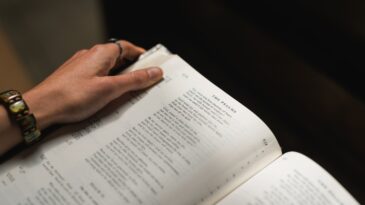
Since being elected moderator, I have experienced much grace as I have gone about the church. Presbyterians are gracious people. I have been on the receiving end of more graciousness and hospitality than I can shake a stick at. God also has been very gracious to give me the spiritual, mental, and physical gifts I have needed to enter into this work and be faithful. I have been delivered many times from anxiety, exhaustion, and frustration and given gifts of love, wisdom, and perseverance that I know did not come from me, but rather through me from Jesus, the Lord and head of the church. I believe that this provision for the task is a result of the prayers many have prayed and are praying for me as we go forward. Thank you from the depths of my heart!
Only eight proposed amendments to the Constitution have been sent to the presbyteries for ratification, but one of them, called Amendments A, is a revision of the entire Chapter XIV of the Book of Order. The amendments booklet has been mailed to presbyteries and is available online at www.pcusa.org/generalassembly/amend.htm
Chapter XIV has been rearranged, reworded and shortened for the proposed new version. The purpose is to simplify the language and provide presbyteries more flexibility in calling pastors, according to the rationale. Three separate handbooks for Committees on Ministry, Committees on Preparation for Ministry, and for certification processes for Certified Christian Educators already exist and presumably will be updated if these amendments pass.
Editor's Note: This is the final article in a three-part series presented at the New Wilmington Missionary Conference in July 2006.
In the first segment, we started to look at how The World is Flat by Thomas Friedman might have implications for our new patterns of missional involvement. The second part described some key events that have "flattened" our world and, in the process, should change our missiology.
I will conclude by giving three types of gentle pointers for future discussions and decisions. First, I suggest some "needs" we have. Then I will illustrate what some other mainline churches have done. Finally, I will suggest some questions that need to be answered.
Priorities for missional discussion: What does the missional endeavor need?
Need for innovation in vision and structures. Harold Kurtz, founding director of the Presbyterian Frontier Fellowship is right in that there must be specific sodalities (mission organizations) working with the umbrella modality (church) for mission to flourish. Kurtz quotes another great Presbyterian pioneer, Ralph Winter.
Recently I visited New Orleans for the first time. I had traveled to Gulfport, Mississippi for a church mission trip to help the Presbytery of Mississippi in Katrina rebuilding.
I arrived a day ahead of the team and decided to take the opportunity to visit the Big Easy. Not knowing where to go, I looked for familiar street names. I found my way to Canal Street, and then onto Bourbon Street, and into the French Quarter. As I drove through the French Quarter, looking at the homes and the architecture, I had the distinct feeling that I had been there before. Something about the place just seemed very familiar. I couldn't quite place what it was.
© Copyright 2026 The Presbyterian Outlook. All Rights Reserved. Privacy Statement. Website by Web Publisher PRO