

Jesus’ confrontation with religious leaders asks the church a pointed question, writes Rob Lowry. Will we merely profess the gospel, or do the hard work it demands?
What happens when God loves the people we’d rather resent? Rose Schrott Taylor explores Jonah’s anger, God’s mercy and the boundaries we’re invited to cross.
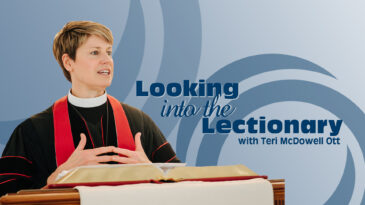
Teri McDowell Ott reflects on Matthew 18:21-35 and Jesus’ call to honor one another’s dignity amid conflict.
David Gerner explores what the “conflict-resolution flow chart” in Matthew 18 teaches the church about accountability, reconciliation and releasing control over how others respond.
Carol Holbrook Prickett reflects on the burning bush as a vision of faithful service without self-destruction, inviting us to resist burnout by knowing our call, ourselves and the God who sustains us.
Jeny Carlson explores how Isaiah 51, Psalm 138, Romans 12, and Matthew 16 challenge us to move beyond one-sided prayer toward truly listening for God's voice — in Scripture, in our callings, and in each other.
In Matthew 15, Jesus's encounter with the Canaanite woman unsettles our assumptions about justice, inclusion and faith, inviting readers to listen more closely to those on the margins, writes Thomas J. Carrico, Jr.
Teri McDowell Ott reflects on Elijah's encounter with God in the silence, exploring what exhausted leaders can learn about rest, perspective and returning to the work God has given them.
Matthew's story of the feeding of the 5,000 invites us beyond skepticism and scarcity toward a vision of God's providence, generosity and everyday miracles, writes Baron Mullis.
From invasive mustard plants to hidden treasure, the five parables in Matthew 13:31-33, 44-52 challenge familiar readings and reveal a kingdom that subverts expectations at every turn, writes Matthew A. Rich.
We do not get to decide where or in whom God will show up, writes Ginna Bairby.
Jacob and Esau’s rivalry reveals a God who works through unlikely people, overturns expectations, and calls us to trust grace over human ideas of righteousness, writes Aaron Pratt Shepherd.
Phil Gladden reflects on Jesus’ “easy yoke,” exploring how Christ’s call to discipleship offers rest, freedom and grace on July 4th weekend.
Drawing on Romans 6, Roger Gench explores how baptism frees us from the “cosmic bullies” of sin, death and domination, challenging modern culture’s distorted visions of power and identity.
When the gospel unsettles families, traditions and expectations, Jesus reminds his followers not to be afraid but to trust the God who sends them, writes Teri McDowell Ott.
As church membership declines, Rae Watson reminds us that people are still hungry for good news — and Jesus still sends disciples beyond the walls of the church.
What if righteousness has nothing to do with worthiness? Stephanie Sorge explores faith, grace and the scandal of who Jesus welcomes to the table.
Christ’s presence — not worldly force — empowers the church to make disciples, even amid doubt, writes Tara Bulger.
For Pentecost Sunday, editor Teri McDowell Ott wonders what we would venture to do if we trusted the Holy Spirit to use us.
Baron Mullis reflects on Jesus’ prayer for his disciples in John 17, inviting preachers to consider how prayer shapes Christian community, sustains faith and gives us words — even when we feel we have none.
As you preach toward Pentecost, Tracey Davenport invites you to linger with Jesus’ promise of the Holy Spirit as advocate — a faithful presence who sustains, guides and empowers us to love as Christ commands.
Jimmy Hoke urges Christians to confront the myth of martyrdom, reckon with anti-Judaism in Scripture and practice truth-telling that leads to repair.
On Good Shepherd Sunday, familiar texts invite a deeper reading — revealing Christ’s abundant life not as exclusion, but as a call to holistic, imaginative faith, writes Aaron Pratt Shepherd.
The language of 1 Peter 1 can feel confusing or loaded. Brian Christopher Coulter invites preachers to slow down, unpack difficult words and guide congregations into deeper understanding, awe and love.
A week after Easter, what does it mean to believe without seeing? And what fears still keep us behind closed doors, asks Philip Gladden?
© Copyright 2026 The Presbyterian Outlook. All Rights Reserved. Privacy Statement. Website by Web Publisher PRO