
A prayer of grief
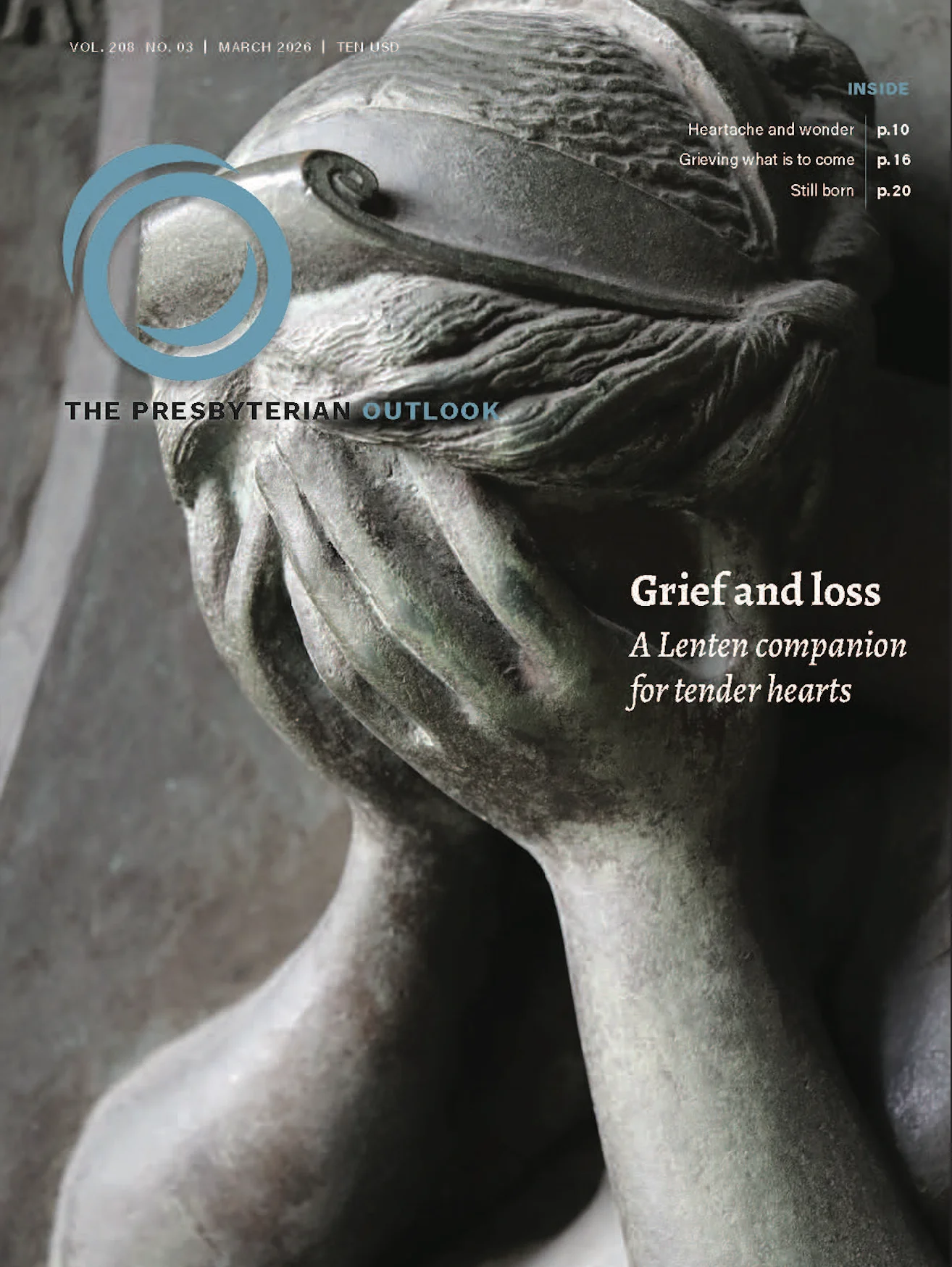
Arianne Braithwaite Lehn invites the Holy Spirit to meet us in grief, reminding us that love, loss, and healing are all held in God’s grace.


"Grief? What is grief? One morning when Jiayu opened her eyes she said to the ceiling, ‘Grief, I don’t know who you are, so don’t pretend you know who I am.’”
In her short story “When We Were Happy, We had Other Names,” novelist Yiyun Li takes us into the life of a woman who is grieving her son’s death by suicide. In real life, Li’s two sons both died by suicide, and her writing often explores the dimensions of grief, from get-on-with-it stoicism to existentialist questions about life’s unexpected turns.
As much as I love and have studied Li’s beautifully defiant paragraph, I don’t understand it. Grief knows me. I know grief and its schizophrenic patterns. And, if you’re living a life of love, you also, or will, know grief. It sets up a place in the living room, makes itself at home, an ever-changing swirl of flight and fury, bittersweet tenderness. It blocks the front door. Hands you a hairbrush. It sits quietly as you watch the news. Grief has wound itself around my body, and the grief that my grandmothers, and their grandmothers, long gone, both caresses and crushes me.
In 2022, a voice whispered to me, and I began grieving my mother a full three months before she even felt ill, four months before her diagnosis of pancreatic cancer, eight months before she died. It was a gift, this anticipatory grief, because it allowed me to be fully present and to attend to her differently. This early grief steadied me for the holy work that accompanies death.
The Lenten season ends with the promise of renewed life, but to reach it, we travel together through the throes of grief on that painful walk to the cross. In this issue of the Outlook, we invite you into the space that culminates inresurrection, salvation, and the good news of God’s unending love.
Arianne Braithwaite Lehn invites the Holy Spirit to meet us in grief, reminding us that love, loss, and healing are all held in God’s grace.

Paul Dornan reviews Elizabeth Kolbert’s "Life on a Little-Known Planet" — an accessible, curious look at climate change, extinction and what it means to care for our changing world.

"When Grief Comes Home" is a tender and practical guide that helps grieving parents both care for themselves and support their children through loss. — Amy Pagliarella
What might Scripture reveal when read through Indigenous history and experience? Eric Garner reviews "Reading the Bible on Turtle Island."

Alfred Walker reviews Art Cullen’s "Dear Marty, We Crapped In Our Nest," a sobering look at climate change, farming and red-state politics.

Heartache and wonder can coexist, writes Christopher Elwood.

Julie Hester offers writing prompts for you to try during this season of Lent.

Aaron Pratt Shephard writes that even when a child’s life seems to end before it begins, faith in Christ’s resurrection offers hope that every life will yet be born into eternal fullness.

Even joyful transitions can stir grief. During Lent, Christians learn how to face the losses we know are coming and walk toward the cross with hope, writes Vern Farnum.
In each issue of the Outlook, we include a discussion guide to further reflect on the issue. We recommend using this guide in your Bible study, small group or book club. It's our invitation into a faithful conversation.
Grief isn’t something to fix or silence. It’s a story that needs to be heard. Honoring our grief is part of the path toward healing and resurrection hope, writes Teri McDowell Ott.

Mindy McGarrah Sharp and Leanna Fuller discuss why grief is more visible today — and how congregations can learn to listen, lament and support one another without rushing past the pain.

Michele Minter recounts an old, but timely, soundtrack for our divisive times.

In deep grief, broad offers of help can feel overwhelming, writes Deb Bergmann. Simple, ordinary companionship can help.

Rosalind Banbury's eighth reflection on the 2025-2026 Presbyterian Women/Horizons Bible Study.
© Copyright 2026 The Presbyterian Outlook. All Rights Reserved. Privacy Statement. Website by Web Publisher PRO