Advertisement
Everything you need to prep for General Assembly in one place

Disciple

Lent 6 ¢ Introduction

This week's Face By the Wayside is an anonymous one. He is simply called a Disciple and represents all those nameless ones who took off and followed Jesus because there was something in the way he looked, something in the things he said, something in who he was, that made life richer, fuller, truer than it had even been before. Don't ask them what it was. Most of them, all of them really, didn't even begin to understand until much later, much much later. All they wanted to do was to be near him, to learn from him, to laugh and even weep with him, and maybe even to become just the tiniest bit more like he was, even if it came to walking on water!

 

The Pharisee


Lent 5 ¢ Introduction

In recent years, thanks in part to scholarly research, and also to a new and more open dialogue with our Jewish brothers and sisters in faith, we know much more, and understand much more, about the Pharisees.  A far more interesting and complex picture of first century Judaism has emerged as a result. We have learned that the earliest Gospel writers, deeply influenced by the increasing competition and resulting hostility between Judaism and their own infant new religion, tended to paint all Pharisees (and in John's gospel, even all Jews) with the same condemning brush. However there is no denying that, among Jesus' own people, and particularly within the religious power structure of that time, there was a growing, and increasingly threatening hostility to our Lord and his message. This week's meditation illuminates some of the grounds for that hostility.


(Matthew 12:22-23, Mark 3:23-27, Luke 11:14-20)

Does Jesus’ tomb mean the end of faith?


(RNS) For many years I've wondered about the following scenario: What if an archeologist turned up the bones of Jesus and had some decent proof? And what if they were found in such a way that it was hard to deny the claims?

That would really shake things up in the Christian world. After all, Christian faith is based on the belief that Jesus rose from the dead. The empty tomb is an essential component. As St. Paul says in his First Letter to the Corinthians, If Christ is not risen ... then your faith is in vain.

So, to be honest, the news of a new book, The Jesus Family Tomb, and a related Discovery Channel documentary produced by James Cameron, startled me. There are several such tantalizing elements, including an ossuary (bone box) marked Jesus, son of Joseph found besides others marked with familiar names from the family of Jesus.

James and John

Lent 4 ¢ Introduction

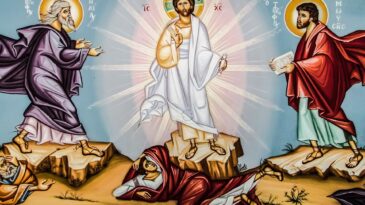
One of the most fascinating and rewarding aspects of being an author is the varied nature of the responses one receives from readers. In recent years I have learned from these that my two earlier Faces... books, Faces at the Manger and Faces at the Cross, were found to be helpful, not only in private, personal devotion life, but also, on occasion, in public worship. Creative pastors, and lay people also, have adapted the musings of the various Faces as dramatic monologues, or even, in one college in Canada, into a whole Christmas Eve service. This week's meditation, in the persons of James and John, might possibly be adapted (into two voices perhaps) for such use on Transfiguration Sunday.

Holy Lent

(RNS) If I could wish you a Holy Lent, it would have two components: personal and communal.

At the personal level, it is time to focus on the basics: prayer, study and self-examination.

Prayer, or talking with God, can take many forms, from the formal to the spontaneous, from highly intentional to humble submission. The point isn't to do it right, but to give God the opening.

Canaanite woman

Lent 3 ¢ Introduction

Jesus saying here about throwing the children's bread to the dogs has troubled readers over the centuries. Did our Lord really share the prejudices of his place and time, prejudices against foreigners, and against women? In my meditation I have tried to imagine how this all might have taken place, and how that amazing Syro-Phoenician woman could have had the sagacity and wit to come up with her winning response. Do read the Scripture passages first and note how Mark's version, although the earlier of the two, comes across more simply and intimately. Perhaps the secret lies in the tiny details that Mark includes, speaking of the woman's little daughter and adding that when she went home she found her cured little girl lying in bed, and the demon gone.

Legion

Lent 2 ¢ Introduction

Most of us today will find it difficult to identify with this demoniac, called Legion. He is surely one of the strangest characters in the gospel narratives. And his tale is told in surprising detail and at unusual length. Many of the man's symptoms seem to fit well with modern day accounts, but the ancient concept of demon possession is quite alien to our modern understanding of mental illness. And the whole business with the pigs, while strangely fascinating, is also quite bizarre. Yet I invite you, for a brief moment, to suspend your twenty-first century frame of mind and step back two thousand years to capture something of what this experience must have meant to one so desperately troubled, and in such crying need of deliverance.

Lent Is For Listening

Lent is for listening.

   A season of hushed voices and uncomfortable silences;

      of hearing and overhearing ~

         hearing the creak and groan of the church building;

            overhearing the muffled cough, the stifled sigh ~

               in worship, the silenced infant's cry.

            Outside the oblivious, uncooperative, noisy world goes on,

                  white noise distracting.

Reading for Lent


Lent offers the church a time each year to consider the wondrous love of Jesus Christ and what it means to follow in his way. These resources (some specifically for Lent, others not) may prove useful for individuals and groups who read, pray, plan worship, and study during this season.


The Beatitudes for Today, by James C. Howell.  WJKP, 2006. ISBN 0-664-22932-8. Pb., 124 pp.  $14.95.

In 14 chapters, Howell reflects on what it means to be blessed in the way of Jesus Christ. His work considers not only what Jesus says, but also what he does not say, ever with an eye to the shape of God's blessing in real human lives. Includes discussion questions at the end of each chapter.

The Sower

(Matthew 13:1-23. Mark 4:1-20, Luke 8:4-15)


I never actually heard him speak that day,

although, over the next few months,

I listened to him many times.


It was the early springtime - don't you see? -

and I had spent the first part of that week

stumbling along behind my stubborn mule.

We were ploughing up a whole new section,

yes, that hillside that sits above the Sea of Galilee,

digging out and carting off old tree stumps,

roots and rocks and boulders,

preparing the virgin soil

to receive the precious seed.


See, follow, believe

O Lamb of God! O Lamb of God! O Lamb of God!

With the slaying of the paschal lambs,

you died upon a tree.

Your sheep scattered

and hid in darkness

weeping.

It was over.


Three days those who loved him

 huddled,

their hearts trembling,

their faces swollen from tears.

They would no longer see Jesus.

He himself had said from the cross,

It is finished.

They felt finished, too.

Out!

When I was a child we didn't have Lent,

not down in Nashville, Tennessee,

where my father was a Presbyterian minister,

That's not to say there wasn't any of that "giving up"

   business going on;

It's just that Presbyterians didn't do it.

Oh, we waved our fronds as we went into the sanctuary

   on Palm Sunday,

and we observed Holy Week,

the most memorable day being Friday

when we had hot cross buns and didn't go to school,

but went instead to the worship service downtown,

and listened to one of those Last Words Sermons

and afterwards ate at the B & W cafeteria.

Easter focus: The “too late” that isn’t too late

Reflections on John 20:1-18

Every few years the calendar conspires against the church by placing the moveable feast of Easter on the same day most of the country springs forward to Daylight Savings Time. This year’s calendar is kind to us, and this ecclesiastical “perfect storm” is avoided.

Lent Devotional #5 – And so He weeps (John 11:1-46)

“Jesus began to weep.”

This man does not do this often. 

This is the only time that the gospels record Jesus’ weeping. Something has struck the deepest chords in Jesus.  This is a resurrection story, but Jesus is weeping.  What do the tears mean?

Lent Devotional #4 – Seeing with the Heart

It’s easy to bash the Pharisees in the gospel of John, but we do so at our peril. One writer notes, “For the Pharisees, protecting the identity of the Jewish people in the midst of a hostile world was an overwhelming priority. To continue to be ‘God’s people’ meant that they had to use every tool they had to remain distinctive, to resist the temptation to assimilate into the dominant culture.” [1]

Lenten, Easter Resources

THE SEVEN LAST WORDS FROM THE CROSS. By Fleming Rutledge. Eerdmans. 2005. $12.00. 91p. (0-8028-2786-1). Pb.

Rutledge presents seven meditations on the final sayings of Jesus. He links the sayings from the cross with contemporary events and concerns, incorporating recent biblical scholarship and modern questions about the death of Christ.

Lent Devotional #2 – Father Abraham

Reflections on Romans 4:1-5, 13-17, Second Sunday in Lent

The Epistle reading for Lent 2 is Paul’s most extended discussion of Abraham. Paul points to Abraham to illustrate his doctrine of justification by grace through faith. The faith of Abraham is witnessed in his trust in the promise of God. (4:20).

Lenten Prayer #1

Lent 1:  Genesis 2:15-3:7


Prayer after reading of the garden’s Keeper

 Maker:

for gardens and walls;

for Eden and our homes to the east;

for your talk with us and ours with you;

Lent Devotional #1 – The Temptation of Power

Reflections on Matthew 4:1-9, First Sunday in Lent

I am haunted by the story of the temptation of Jesus in the wilderness. So was the Russian novelist, Fyodor Dostoyevsky. Early in his novel, The Brothers Karamazov, Ivan tells Alyosha of a poem he has written he calls "The Grand Inquisitor." In the prose/poem Jesus returns to earth in human form, but it is not to Nazareth in Galilee. It is to Seville in Spain in the midst of the Spanish Inquisition of the 16th century.

Page 7 of 7

LATEST STORIES

Advertisement