This week we asked our bloggers to consider “membership” – How is our understanding of membership changing? Is membership important? What are new ways of moving forward? These are their responses.
When I invite someone to become a member of my church – particularly someone new to the whole “church” thing – they often give me a funny look. Because by the time I know the person well enough to ask, they have already bought in to some degree. They already attend worship often enough for me to think they would like to be in the church long-term. They have joined a Bible study or found a mission opportunity that suits them. As they give me that funny look, they respond in one of two ways. Either they are surprised because they thought they already were a member by virtue of their participation and commitment, or they show a willingness to join because it seems like doing so will help me out. Somewhere in our conversation though, these folks will ask the question “Why?” Why should I make the effort to officially join? What’s different when I’m a member?
The pastor in me wants to say that everything is different! When you make promises to Christ and before the congregation, everything changes. When you strive to live out the challenging membership responsibilities detailed in the Book of Order, your life couldn’t help but be transformed. At the same time, the realist in me also wants to say the main difference is that as a member, you can be asked to serve on session (or as a deacon) and you can vote at congregational meetings. And we get to count you in our annual statistics. That’s it. Otherwise, the expectations and opportunities will basically be the same.
Membership means different things in different places. In my rural setting, membership is thought of as life-long. Even if you move away and join another church, 25 years later you may still consider yourself a member of Ebenezer. A colleague of mine serves a congregation that attends to the reality that people have seasons of involvement in church. Each year, participants are invited to covenant as members for just that year, promising to be in attendance and contribute their gifts. Membership is equated with the annual covenant, which means that this year I might not be a member, but next year I might. The system results in fluctuations, but it may also be more honest. In my work with new worshipping communities, there are many questions of how to define membership and whether we should try to at all. Not to mention that because these communities are not chartered congregations, their participants are not reported in annual statistics showing just how many folks are part of the PC(USA).
I know we need some way to account for those who are part of our communities. And I think making promises to be part of a congregation does make an impact. But our church typically presents membership as a head thing, a question to be answered “yes” or “no.” For many people, membership is a heart thing. Being a church member is a commitment made on the drive home from worship when, after a passionate service, a person realizes, “That is my church!” It’s a commitment slowly recognized by the congregation when folks learn each other’s names and exchange invitations to events. Membership becomes clear in times of grief and illness when the people who show up to support you claim you as their church family.
As I look toward the future, I believe we need to broaden our understanding of what makes someone a member. Our concept of membership must stretch to recognize relationships over a lifetime, commitments made for the short-term and participation that signals dedication, even without the official paperwork. By somehow separating membership from money given to the denomination, we might open the door to new understanding. By refusing to let membership define who is in and who is out, our churches might reflect a new sense of inclusion and welcome. At that point, I might not ask people if they’d like to become a member. Instead, I would ask them how I could help them deepen their membership in the body of Christ and participation in God’s mission in the world. I would still get funny looks. But it would be for much better reasons.

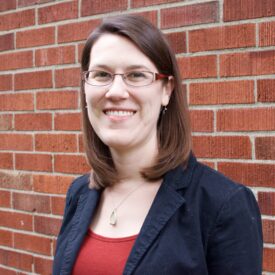
EMMA NICKEL serves as stated supply pastor of Ebenezer Presbyterian Church in Greensburg, Kentucky. She is passionate about small church ministry, cooking and playing with her cat, Scout.