
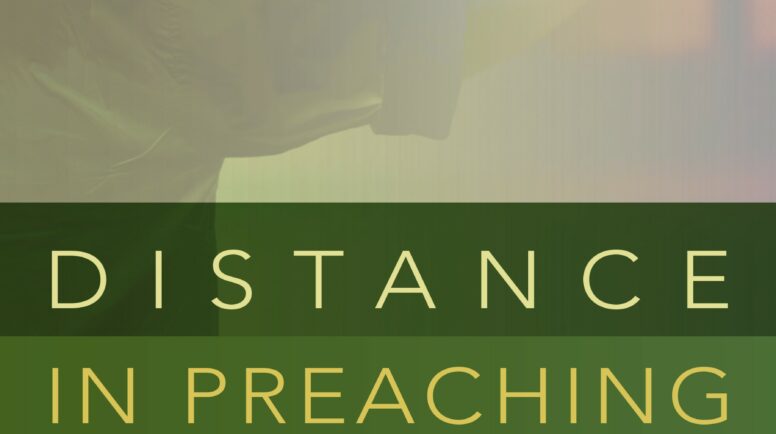
 by Michael Brothers
Wm. B. Eerdmans, Grand Rapids, Mich. 189 pages
REVIEWED BY SEAN MILLER
The preaching world still mourns the loss of Fred Craddock, though his preaching voice, style and profound impact on field of homiletics lives on. Craddock would invite the congregation into his preaching and trusted the hearer to make connections, draw relationships and to imagine. His was a voice that invited reflection, while creating space in the sermon and distance between preacher and hearer. As his student Barbara Brown Taylor once said about Fred Craddock, “He lets us chew our own food.”
In “Distance in Preaching,” Michael Brothers hosts a conversation between the preaching of Fred Craddock and speech performance studies in a consideration of what it means to create “distance.” Distance, or what Craddock called “overhearing,” invites the listener into the preaching moment, yet creates a sermon that says to the listener, “You are sitting in on something that is of such significance that it could have gone on without you.” Brothers notes a recent shift in his own students’ preference for preaching that leaves “room” in the sermon, while a previous generation’s desire to be “drawn in” or “convinced” by a sermon has, as Brothers notes, “all but disappeared.”
Brothers’ conversation between preachers and experts in speech performance studies focuses not on the preacher’s ability to perform, but rather on the hearer to hear and experience a sermon. “Distance in Preaching” invites the preacher not to rely so heavily on the preacher’s affect (where the preacher draws attention to her or his own skills or abilities), but rather the effect of the text — or its ability to “effect a new hearing.” Relying heavily on the preacher’s ability to sway or lure a hearer into the story rejects the dignity of the hearer, Brothers suggests, and robs the hearer of the independent ability to accept or reject the message.
Any preacher who is willing to take a hard look at assumptions about preaching and reimagine a new way to preach and trust the hearer must read this book. Any preacher who has heard Fred Craddock preach or has read his sermons and wants to understand his way of preaching and his why of preaching should read this book. And anyone who wonders what matters in preaching communication today should take seriously this worthwhile read.
For ultimately, preaching is communication, and there is a difference between listening to a sermon and hearing it. Brothers invites us into a reflection on what it means to “hear” and what it takes to preach a sermon into a culture where communication and means of communication are changing so quickly. Preaching that becomes a demonstration of the preacher’s ability to craft an argument becomes just that — a one-sided argument. Preaching that creates distance invites not just a listening ear, but space to hear. Perhaps this is why Jesus so often will introduce a parable with the invitation, “Let anyone with ears to hear, hear.”
SEAN MILLER is the pastor of Potomac Presbyterian Church in Potomac, Maryland.

LATEST STORIES


Stay up to date with the latest news and resources

© Copyright 2026 The Presbyterian Outlook. All Rights Reserved. Privacy Statement. Website by Web Publisher PRO