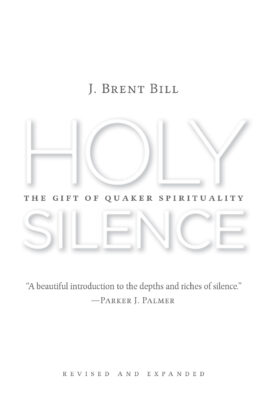
 by J. Brent Bill
Eerdmans, Grand Rapids, Mich. 159 pages
Reviewed by Emily Berman D’Andrea
Quaker author, J. Brent Bill, in his revised and expanded “Holy Silence,” introduces the reader to the great gift of silence that is at the core of Quaker spirituality and practice. This book is dense with explanations of the intricacies of the Quaker tradition, which include silence, queries, practices and more – lest the reader pick up a copy and be lulled into thinking it an easy study and a quick read! There is a lot to digest and ponder and meditate on and sit with and contemplate in this small book.
In the introduction he posits, “We Quakers believe that every moment, every scene, every action is God-imbued and thus sacramental. If, that is, we learn to quiet ourselves and our soul and partake in this means of grace, this visible rendering of an inner and often invisible work of God.” Bill then sets out to help the reader understand what he calls the Quaker sacrament of silence. The reader is given step-by-step instruction as to how to enter into silence and engage silence and thereby receive the sacrament while reading the book. In his words, “This little book is an invitation to experience more fully the life-changing power of sacred silence.”
In the first chapter the author explains how silence is a sacrament in the Quaker tradition in a way similar to how the Eucharist is a sacrament in a sacramental tradition. The next chapters uncover the many facets of silence such as ways to create silence in a world of noise; communal vs. individual silence; and practical steps toward understanding silence.
Sprinkled throughout each of these chapters are six “quietude queries.” A “quietude query” invites the reader to “relax body and mind, breathe deeply, put down the book” and think about a particular question or “query” posed there in the middle of the page. The quietude queries are what help the reader to experience what the author means by the sacrament of silence. When the reader engages in the exercise of the quietude query and does as is suggested in the book — that is, taking the necessary time to think about what has been read — the reader then experiences the kind of silence the author writes about. Stopping in the middle of the page and putting down the book to engage silence and the query takes time and energy and is one reason why this is not a quick and simple book to read.
The final chapters give additional practical steps to experience silence by listing 12 silence practices and listing dozens of quietude queries. These final chapters are useful for those who after having read the book get a taste for silence and want to delve deeper. The glossary on Quaker words and phrases at the end of the book is a useful tool to understand what Bill calls “FriendsTalk.”
The phrase from Psalm 62, “For God alone my soul waits in silence,” kept repeating in my head and heart as I was reading this book. For those readers who with the psalmist yearn for and wait for silence, the Quakers are onto something holy — something sacramental — and J. Brent Bill’s small book helps to guide the way.
Emily Berman D’Andrea is the associate pastor at Lewinsville Presbyterian Church in McLean, Virginia. She leads monthly Taizé worship and seeks to help the community find ways to encounter God through contemplative practices.