 Karen Branan
Atria Books, 312 pages
Reviewed by Currie Burris
Nearly everyone has secrets buried in the history of their family tree, uncomfortable secrets that when uncovered reveal the inherited legacy of who we are and where we have come from. Our character and identity are shaped by the history we receive from our family tree, whether or not we are consciously aware of that history. The complete context of our lives includes the achievements and the sins of those who came before us. Uncovering that inherited legacy reveals new dimensions of our identity and our purpose.
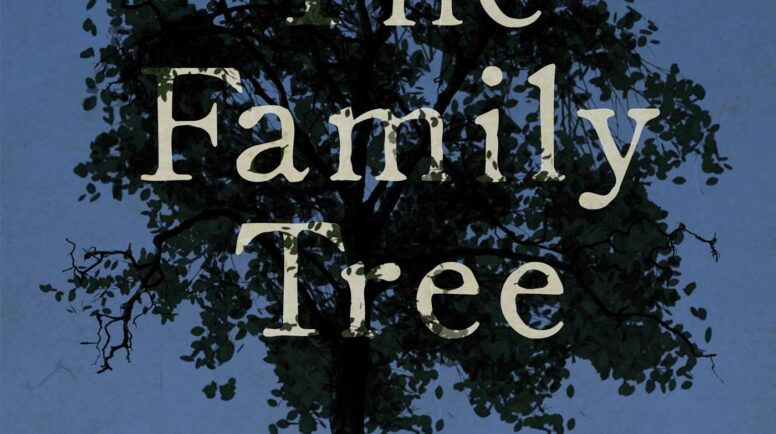
In her book “The Family Tree,” Karen Branan uncovers a secret in her family legacy that is deeply troubling and confounding. She discovers that a lynching, which took place in Harris County, Georgia, in 1912, directly involved her family. A white man was shot dead on the porch of a black woman. That man was the nephew of her great grandfather, the sheriff of that small community. That same sheriff quickly sanctioned the lynching of three black men and one black woman a few days later. Through her research, Branan discovers that the four were certainly innocent of the murder, and that one of those men was also a distant relative. The victim of the murder, one of those lynched and one of those responsible for the lynching were all part of her family.
Branan researched this hidden history for over 20 years. In this book, she traces the history of slavery in that part of the country, the history of emancipation and Reconstruction in Georgia and the history of lynching in the post-war Southern states. But most trenchantly, she reveals the interconnectedness of the black and the white community. The history of slavery, oppression and murder has produced a community that – while segregated and divided by hatred and fear – was nonetheless tied together by blood and mutual dependence. The black and white communities were then, and always have been, family.
And that is why we must read Branan’s book. The events she describes in “The Family Tree” were duplicated in thousands of communities across the southern states (and many northern ones, as well) over almost 100 years. Lynching was an almost ubiquitous reality for every black community. And whether you participated in it directly or witnessed it from a distance, the white community is guilty of the violence and terror inflicted upon thousands of black men and women. And that violence was committed brother against brother, sister against sister.
The secret legacy of Branan’s family tree is the history inherited by all of us. Lynching is deeply engrained in our shared legacy: the black community in pain and horror, the white community in guilt and responsibility. We all play a part in Cain’s murder in the family. This legacy defines who we are and it shapes what we must do about it. We are the murderers, and we are the murdered. We must find a way – through confession and repentance, through love and reconciliation – to bring healing to the family tree.
Currie Burris is pastor of Silver Spring Presbyterian Church in Silver Spring, Maryland.