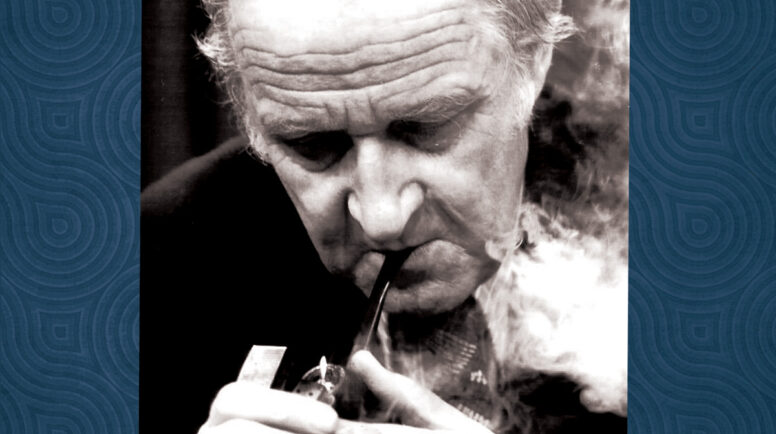
 David H.C. Read (John McTavish, editor)
Wipf & Stock, 272 pages
Teachers of homiletics debate whether or not preaching can be taught. It is possible to teach techniques, of course: here’s how you prepare; here’s how you start and end; use your voice, your hands. What cannot be taught so easily is imagination: how to discern a relationship between an ancient text and the contemporary moment. But that can be learned, too, for those who truly want to learn it. One of the best ways is learning by example. David H.C. Read is one fine model.
Born in 1910, Read grew up in Edinburgh, Scotland. On a scholarship from New College, he studied theology at the three seminaries of the French Reformed Church where he was introduced to the theology of Karl Barth, a major influence. Ordained in 1936, Read became a military chaplain, eventually taken prisoner by the Germans. After the war, he served in various positions in Scotland. He became pastor of the Madison Avenue Presbyterian Church in New York City in 1956, serving until his retirement in 1989.
Except for one sermon from 1967, most of the 40 chosen for this volume were preached in and between 1970 and 1989. Organized by the Christian year (though not lectionary-based), they demonstrate what it looks like to preach with the Bible in one hand and the newspaper in the other, as Barth supposedly urged. Read brings biblical and theological sensitivity to his reading of the temper of the times and how it affected his congregation.
Addressing the problem of literalism in a sermon from 1982, Read took on “scientific creationism.” Citing Job 38:4 (“Where wast thou … when the morning stars sang together and all the songs of God shouted for joy?”), Read asks rhetorically, “Do you want to know what particular tune the stars were singing?” Addressing the issue of how to read a sacred text without confusing it as science, Read describes the evolution of his own struggles. “It was an immense relief when it dawned on me that I was comparing, not just apples and oranges, but the apple as the scientist analyses it and the apple as seen by the artist in a radiant still life.”
In 1981, Read preached about how his mind had changed. He said: “I remain, without apology, a Christian of the Reformed tradition. I still believe in Jesus Christ, not only as my Savior and Lord, but as the Lord and Savior of the whole human race. … But I have learned that it is possible to have this conviction without isolating or offending those of other beliefs, that, in fact, there is much to learn from those of differing traditions.”
He mentions with appreciation Roman Catholicism and Orthodoxy, Judaism and people of no faith at all. “I now see the gospel at work in unexpected places, and unexpected people.” McTavish ends with a list and description of Read’s published books. Those who preach might well read this one together, making careful note of the important moves not easily taught in class.
 Ronald P. Byars is professor emeritus of preaching and worship at Union Presbyterian Seminary in Richmond, Virginia.