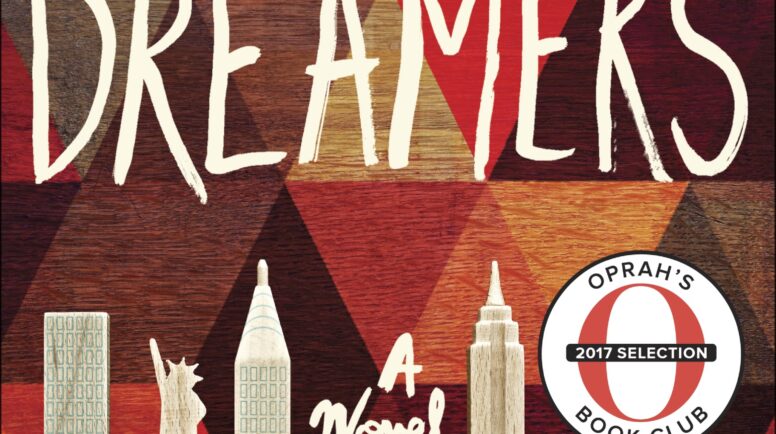
 Imbolo Mbue
Random House, 416 pages.
Reviewed by Leslie A. Klingensmith
“I have no problem with immigrants, as long as they come here legally.”
“Why don’t they just go through the process to get their citizenship?”
“They think they can come here and have everything given to them.”
These are all things I have overheard people say in highly charged conversations about immigration. Such comments nearly always come from a place of security and privilege – usually from people who don’t want to be seen as xenophobic, but who have strong opinions about who should be allowed to live in this country and how “those people” should behave. As the pastor of a congregation that is approximately 25 percent immigrant, my perspective has changed over the past years. I realize, though, that I still have a picture of the immigrant life that is far from complete.
Imbolo Mbue’s “Behold the Dreamers” tells the story of an immigrant family trying to earn a living and become educated in Harlem. It is a novel that calls us to reexamine what we think we know about immigrants. We learn of the love the characters have for their home country of Cameroon, as well as the frustration they feel at the political corruption and lack of economic opportunity there. Mbue takes us inside the lives of her two main characters, Jende and Neni, and we also meet a number of their extended family and friends. Each one of these persons is trying to find a path to stability, or even prosperity. Most are struggling economically and trying to balance work, school and family life. American-born people certainly have those worries too, but Mbue’s characters face it all against the backdrop of immigration law. The threats of arrest, jail and deportation hang over their lives like a menacing specter.
Mbue also courageously explores the fraught relationship between immigrants of color and privileged white people in New York City. The story is set in 2007-08 during the months leading up to and just after the economic crisis. Jende and Neni are financially dependent on a family closely tied to the Lehman Brothers bank. When the bank fails, Jende and Neni are the first to be in jeopardy, even though they bear no responsibility for the catastrophe. As a series of tragedies unfolds, Mbue shows us that feelings of goodwill are not enough when people are suffering.
“Behold the Dreamers” does not paint the immigrant community with overly broad strokes, nor does Mbue pretend that all people who move into the United States have completely pure motives or consistently make good decisions. People are complicated. Desperation can lead people to acts they never imagined themselves doing. We all play a part in the suffering of our immigrant neighbors, but awareness of others’ struggles and following through with our best intentions can put the relationship between immigrants and American-born people on the path to redemption.
This novel will stay with me for a long time. I’ve recommended it to numerous friends and colleagues and plan to lead a conversation about it for a book discussion group in the congregation. “Behold the Dreamers” does what the best books do – gives us a window to understand the experiences of others. We need such books now more than ever before.
Leslie A. Klingensmith is pastor of St. Matthew’s Presbyterian Church in Silver Spring, Maryland.