I am not a fan of weeds. Weeding in Houston (where I live) is an extreme sport, especially in the summer time. Aphids, fire ants, snails — one never knows what will be stirred up in the garden when weeding. Plus, weeds get a bad rap. Just think about the role they take in Jesus’ parables! Weeds choke out the good seed in the parable of the sower (Mark 4:1-9). Weeds that take root with the wheat are given time to grow, but once the wheat is sorted, those weeds will be burned (Matthew 13:24-30). Weeds keep plants from growing and bearing fruit.
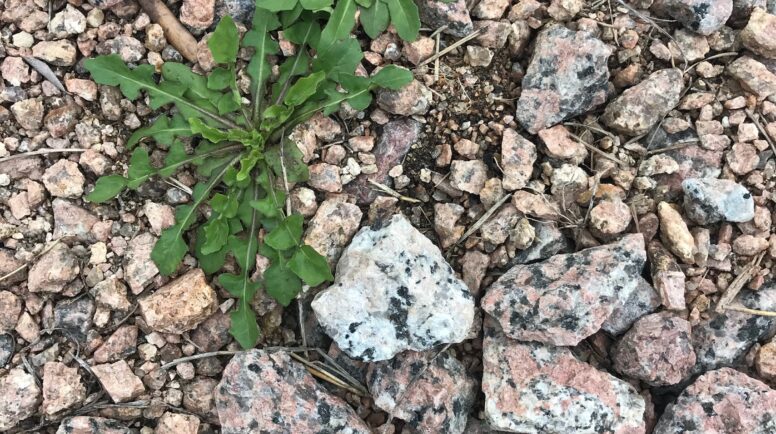
 Recently I was invited, on a cold February day, to do some weeding at a planned community outside of Austin called Community First! Village. This 27-acre property sports a couple hundred RVs and micro-homes that chronically disabled homeless residents call home. The grounds are beautiful: in part because of smart landscaping, and in part because of the hard work of residents and volunteers. Armed with a weeder, I went to work looking for bits of green amongst the gravel paths around the property.
The longer I weeded, the more I came to admire these weeds. Not only were they thriving in winter (and this winter in Texas has been colder than usual), but they found a way to break through rocks, gravel and even a weed mat! Weeds are survivors — they don’t give up, even when we do our best to suppress the life in them.
I found myself praying, “God make me like these weeds,” even as I pushed away rocks, broke through the soil and pulled out the weeds out by their roots. The ability to break through barriers to experience the sun felt like a metaphor — a point of reference as I walk through a season of fatigue and walk with others in the continued process of restoring their lives and homes following Hurricane Harvey.
 Rebuilding is taking a long time in Houston, in part because the community does not have enough experienced contractors (and so homes have been put on waiting lists) and in part because of obstacles set by insurance companies. And Houston is large enough to have far more resources for rebuilding than other parts of Texas or other parts of the world. The longer the delay, the more discouraged people become. It’s not just the restoration of homes that cause discouragement. Members of my congregation struggle with a variety of issues (mental health, addiction, chronic illness). I have experienced deep disappointment as I’ve seen them make progress only to have a significant setback.
What I need (and what I sense others need) in this season is the perseverance that comes from hope: a hope in the good future that God has for us (even if it takes a lifetime to experience that good future), a hope for healing, a hope for new life. We long for the kind of hope that strengthens us to push at the barriers – the rocks, the gravel, the weed mats – so that we can reach the sun. Weeds are a symbol of hope.
I still want my garden to thrive, so I’ll pull up the weeds. But perhaps I will do so in the future with a sense of admiration rather than frustration. “God, make me like the weeds.”
 Rachel Young is the associate pastor of spiritual formation at Clear Lake Presbyterian Church, in Houston, Texas. She is married to Josh, who also serves on staff at Clear Lake Presbyterian as the director of contemporary worship and media.