The gospel of Jesus Christ, our faith and the pronouncements of the church calls us to be inclusive — and to not just tolerate, but affirm and celebrate other cultures, ethnicities, languages, sexual and gender orientations.
However, this is hard to do.
I was born in Cuba. Spanish is my first language —
my “language of the heart.” I feel much more comfortable talking to my family and friends in Spanish. When my wife and I go to Miami (also known as ‘’North Havana’’) it’s as though we have forgotten the English language. By the wayside goes McDonald’s and Burger King and we say hello to black beans and rice, roasted pork and fried plantains.
We are all far more comfortable with what is familiar to us. We enjoy being with those who are like us ethnically, linguistically, socially, educationally, sexually, etc.
On the other hand, the world is getting smaller and more diverse. Also, people are proud of who and what they are. In spite of strong resistance from the dominant cultures, emerging majority ethno-cultural groups as well as LGBTQ sisters and brothers are asserting their uniqueness as created by God — and God said that everything created is good!
In the Gospel of John (4:1-30;39-42), we find Jesus’ encounter with the Samaritan woman. This conversation is unique in many ways. Jesus spends more time talking to her than with any other person in all the Gospels
This is significant because of who this woman is, what she represents and how Jesus deals with her. The Samaritans were a mixed race, part Jews and part Gentiles. There was enmity between the Samaritans and the Jews from the times of Ezra and Nehemiah. They even had their own temple and worshipped God in a different way. The Jews would not socialize with them at all.
Adding insult to injury, the Samaritan of the story was a woman. At the time of Jesus, women were mostly treated as second-class citizens. Once married, their husbands considered them as just one more piece of property. They were really kept “barefoot and pregnant”!
Moreover, even among the Jewish people, males were not supposed to speak to a woman in public. Also, this woman was apparently a “fallen woman.”
To translate all this into our own context so that we can understand the magnitude of Jesus’ action from the perspective of today’s society, this Samaritan woman could be described as being: a prostitute, white trash, a drug addict, an ethnic minority, a homeless person, an undocumented immigrant or a transgender person with the AIDS virus — all these things and more at the same time.
She represented many of the things that dominant society, even today, still despises. She represented everything that, unfortunately even the church, tries to stay away from.
But Jesus could not care less about human-made social barriers. He wanted to show her the love of God in a very concrete and practical way. At the end of the encounter with Jesus, this woman despised by all, went back to her village and founded the First Presbyterian Church of Samaria.
Moreover, Jesus also helped her maintain her dignity as a person. Not only did he sit down and chat with her, but he accepted water from her hands. This woman had something precious to give, to share, and Jesus accepted it.
Jesus, the Messiah, God’s own offspring, became as vulnerable as a thirsty human being can be in order to reach out to this outcast with the love of God.
Want to be truly an intercultural person? Accept water from a stranger.
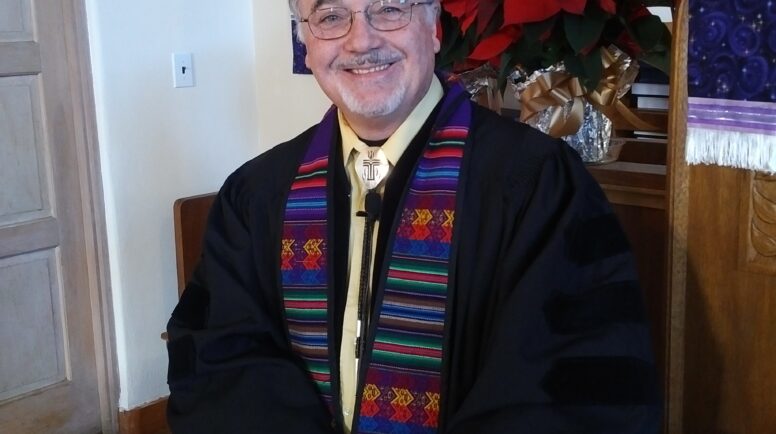
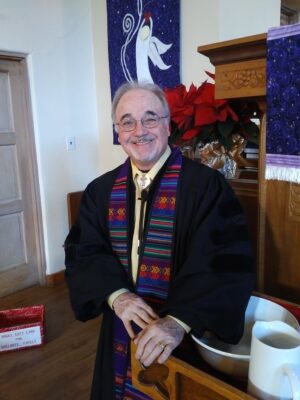 ANTONIO AJA is the pastor of Westminster Presbyterian Church in Santa Fe, New Mexico, and moderator of the Hispanic/Latinx National Presbyterian Caucus.