 Gradye Parsons
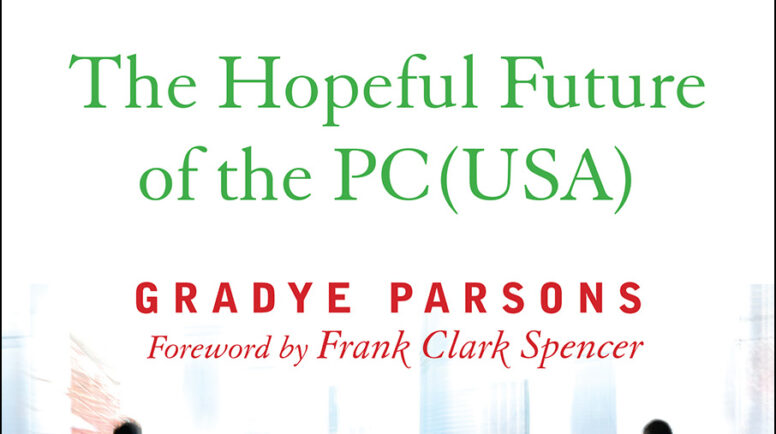
Westminster John Knox Press, 88 pages
Reviewed by Linda L. Lanam
Since the 2015 publication of the book “Get Big Things Done: The Power of Connectional Intelligence” by Erica Dhawan and Saj-nicole A. Joni, the adjective “connectional” has been too carelessly attached to a multitude of nouns. But in his little book, “Our Connectional Church,” Gradye Parsons not only uses the word correctly, but also demonstrates its meaning in a way that is unique and useful. As a resource for a congregational reading list or as required reading for pastors in need of ideas for imaginative and innovative ministry, Parsons has added one more entry to the lengthy list of his services to the Presbyterian Church (U.S.A.).
The book actually grew out of the tricentennial celebration of the Presbyterian Board of Pensions as part of the Board’s commitment to taking “the long view.” So, at the request of board president Frank Spencer, Parsons, who was concluding his service to the denomination as stated clerk, was engaged to examine what lies ahead for “this particular expression of Christ’s Church.” For Parsons, the efforts turned out to be “the best retirement transition project a stated clerk ever had.” In developing the stories in which he fleshes out the statistics offered by Spencer in his foreword, Parsons visited with pastors and members in a number of congregations across the country as well as leaders of the national church. In the process of telling their stories, Parsons offers a snapshot of the church today and draws connections to what he calls a “Presbyterian ethos,” which he analogizes to an “aquifer,” and links that ethos to our Book of Order in a way that gives that traditional text new life and meaning for the 21st century.
The book, which is more pamphlet than tome (something that makes it especially useful for group study), begins with the particular connectional metaphor that runs through the pages that follow: “the Presbyterian aquifer.” This underground resource consists of the particular way that Presbyterians live out our faith: respond to God’s grace with gratitude expressed in service, welcome questions, the way we structure ourselves, identify our leaders, respect education, and emphasize preaching and the continuing importance of worshipping as a community. Parsons sees that while these characteristics are shared by congregations across our denomination, they manifest themselves in a variety of ways both in and beyond the church building.
And the examples of that variety offered in “Our Connectional Church” fulfill what Shawna Bowman, a pastor in Chicago, says is the call “to find out what works and report it out.” Parsons takes us into big cities (Chicago and Charlotte and Atlanta), and small ones (Spring City, Tennessee) and demonstrates that there are connections being made within them and between them and the world around them. Parsons is honest in acknowledging that there are a number of Presbyterian churches living in “survival mode” with very little energy for focusing on the future. But he also emphasizes that what sustains and supports the growth of any church, whether it is “a congregation of ten members with no indoor plumbing or a large congregation with a fat endowment,” is taking the connectional risk. If all you read is the final chapter, you will come away sharing some of Parsons’ hope for “the future of our connected life.”
Linda L. Lanam is a ruling elder at Old Presbyterian Meeting House in Old Town Alexandria, Virginia, and director of the Academic Resource Center at Virginia Theological Seminary.