Guest commentary by Jonathan Freeman
This is my confession.
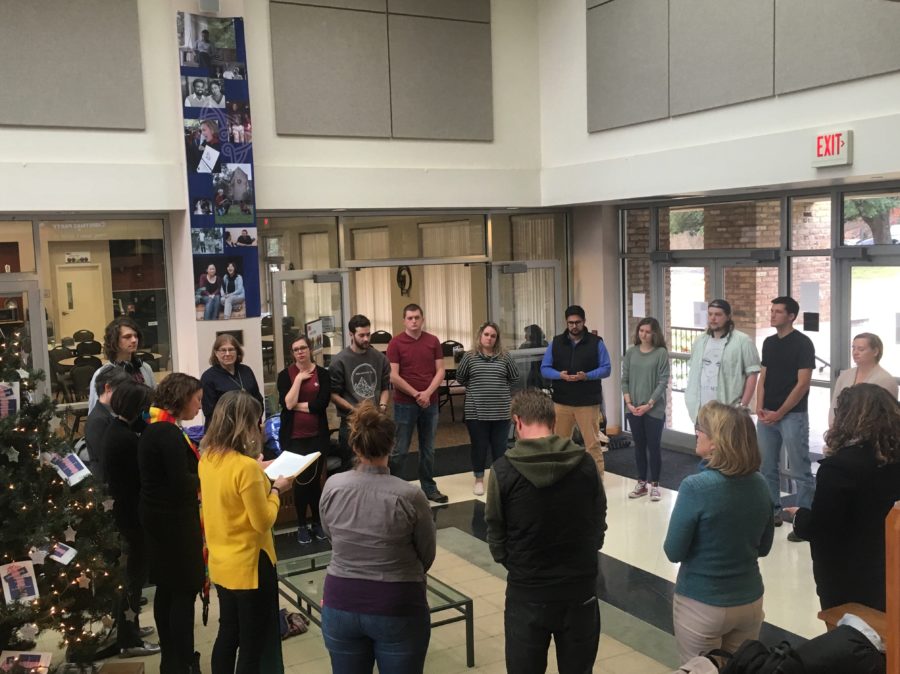
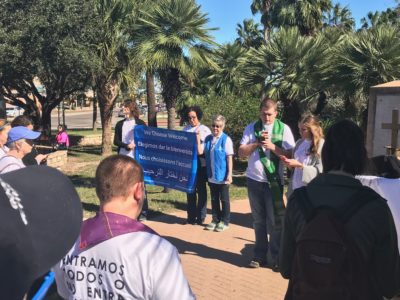
Earlier this month I joined a delegation of fellow Austin Presbyterian Theological Seminary students, seminary faculty and ministers from nearby regions on a trip to McAllen, Texas. There were as many reasons for going on this trip to the U.S.-Mexico border as there were people making the trip, but the profound connecting reality that we shared was an awareness of the tribulations of our neighbors.
Each day, people come to the border seeking asylum, and each day, these same people are met with fear and hatred from the nation they had hoped might give them refuge. We went to offer whatever we could to welcome these asylum-seekers, as well as to learn. As a student, I can attest to the conviction that my theological education would never be complete if I ignored the calling cry of neighbors in need. Though I did go with the full hope that the trip would be an opportunity to learn how God is calling me to love my neighbor in light of this complicated and tragic migrant crisis, I have to admit that the sheer weight of what I learned is something I am still struggling to process.
It is one thing to hear that the legal procedure for claiming asylum is needlessly complicated, and that the immense challenge it presents is causing people to suffer in freezing detention centers, to be separated from their families and, in most cases, ultimately to get sent back into the danger from which they were fleeing.
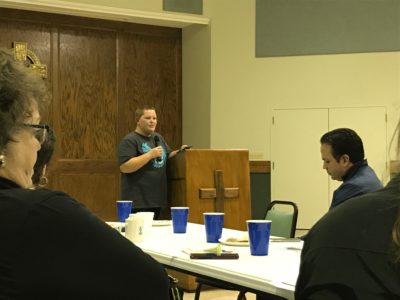
It is quite another thing to visit a small respite center, overflowing with hundreds of exhausted families, and spend your morning building tables alongside a small group of young men there who have volunteered to help you.
It is quite another thing for those men to share their names with you, and for them to manage to explain how you screwed in the bench seat wrong and fix it for you, all despite the fact that you don’t speak a common language.
It is quite another thing to consider the fact that they have travelled farther than you can even fathom in order to be here, and see the fatigue and pain in their movement despite their eagerness to help you.
It is quite another thing to be reminded in a moment that over the next handful of days, each of these men will likely be deported, and executed by gangs almost immediately upon their return.
Thanking them for their help, and the brief prayer you participate in afterward, hardly seems to touch on the reaction that is necessary in a moment like that.
 My confession is not simply that bad things are happening, nor that we all ought to feel bad because of that. My confession is that, despite my belief in a God who sacrificed everything in order to demonstrate perfect love for each of us, I have barely begun to offer anything in order to eliminate the abuse of power and privilege happening at our southern border, and that I cannot continue to prattle about the beauty of the Imago Dei while ignoring the suffering that such abuse propagates. Because of my silence and inaction, I must pray for forgiveness, and for the courage and guidance to repent meaningfully.
That is not how this ends though. As a faithful Presbyterian, I would feel incredibly uncomfortable leaving any confession without at least something in the way of an Assurance of Pardon. So here is the Good News of which I feel assured:
God is present at the border, and no sin of mine or of my nation’s could ever change that. I believe God has been present with the migrants at our border for every step of their journey, in the strength they have been able to lend one another when it seemed impossible to carry on, in the workers at respite centers like the one we visited and in the community they have formed, whose indomitable spirit has made it impossible for me to believe things will not get better.
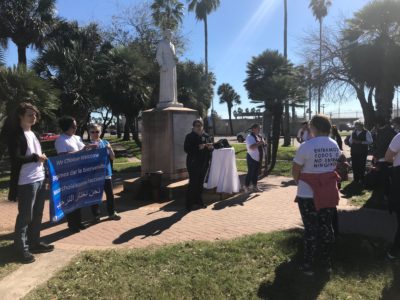
Joy is inevitable, love is irrevocable and God is irrepressible. The same God who healed the lame and the blind is walking with asylum-seekers today, and I was lucky enough to catch a glimpse of God’s glory when I met some of them. Most congregations in the U.S. are starved for the sort of koinonia that is simultaneously present at and making its way toward our border today. The sort of profoundly caring and thoroughly redemptive love that is evident in the resilience of the Mobile Congregation (to borrow my professor Gregory Cuéllar’s apt description of the migrant community) echoes the divine dance of the Trinity in ways of which many of our comfortable congregational communities cannot conceive. When they journey our way with a determination and vigor that is unfamiliar to us, they are not threatening us, but offering us the chance to learn what it really means to be the church.
For people who know me well, it is no secret that I generally dislike the season of Advent. Maybe I have just been spoiled by the theology of God’s immanence with which I grew up, but I have never been a great fan of the idea of waiting for God to be with us. In a world so filled with injustice and suffering, it seems like an unforgiveable waste to have a season about waiting. Though I have long known that such a mentality was not supposed to be the entire point this time of year, I always found it hard to believe the church really intended to make anything more of it than that, simply because I rarely saw it do so. After our trip to the border this Advent though, I have begun to consider things somewhat differently.
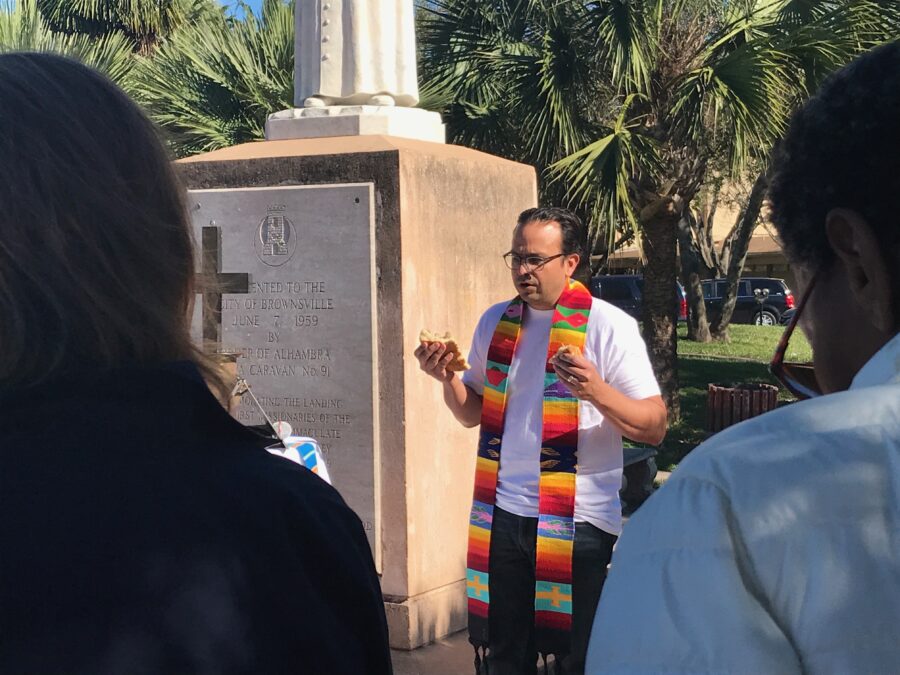
This Advent, I was not given the chance to wait for God, but to go and see the work that God is doing right now. Though the work is ongoing, the Worker is undeniably present. I was certainly fully aware of the horrific state of the world around me in the moment, but I still could not deny the hope and fulfillment that I felt laying on the cusp of the moment.
I still do not believe any of us are called just to wait for God to change things. But I have come to believe in our need to enter into the places and moments where we can know things will change because of God’s unceasing work through us.
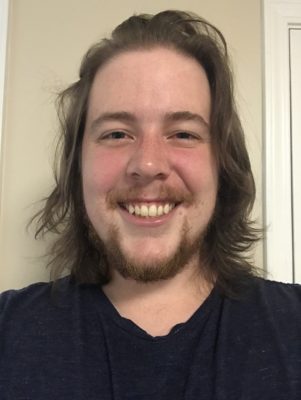 JONATHAN FREEMAN is an M.Div. student at Austin Presbyterian Theological Seminary. He grew up in Atlanta, and is a member of Central Presbyterian Church in Athens, Georgia.