
We asked our bloggers to share what they have learned about managing conflict in ministry. Here are their reflections.
In current times, it seems that the smallest of disagreements can lead to huge divisions in our lives, in our families and in our churches.
I have been blessed in that I haven’t had to work through any major conflicts in my ministry thus far. I have had to lead through minor conflicts in a variety of contexts, which are challenges in themselves. I’ve noticed that conflict is always tied up with two powerful emotions: fear and hurt. Fear and hurt can lead us to a profound sense of sadness, which in turn can manifest itself as anger. When we are angry, we are much more likely to engage in behaviors that turn from disagreement to conflict.
Emotions can make even the most rational, loving, level-headed person say something hurtful. I hope that we rarely (if ever) choose our words with the intention of hurting another human being. Yet all of us unintentionally have hurt someone with our words. This is especially true when we disagree on something. Hurt can really stay with a person or congregation. I have worked with congregations after they have worked through devastating conflict, and the hurt of it all lingers. Conflict can leave chaos and a trail of emotional and institutional damage in its wake.
Conflict can be outright terrifying. I’d often like to hide under my desk rather than take it on. Yet, if there is something going on with the potential to break out from disagreement into full-on conflict I need to get ahead of it. It might be uncomfortable to address, but taking it head-on helps to get it out in the open so conversations can begin to happen. And conversations should happen, even when uncomfortable. As followers of Jesus, we should always encourage transparent communication.
Let’s take an example that is familiar to many congregations. Someone suggests the church consider purchasing new hymnals and the worship committee begins to consider if this is a purchase they will recommend. This typically yields a variety of reactions: some folks will be excited to go full-steam ahead, others will be concerned about costs or usability. Then John Doe will dig in his heels and object to just about everything from the color of the cover to the songs included, but especially about the songs that were left out. Jane, who was so excited about the hymnal, begins to get upset. Emotions start to run high and the conversation gets heated. Before you know it you hear the dreaded, “Well, p eople are saying ….” As a church leader you might recognize that Jane is a talented musician who needs the new challenges and the new depth of the proposed hymnal. She is searching for a new energy in her faith that she hasn’t found yet. You may also know that John recently lost his wife and his son moved 2000 miles away where he is raising a family. You also know that John recently had to get a smartphone that he just can’t seem to master, and he had to give up driving. Perhaps John isn’t so upset about the hymnal as much as he is fearful he that what is dear to him is losing relevance in the world. It would be so easy if John said, “I fear I am becoming obsolete and I just need to cling to ‘The Old Rugged Cross.’” Chances are John and Jane will never say these things directly. Then you have Alma, who is mad (or actually hurt) because no one asked her about this new hymnal! Before you know it, you may fear finding a brawl in the parking lot after worship because emotions are running so high around the potential for a new hymnal. Not one bit of that brawl would actually be about the hymnal. It is about fear and hurt. You, dear leader, get to figure it all out without — and are expected to with humility and grace.
Communicating well helps alleviate some of the fear and hurt. I’ve learned if communicate clearly that this is just a consideration, it leaves less room for the rumor mill to start up. Even if I can never “call people out” on the underlying emotions I see bubbling up, it helps to understand where John, Jane and Alma are coming from. (This is easier said than done!) Remember, we are all human, we all make mistakes, we all need grace, we all say hurtful things; when you learn you have hurt someone, apologize (with out defending yourself)! If we can get past all of this we might be able to actually consider the new hymnal, a change in worship or what it means to be the church in the world we find ourselves in.
I am not sure the church will ever be completely without conflict, but we can take the direct communication that is modeled in Scripture and our ability to use compassionate words to help us through conflict. Remember, even in the pain of conflict, God is with us, and we are always growing. Peace be with you and yours!
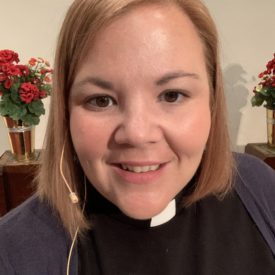
 REBECCA GRESHAM-KESNER is pastor at Faith Presbyterian Church in Medford, New Jersey. Outside of church and family life, you can find her in nature, finding fun ways to be creative or asking awkwardly deep questions of people she just met.