Two ice cream trucks came to our community when I was a child. The first sold Eskimo Pies, Bomb Pops and Orange Creamsicles. With a quarter, I could cool myself down nicely on those blisteringly hot Atlanta afternoons.
One Saturday a month, there was a second ice cream truck. Actually it was a bus. The occupants would distribute as many popsicles as we could consume from the bus windows. Free!
Once we were all sticky and sugar-drunk, one of the occupants would read stories of how God loved the world and how God gave us Jesus. For one last handful of Jolly Ranchers, we would sing “Yes, Jesus Loves Me.” Some of my friends became members of the church that gave away popsicles.
Though I enjoyed the freebies, I never followed them to church. My parents were leaders at another church and I had been a choir member since I was 5.
We moved into this new community a few years earlier from a government housing project on the opposite side of Atlanta. My mother promised God that if we could ever have our own house, she would dedicate it to God.
Mother’s promise was in response to our deliverance and exodus from the deplorable conditions of “the projects.” My father saw the future of this failed government experiment and got his wife and son out of there pronto.
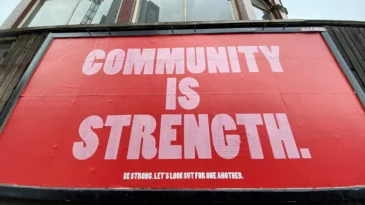
Mother saw her new community as a place in which she could be in daily relationship with her neighbors and serve them better than a church that descended upon them for a couple of hours a month.
As Obery Hendricks suggests to the church in “The Politics of Jesus,” my parents saw the people’s needs and treated those needs as holy.
I’m sure “The Sugar Bus Church” meant well, but the children didn’t need massive doses of sweets. Their young parents, many of whom worked two jobs, rarely cooked nutritious meals. My parents were 20 years older than the parents of most of my friends. My mother was also clinically disabled. My father converted our whole backyard into a garden. Though I didn’t have much play area, our neighbors had fresh vegetables and well-cooked meals weekly — and sometimes more often.
Mother became the PTA president. She was at my school three to five times a week. The first demonstration I participated in came when she discovered that our school books were almost 10 years old.
Dad was not a perfect man by any stretch of the imagination, but he taught by the best examples he knew. While most men in our community opted to spend a little extra time partying, Dad was home every night. He was also up at 5:30 a.m. every Saturday morning doing yardwork until sundown with his son “happily” at his side.
In Matthew 28:19, Jesus instructed his disciples to go forth and matheteuo (make disciples) of all nations. As any former student or professor knows, pedagogy that utilizes examples works much better than manipulative or coercive instruction.
At Dad’s funeral, several of our neighbors expressed thanks to him for helping them to mature by his example. One of them came to church with Dad one Sunday. The guy ultimately became a deacon and later a minister. By being at the school so often, Mother met a lot of parents. Some followed her to church. Some joined.
My parents gave their neighbors the same love that they gave themselves and their own. They treated the needs of the people as holy. And the people reached other people — they became disciples.
In other news, did I mention that my mother was at my elementary school almost every day? And did I mention that my backyard was a tomato, collard green, okra and corn field? You disciples owe me a childhood! Or at least some free ice cream!

CARLTON JOHNSON is the operations officer for Johnson C. Smith Theological Seminary in Atlanta and associate minister at the First Afrikan Presbyterian Church in Lithonia, Georgia.