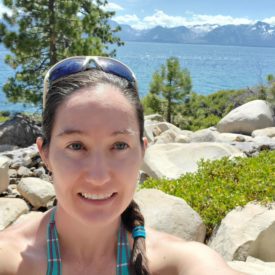
I vividly recall the excitement I felt when first applying to ministry positions upon graduating from seminary. I decided that (besides Wyoming) I was open to wherever God might call me. I eagerly began my search, but I quickly became discouraged. It seemed as if almost every position said: two-five years experienced required. Should I just apply anyway and explain that I had other industry experience (I previously worked in the business sector prior to switching careers)? Did my internship experience count? How does one gain experience if they have to have experience to get the job in the first place?
It seems that nothing can really be substituted for experience. For that reason alone, I will always be grateful for my first church that took a chance on an inexperienced pastor (right out of seminary) and allowed me to gain that valuable first couple years (and more) of experience.
Experience, whether we like to acknowledge it or not, has a direct relation to faith. As we experience different spiritual circumstances in our lives, our faith grows. And it works both ways: Relying on Christ in the toughest times encourages us that we can get through times that pale in comparison and, on the flip side, spiritual highs (mountaintop experiences) can keep us going when we are walking through valleys. When running, I often draw on my past race experiences to get me through new races. “This isn’t as bad as the time I got hailed on, or when the entire last eight miles was a windy downpour,” I might think. Or I might remember how great I felt when I completed my previous race, inspiring me to keep going even when I am tired and feel like giving up.
It is almost undebatable that experience serves to grow our faith, but our faith cannot and should not be based solely on experience. When that first church called me as an associate pastor, they too were exercising faith. I came with no paid ministry experience, yet they experienced God calling me as their pastor. Now, they were not entering into the relationship totally blind; they did their research — checking out my transcript, calling my references, presbytery and even Googling me. But, part of faith is trusting the unknown to a God of providence.
I recently put together a Bible study on discernment, focusing on resources from both John Ortberg and Ruth Haley Barton. If you know anything about these two authors and spiritual leaders, you might expect that their teachings on discernment would be quite different — and you would be correct. Ortberg’s position was kind of like the experience part of faith — he encouraged believers to root themselves in the Word of God, studying who God is, how God works and knowing Christ more intimately. If this is done, his position on discernment is that if someone knows the Triune God both intimately and comprehensibly, then she will be able to consider paths put before her in life and discern which one this God that she knows will direct her toward. Barton approaches discernment more like a “leap of faith.” She focuses on being open and aware of the Spirit’s leading, often looking for ideas or paths that come from outside of what we would have explored on our own to determine where God calls us.
So should we trust God in the unknown or draw on past experience? “Yes,” it could be answered. It is both and. Sometimes our faith takes us outside of our comfort zone, and other times it requires us to look backwards in order to move forward. Sometimes faith makes no sense, and other times it fits perfectly. Sometimes faith has us jumping into something brand new, and other times it has us staying/remaining completely still and waiting on God. If you’re like me, you find one aspect far easier than the other.
A few years ago I struggled with some medical challenges. I was really worried about a certain test and a possible diagnosis. And my fear was causing me anxiety and worry. I confided in my sister. “I know you’re really scared,” she said. “But you have had this same test many times, and every other time it has worked out. So why would you think this time around would be any different?” Even though I have a steady, dedicated personality, my faith personality struggles more to stay put and draw on experience.
Like the church that insists that God would never invite them to call a pastor with no experience, or like the church that struggles to make any move at all without a sign or spiritual nudge, we all benefit from remembering and reminding ourselves that faith is made up of both trying a new thing and drawing on past experience. And often, when you think you have one piece figured out, God challenges you, giving you an opportunity to exercise your faith by embracing the other.
Still, real Christian faith isn’t confidence in past experience or confidence in the future, but confidence in Jesus Christ. But we can be grateful and mindful of the many different facets of faith, experience and risks that lead us to Jesus Christ.
 JULIE RAFFETY serves as the pastor at First Presbyterian Church in Franklin, New Jersey. Julie is a violinist, aspiring writer, snowboarder, runner, identical twin and crazy about popcorn.