Mystery and metamorphosis: What does wonder have to do with transformation? William Brown, professor of Old Testament at Columbia Theological Seminary, invited Big Tent attendees to ponder that question based on the text of Romans 12:2, “Do not conform yourself to this age, but be transformed by the renewal of your mind so you can discern what is the will of God – what is good and pleasing and complete.” (Brown’s translation)
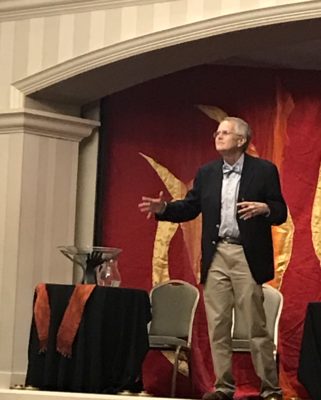 During Big Tent Bible study August 2, Brown emphasized our call to be different from this age, this time in which we live. Projecting a series of images from recent events on the screens, Brown invited participants to call out adjectives describing our current age. Words like “tragic,” “sad,” “violent” and “broken” resounded through the ballroom, making the need to somehow be different for our current time period abundantly clear.
Noting that the Greek word for “transformed” is the same as that for “transfigured,” Brown pointed to texts like that from 2 Corinthians 3:18: “And all of us, with unveiled faces, seeing the glory of the Lord as though reflected in a mirror, are being transformed into the same image from one degree of glory to another; for this comes from the Lord, the Spirit.” He urged listeners to remember that transformation is never done alone, but only in community and through the power of God. Such transformation truly is a mystery, one we are called to steward. “We are managers of mystery,” Brown said.
Unpacking the word “metamorphosis,” Brown called attention to the prefix “meta,” translated as “across” or “with.” “There is some kind of “with-ness” that comes with transformation,” Brown noted as he read a series of passages from Genesis to Revelation featuring the preposition “with.”
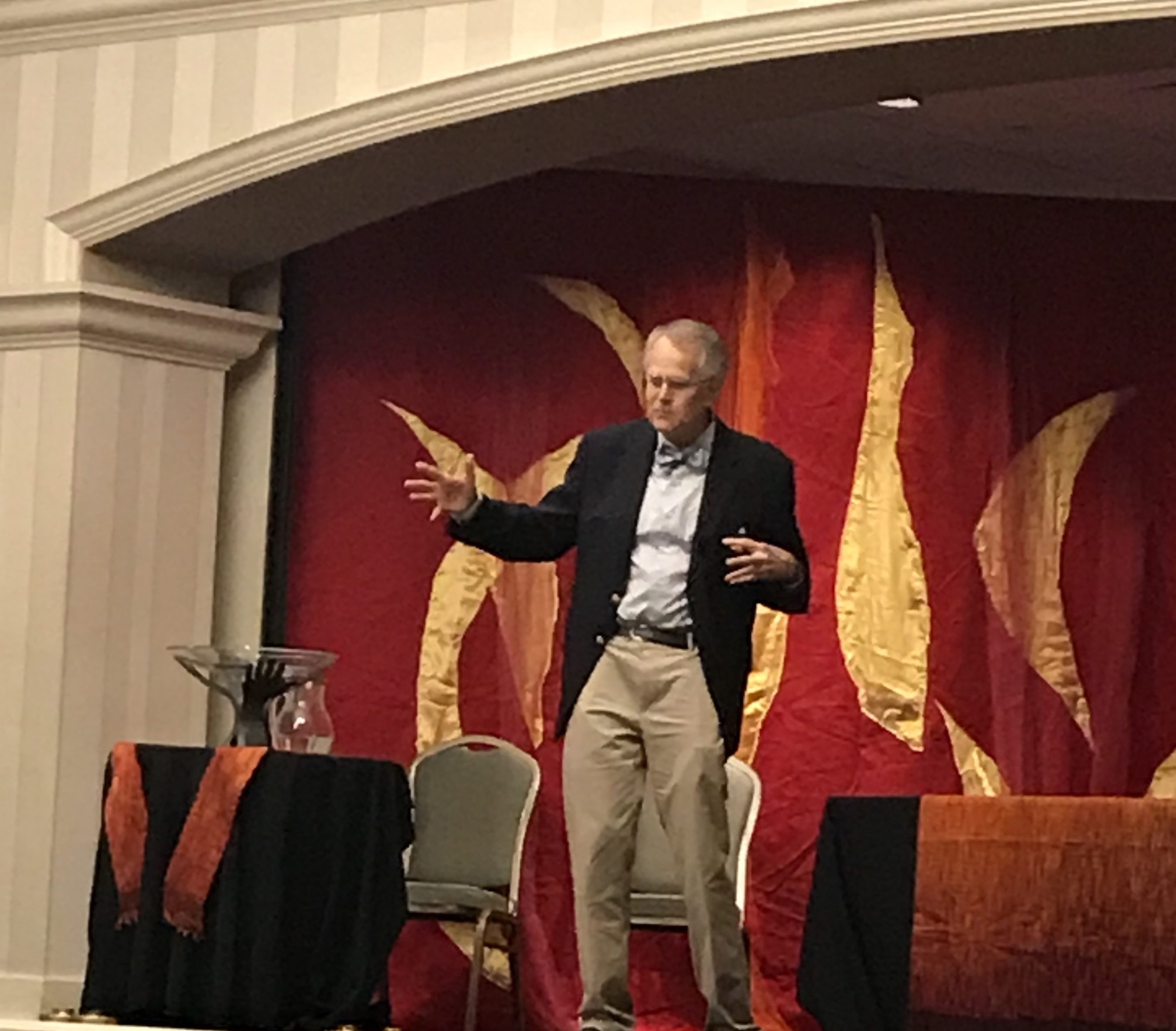 But what does such metamorphosis look like? According to Brown the affects of a transformation without triumphalism are marked by grief for the state of our current age; humility in knowing that we do not, cannot, bring about transfiguration on our own; joy because God’s Emmanuel project is God’s gift of joy to the world; and, finally, love which must entail justice. Such transformation requires persistence – a very Presbyterian trait, Brown noted.
Perhaps, Brown posited, we might slightly revise the well- known phrase, “the church reformed, always being reformed” to “Ecclesia transformata, sempre transformada!”
The church transformed, always being transformed. Certainly, an interpretation worth wondering and dreaming about.