Look: Here we are in West Virginia, the heart of coal country.
This is a place where Presbyterians could give some answers to the “What can we do?” question about climate change.
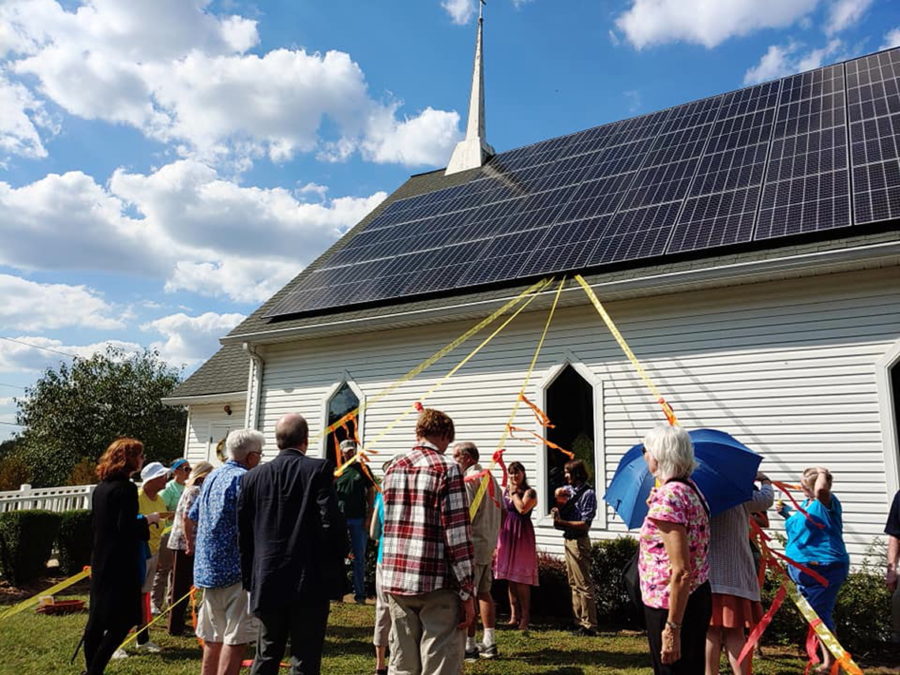
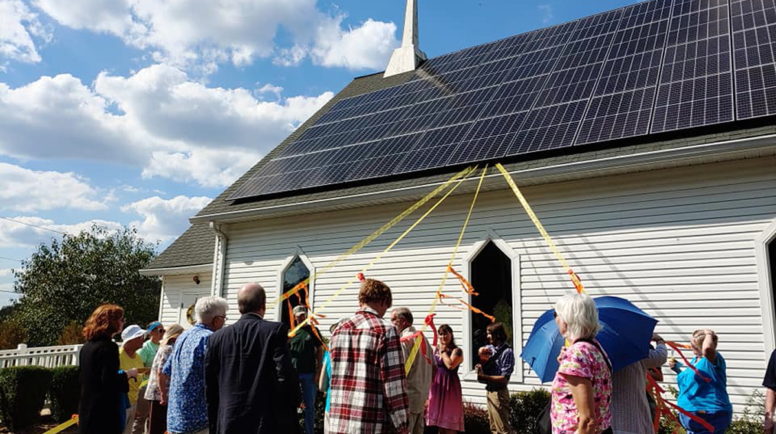
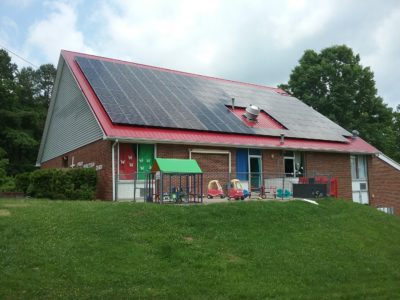
Here’s the eight-member Spencer Presbyterian Church – eight members! – which a year ago took out a Restoring Creation loan from the Investment and Loan Program to put solar panels on the roof of the church. Elders from the congregation, where most of the members are age 70 and older, had to convince a committee of West Virginia Presbytery that they’d live long enough to pay back the loan, said Brenda Wilson, one of the leaders of that effort.
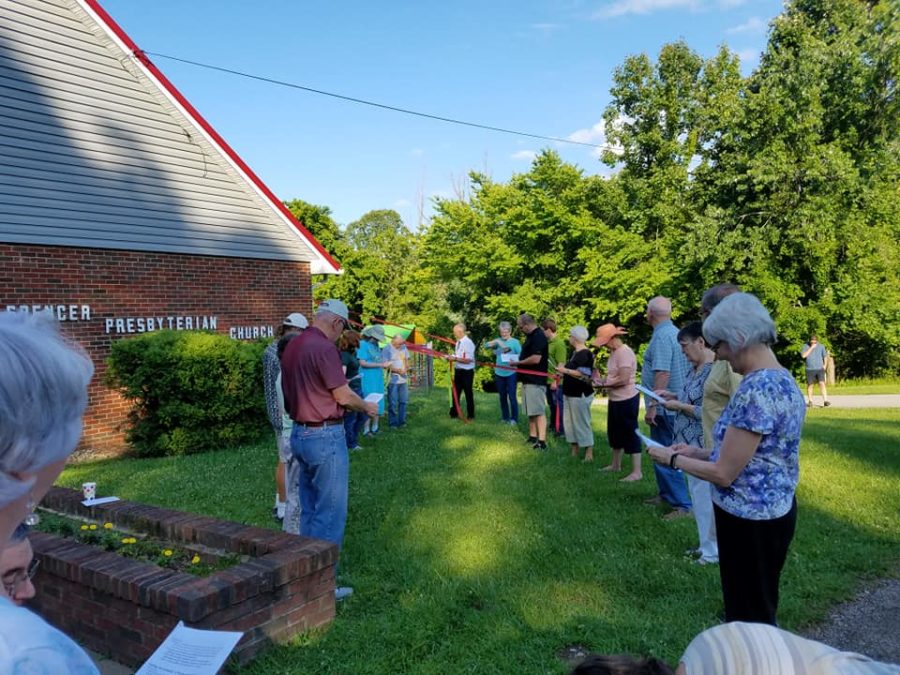
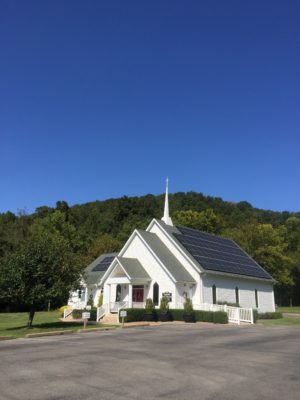
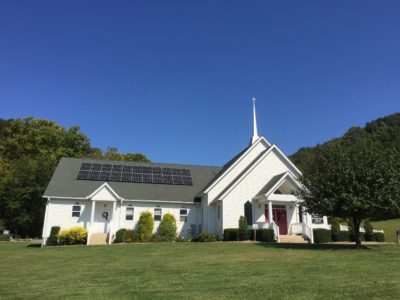
And here’s the 20-member Glenville Presbyterian Church, which took courage from the Spencer initiative and used endowment funds to pay for their own solar project — dedicating it on September 22, during the week when young people from around the globe took to the streets in Climate Strike actions, demanding that world leaders do something definitive now to stop global warming.
“It was perfect timing — God has a plan,” said Kayla Walsh, a mother of two preschoolers who was one of the instigators of that project. “We follow the theory ‘think globally, act locally.’ … We have a responsibility to care for God’s creation. It just makes sense. Who wants to drink dirty water? Who wants to look at trash?”
Walsh moved from near Baltimore to West Virginia, where her mother’s family is from, so her children could grow up closer to the land. “We’re killing the land we’re living on,” she said.
The Spencer congregation decided to go solar after two families in the congregation had already done so – deciding it was worth an extra $100 or so a month to pay off the loan in order to do the right thing for the climate and set an example for the community.
“All of us are environmentalists,” Wilson said. “I worry about my grandchildren. I’m going to make it through before this whole thing goes belly up … but for my grandchildren, they didn’t ask to be born into this world where you’re going to get wildfires all the time, and sea levels rising, and migration of desperate people who don’t have a place to live or don’t have food because of climate change.”
Both the Spencer and Glenville congregations used a company called Solar Holler to install the panels, and got advice from Robin Blakeman, a Presbyterian Church (U.S.A.) minister who serves as project coordinator for the Ohio Valley Environmental Coalition.
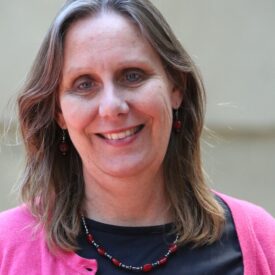
Blakeman is an eighth-generation West Virginian, who says her work on environmental issues – which includes some faith-based initiatives – “feels like my real calling.” She has worked, for example, to help establish a West Virginia chapter of Interfaith Power and Light, and to protect small family cemeteries from being desecrated by mountaintop removal.
As important as she considers this work to be, however, Presbyterians are not always sympathetic. “Most churches in the presbytery don’t want to hear much of what I have to say on environmental issues,” Blakeman said. “In most cases in West Virginia Presbytery, it would be very unpopular to preach a sermon on climate change or the need to preserve our forests.”
Activists say the most urgent work on climate change is happening in environmental coalitions, not in the church.
“I feel like the work with nonprofits I do is a new kind of church, in a way,” Blakeman said. “I have met some of the most deeply spiritual people in the state through the work I do, and hardly any of them are affiliated with a specific church. … I feel a lot more connection to those folks than I do to people in the pews who sit inside a building on Sunday mornings and ignore what’s going on in terms of environmental degradation. I feel pretty strongly that we’re called to preserve and care for this earth. We need a revival in the church about our connection to the earth.”
As frustrated as Blakeman sometimes feels – she’s seen Presbyterian legislators with financial ties to the energy industry vote against environmental legislation, and has heard “some bad theology in terms of people thinking that God is out there somewhere up in heaven, separated from this earth” – she has also has hope.
She finds hope in the efforts individual people of faith make to cut their carbon footprints, and in the certainty of congregations like Glenville and Spencer that they can make a difference.
“Both of those churches are extremely small, but they both have big programs that benefit children in the communities,” she said. They are looking to the future – trying to find ways to cut energy costs now and contribute less to global warming, so they can be around to serve their communities for years to come.
And she finds hope in the younger people who are speaking up and trying to change public policy.
“Older folks have been quiet long enough,” Blakeman said. “Quiet and polite. … If you think speaking out on the environment is political, look in the eyes of the kids. The environment is their future. Church is going to become increasingly irrelevant if they don’t address these issues that are literally robbing our children of their future.”