An undercurrent of fear runs below all of us these days.
Images of exhausted health workers, projections of spread and the numerous unknowns keep us awake in the middle of the night and uneasy in the middle of the day. We are careful to keep our distance as we glance across grocery aisles for a mutual contact of cautious acknowledgment.
We have become proximate strangers. Perhaps, we always were. Yet, now the mandated and anxiety-filled space between us is awakening our common desire for connection, our need to know that we are not alone.
A recent thread of posts on my neighborhood app signaled a yearning for community.
A suggestion was made that the local church ring its bells in the evening during the stay-at-home order. “The church bells will remind everyone in the neighborhood that they are not alone.” Another wrote, “It will encourage all of us to join our thoughts and prayers together as one.” Another replied, “I am not religious, but my fears would welcome church bells.” This is the same neighborhood app once used to report coyote sightings and complaints about unidentified parked cars. The recent online discussion about church bells was sandwiched between tips on where one might be able to find paper goods and eggs.
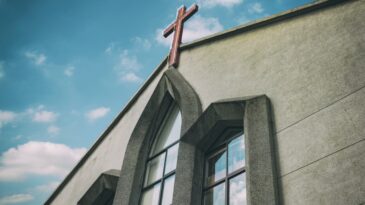
The local church bell is ringing again. At 6 p.m., I hear the faint echoes filling the dusk sky with dignified calm, causing me to pause, to step out of my front door and lean my ear, yearning to catch more of its clarion call.
The Angelus is a prayer recitation practiced in the Catholic tradition. At dusk, the church bell would ring to signal a time for this prayer. This moment of devotion is captured in a well-known painting by Jean-François Millet, “L’Angélus.” Bells resound from the distant church tower. Two farmers, husband and wife, put down their earthly tools, their modest harvest of a handful of potatoes at their feet. They pause from the labor of their hands and bow their hearts, returning their day, their livelihood, to God.
This painting hung in the home of my parents-in-law. When I lived with them for a short time, I would see them in this painting when they returned home at my 7 a.m. breakfast hour. They rose every morning at 4:30 a.m. and headed to church for a daily dawn prayer service. This was their practice for 40 faithful years of ministry. I saw what quiet devotion and steadfast faith look like — in still life and in living witness.
Not every neighborhood will galvanize around a suggestion that the usually unnoticed little church begin to ring its bells. But I can’t help wonder if the fears running under all us would be stilled by more church bells ringing in cities and towns, proclaiming a reassurance that those of us professing faith in God remain steadfast in our prayers.
Perhaps, those who are “not religious” can lean on those who pause to pray. Perhaps, we can borrow one another’s faith.
I’ve borrowed the poetic faith of John Donne for this column’s title. Commonly attributed to another literary wordsmith, Earnest Hemingway, “to whom the bell tolls” is from Donne’s meditation written during his prolonged illness, a meditation that begins with “no man is an island.” Bell tolling was an expression of a community’s mourning. A single, slow strike followed by silence.
The world is enduring a communal sorrow. Somewhere in the waiting, in the listening, in the in-between silence, in the borrowing and in the offering, we will begin to collect enough hope for these trying days.
 Charlene Jin Lee is a practical theologian and community activist based in Los Angeles.