
Guest commentary by Robert P. Hoch
The British composer John Rutter has just completed a new choral piece, “Joseph’s Carol.” It will commemorate the work of the Oxford scientists who designed a vaccine for COVID-19. The Oxford Philharmonic Orchestra will stream the recorded service on Friday, December 18 at 1:30 p.m. (EST).
I haven’t heard the carol but only had the tiniest glimpse of what it will be like from recent news reports. Like most people, I’ll be listening for the first time on the 18th. I am also recently arrived in the UK, only eight days into my two-week quarantine with lots of time on my hands to read national newspapers. It’s a bit of a switch for me, coming out of the intense political furnace of U.S. politics to the equally intense UK scene.
Maybe that’s why Rutter’s announcement struck me as interesting. For one, I will be interested to hear how “British” Joseph has become (which is not a bad thing per se — after all, I’m married to a Lancastrian). But given rampant nationalism in both the UK and the U.S., I am concerned, not so much about Rutter’s work, which is highly esteemed on both sides of the pond, but rather about the hermeneutics we use in the act of biblical interpretation to pastorally distressed and politically charged communities.
To begin with, it is helpful to think about the original connection that Rutter drew between the story of Joseph and the Oxford team: “When I was wondering what to write [to commemorate the Oxford vaccine team], something drew me to the figure of Joseph, the character in the Christmas story who seems to get overlooked and sidelined. I’ve always felt rather sorry for him; he must have felt he was traveling a long dark road to Bethlehem, and his thoughts about Mary’s inexplicable condition must have been … well, complicated. Yet at the end of their journey a miracle happened, and that gave me the seed of what became ‘Joseph’s Carol.’ ”
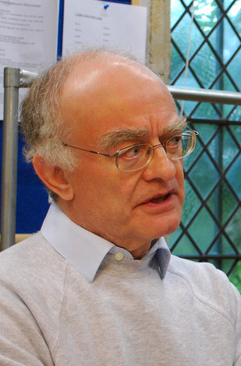
Rutter pointed to what he thought were interesting parallels between the Joseph story and the work of the Oxford vaccine scientists: Joseph “was treading a long road with lots of doubts and uncertainties but yet at the end of the journey there was a miracle in Bethlehem which the world has never forgotten. It almost boggles the mind, the importance of what [the vaccine team] are doing.” Like Joseph, the Oxford team labored in a “backroom” where they didn’t know whether their work would be successful or not; and like the biblical account, when the Christ child was born, the angels sang in heaven. And just so, the announcement of the vaccine results led the orchestral leader to add the “Hallelujah” as a “salute” to the Oxford team’s good work.
On the face of it, Rutter as composer has done what preachers have always done: he recognized that in a time of national crisis, an ambiguous character of the biblical story (in this case Joseph) can serve as an invitation to more evocative associations that may bring assurance of divine presence in a time of need.
As for ambiguity, Joseph fits the bill nicely: he completely disappears from the Matthean account of Jesus! Some scholars conclude that the narrative of Jesus’ nativity is not original to Matthew (you could read Matthew from 3:1 to 28:20 and not feel any loss in terms of Matthew’s story about Jesus).
And Christian art is a willing co-conspirator. Rembrandt’s “The Holy Family with Angels” shows Joseph standing in the shadows, barely visible, reliable as ever at his workbench. Meanwhile, Mary casts her warm maternal gaze upon the miracle, the infant Jesus.
Joseph’s very ambiguity, historically and narratively, teases our associative imagination into active thought. Hence Rutter’s associative connections: the vaccine, a miracle; the Oxford team of scientists, a modern-day sign of Joseph. So far, so good.
But what of Joseph’s “complicated” thoughts? According to Rutter’s humorous aside, they had to do with Mary’s “inexplicable condition.” That’s just the beginning of it. Joseph’s social situation feels like an impossibly tangled knot of complications: a Jew living in occupied territory, a non-traditional family in a deeply conservative religious culture, a member of a persecuted religious minority with extremist elements on its fringes. Isn’t that complicated enough?
And by the same token, isn’t an association between Joseph and an Oxford University team complicated? Isn’t an association between an undocumented person of Hebrew ancestry, living under Roman occupation, and a group of scientists laboring in the privileged space of Oxford University complicated? Is the Oxford vaccine team, as Rutter suggests, our modern-day Joseph, leading Mary on her donkey to a 21st-century “miracle” vaccine?
Is it more complicated? Must it be more complicated?
Yes, it is complicated, not least because the vaccine being distributed in the UK isn’t British at all; the vaccine being given is produced by Pfizer/BioNTech, not the one produced by Oxford. AstraZeneca, which worked with the Oxford team, fumbled badly when it did not promptly report negative reactions to its vaccine to the U.S. Food and Drug Administration.
As for Pfizer/BioNTech, it stands out as a product of the global economy — the opposite of nationalism. Fintan O’Toole, a columnist, points out that the ancestry of Pfizer/BioNTech includes its design in Germany, its development by a U.S.-based multinational company, its manufacture in Belgium and its leadership team consisting of the children of Turkish immigrants, the very antithesis of Brexit activists. “Just as a very hard Brexit is about to become reality, the vaccine’s history undermines ‘our island story’ of ‘standing alone.’ [The vaccine’s ancestry] looks suspiciously like a rootlessly cosmopolitan citizen of nowhere,” he wrote. Not incidentally, the for-profit Pfizer/BioNTech stands to reap billions from the suffering of “essential workers” (many of them migrants and people of color and the poor of all colors) who have lost life, income and security during the pandemic.
These represent some of the complicated contours of this miracle. But must it be more complicated? One wonders if, in uncritically associating the Christmas story with a celebration textured with nationalistic overtones, we inadvertently insert a theological justification for the nationalistic spirit of the age. Is that okay? If not, how do you pastor to a community in contexts that are pastorally needy and politically charged? Is there a legitimate place for this kind of interpretive move? If so, what kinds of interpretive guideposts give shape to that move? Can the political hopes of a nation ever become coterminous with creaturely hope in the divine? Or must they always exist in tension? What keeps that tension active? Can we be patriotic members of our nation and people of faith? What is the distinction between the global economy’s “rootlessly cosmopolitan citizen of nowhere” and appropriately patriotic citizenship in the community of faith?
For those who share these concerns, here are a few quick thoughts that should be at play. From the standpoint of Matthew’s account of Jesus’ family (irrespective of its historicity, the nativity story in Matthew does reflect the experience of a minority community under imperial rule), Joseph and Mary were poor, largely extraneous to the machinations of Empire even as they were its most common and most voiceless victims; and they were not rootless, but Jews through and through.
As to empire itself, Matthew’s genealogy of Jesus includes the kings of Israel, suggesting a clear national identity. While seemingly endorsing the monarchy, the narrator lists kings who were viewed by the tradition as bad. Even the best of them, King David, the narrator singles out for sexual misconduct and homicide (“David was the father of Solomon by the wife of Uriah”); and the elephant in the room, never mentioned explicitly, is the Emperor of Rome, who likened himself to a god. Whatever else we may say of Matthew’s narrator, we may be certain that he was not a vulgar nationalist but deeply suspicious of imperial powers.
However, Matthew’s Jesus testifies to the triumphant arrival of the Empire of Heaven, which is also problematic. That makes Matthew’s witness complicated in our own time of hyper-nationalistic impulses and rapacious greed on a global scale. If we are to be faithful to Matthew’s root conception of the Empire of Heaven, we would need to keep the distressed and the oppressed as our primary interpretive location.
That hermeneutical location is implied in the genealogy and explicit in the rest of Matthew, especially in Matthew 25:34-40. But Matthew never quite escapes the empire bent on global domination — or at least Matthew’s interpreters don’t. Western Christendom, after all, embraced Matthew 28:18-20 as its own “Great Commission” not unlike (and perhaps related to) the ambitions of today’s global economy, that “rootless citizen of nowhere.” All things, including Matthew’s notion of the Empire of Heaven, must be seen to be contingent rather than final and universal.
Second, we could also probably use a short refresher in the history of Christian hymnody. Rochelle A. Stackhouse, a United Church of Christ pastor and professor at Moravian Theological Seminary in Pennsylvania, provides a helpful perspective on the historical evolution of Isaac Watt’s “Our God, Our Help in Ages Past” — from its composition in 1714 to its present place in the lexicon of Christian hymnody.
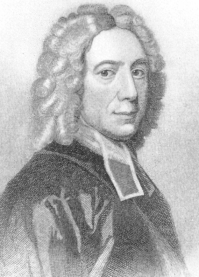
The Book of Psalms, including Psalm 90 on which Watts’ “Our God” is based, is historically ambiguous, as it speaks in vague terms of the nation of Israel or personifies the voice of an unidentified person’s complaint and or praise. Reading Psalm 90 pastorally, Watts recognized that it could speak to different generations and contexts — that, indeed, it was intended to speak evocatively for subsequent generations. Today, in the UK, many British hymnals classify it as a “National Hymn.” In the U.S., many pastors use this hymn, especially during crisis periods, including (as I did) in response to the 2016 election and the onset of the pandemic.
Maybe when we sang that together, there were some of us longing for a “return to normal” — but the Black Lives Matter movement, among others, reminded us that a return to normal isn’t something to aspire to. Sadly, and frequently, our singing of this hymn has been too uncomplicated by historical considerations. In other words, we tend to universalize and decontextualize our associative instincts at our existential peril.
Stackhouse begins to correct this deficiency as she reminds us that Watts composed “Our God” during a period of national uncertainty and specifically as a member of an oppressed and persecuted religious minority (the tradition of English Nonconformity). Watts’ grandmother was a Huguenot and his grandfather a naval officer under a Cromwellian naval commander. He was educated in a school of Dissenters.
In 1714, when Parliament passed the Schism Act (which forbade Independents to run schools), Watts’ community was the target. Queen Anne died on August 1, 1714, the day the edict was to take effect. Her death came to be known among the Independents as the “Protestant Passover” — and it was for this occasion, a crisis of transition and evident mediocrity in government, that Watts composed his hymn. He did not write it as a blessing to the status quo or as a desire to “get back to normal,” but amid turmoil and uncertainty about what might come next for this persecuted minority. George I would repeal the Schism Act in 1719, thus cementing the wisdom of the hymn in the minds of the Independents.
According to Stackhouse, Watts was a patriot (he often referred to Britain as Zion in his paraphrases of the Psalms), but equating “Our God” as a blessing to the status quo does an injustice to its sociopolitical complexion. For Watts, the monarchy was anything but stable or intrinsically interested in the welfare of vulnerable communities. He was British. And maybe at his best Watts reflected the worldview of the psalmist: “Do not put your trust in princes, in mortals, in whom there is no help” (Psalm 146:3).
Like the psalmist, Watts intended to say that monarchs and parliaments come and go, they rise and fall, like all political parties, but do not fear them — the futures they plan perish with them. Or in the language of Watts’ 1714 version: “The busy tribes of flesh and blood / With all their lives and cares / Are carried downwards by the flood, / And lost in following years.” Stackhouse finds it extremely ironic that a hymn that decried the ephemerally “busy tribes of flesh and blood” has come to mean that God conserves the status quo — forever.
In his blog announcing “Joseph’s Carol,” Rutter points to the amassing of insane wealth by global tech companies (does he also have in mind the likes of Pfizer/BioNTech?) and the debt the superelite and tax-avoiding wealthy owe to the rest of us. He urges us to “remind these global titans that if the world they are increasingly ruling over is to be a world worth living in they should give back some of the money they have made out of you and me, to support the arts. Their tax-avoiding companies have profited massively from Covid; they should help those who have suffered from it. The arts are not a frill; they are the lifeblood and hallmark of a civilized society.”
Maybe Joseph would get that kind of concern.
I hope we hear it in the carol, too.
 ROBERT HOCH is an ordained pastor in the Presbyterian Church (U.S.A.). Rob lives in Lancashire, England, where he is currently pursuing two of his passions: walking and writing. Most recently, he served as the pastor of First & Franklin Presbyterian Church in Baltimore. His email is [email protected].