 Guest commentary by Beth Ricanati and Chris Carson
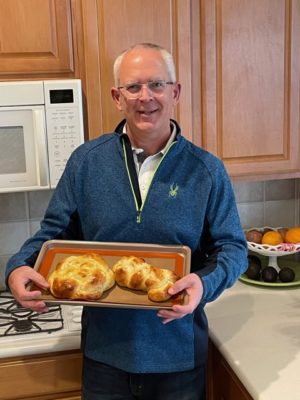
A Christian and a Jew bake sacred bread together. They do so distanced; the times require this. They are separated — not by six feet, but by 1,500 miles and much of the country. Normally, these two would never have met, but these times are not normal.
This, of course, is not how the joke starts. It is supposed to start with a priest and a rabbi walking into a bar. However, there is nothing funny about the old joke. If anything, it serves as a sad commentary on society, reminding us of places, of station and of the disconnect we have with most things “other,” a disconnect that keeps us distant from one another and ignorant of the beauty of another and her customs.
This ignorance has perpetuated the racism that treats entire groups of people as if they are “less than.” It has furthered the rise in anti-Semitism, felt too long by too many, but seen on display so recently in the Capitol riot, where sacred walls were desecrated by some wearing clothing depicting Auschwitz as nothing more than a sleep-away camp and the murder of millions as “not enough.”
 Surely, we are better than this! Surely, we are more than the sum of our walls!
This Christian and this Jew think so. They believe others do too.
We met early in the pandemic. The Christian, Chris, a male pastor from Texas, reached out to the Jew, Beth, a female medical doctor, author and challah-maker. Chris had just finished reading Beth’s book, “Braided: A Journey of a Thousand Challahs,” and had offered an interfaith class using the book as the syllabus. It was, to Beth, an offer to build a bridge at this most difficult of times. It was almost too good to be true, this opportunity to explore some of the themes of the book in real-time.
Beth and Chris have since gotten to know each other, the Jew and the Christian, the Southerner and the Californian. Beth attended one session of Chris’ classes on Zoom. She attended as a participant, and later again to make challah with everyone.
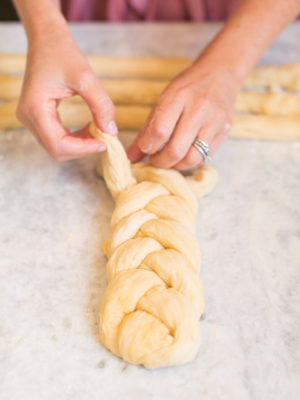
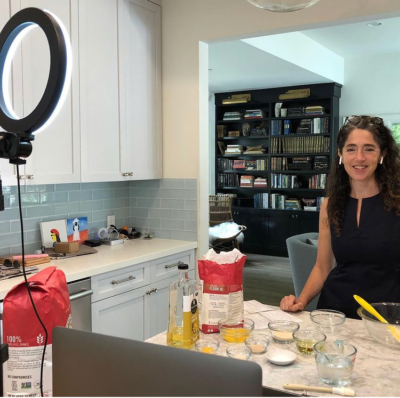
For most of a year now, they have continued to bake challah, to expand their community. While societal walls exist, together, they are watching them begin to crumble. Chris sees it in Beth, who stands in her kitchen comfortably covered in puffs of white flour before leaning into the counter as she kneads the dough, engaging each week in a profound behavior that connects her to the foodways of her ancestors. She is literally perpetuating the Jewish culture each and every week. She is doing so in America, where anti-Semitism is on the rise. One challah at a time, Beth stakes her right to be here, to be heard, to be every bit herself.
Beth sees the walls crumble in Chris, a Christian from almost 1,500 miles away who wants in on this ritual. He is still baking challah, as are some of his community. She sees it in others too, in particular those with whom she gathers over Zoom, those she is able to see peering across her kitchen island as tiny little squares, populated by people in their own kitchens, often in different states from all across the country, often multigenerational. Together, ingredients spread out, ready to make dough, they commune. They care about something bigger than themselves. They make more than bread, they build bridges!
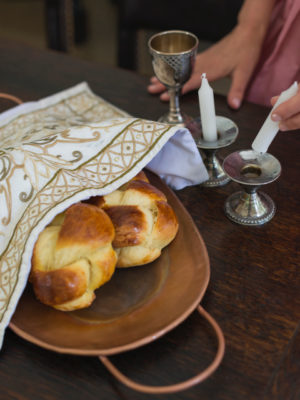
Baking challah is about so many things. It is notably about the Sabbath/Shabbat. It is about table fellowship, about community. It is about themes relevant to all of us, regardless of religion. It was with these themes in mind that Chris offered a class both to members of the church he pastors and a local synagogue. It is with these themes in mind that Beth bakes with people around the world.
Breaking bread together is at the center of so many religions because it provides us with an opportunity to come together, to share stories, to nurture and nourish each other. Breaking bread reminds us that life is more than just about us — it is also about others. When we break bread together, we share a piece of something larger. As a result, we come together.
This commandment of Sabbath is so timely now. Making challah is an act of transformation, of taking something raw and creating something new and beautiful. It is about real change – in this case, starting with one thing (the ingredients) and creating another (challah) – hopefully for the good. We need that now. Our country needs that now.
The complexity of our problems feels overwhelming. Yet, in this simple, mundane, ordinary act of baking sacred bread, we find healing. For, when we bake together and our images pop up on our Zoom screens, our faces are not those of Christian or Jew, but of dreamers, of people daring to knead for the needs of others, even themselves. Surely there are like-minded others out there, dreaming of a different reality, who can come together and heal over this ancient ritual of baking and breaking bread.
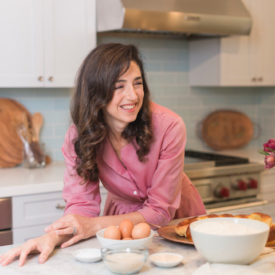
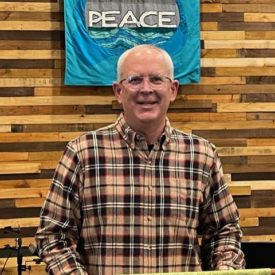 BETH RICANATI is a physician and author of “Braided: A Journey of a Thousand Challahs,” living in Santa Monica, California. CHRIS CARSON is pastor of Faithbridge Presbyterian Church in Frisco, Texas.