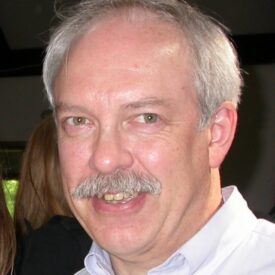
Guest commentary by Christian T. Iosso
Don Shriver was on my committee when I received my Ph.D. in ethics from Union Seminary in 1991. I want to say several things about Don’s contribution to the Presbyterian Church’s social ethics thinking and action. I served for more than 14 years as coordinator of the Presbyterian Church’s social witness policy. (Don had earlier served nine years on that committee, with several years as its chairperson.)
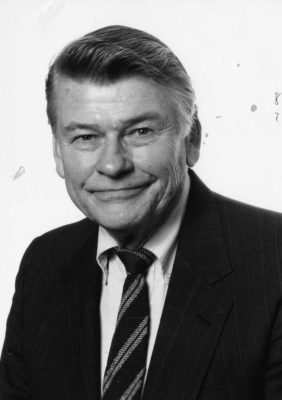
In the early 1980s, Don served on the social concerns committee of New York City Presbytery. Compared to the major struggles described in his book of essays “On Second Thought” and in the book I edited with Isaac Sharp, “Christian Ethics in Conversation: A Festschrift in Honor of Donald W. Shriver Jr.” it is amazing that Don found the time – made the time – to meet with a miscellaneous collection of activists in New York City Presbytery. He was always gracious, both patient and impatient, always focusing on the goal of getting congregations to address real issues in their neighborhoods and for the presbytery to address city-wide issues. He never complained about people, and didn’t throw his weight around. Because of his transparent desire that good be done, passive aggressive administrators actually did what he encouraged.
Don asked me to speak to the class he and Jim Kuhn taught at Columbia Business School on business ethics. He wanted me to describe an aggressive corporate social responsibility campaign against Johns Manville, an asbestos manufacturer, and I would say he and Jim Kuhn even egged me on to scare the business students. He and Jim were clearly lovingly blowing up the assumptions of the students, and their business ethics book, “Beyond Success,” was perhaps Don’s best collaborative venture. Jim had a fine realism about corporate power and I think Don absorbed a lot from him almost automatically.
Don’s ability to wade into other professional areas of expertise was remarkable, and was partly due to personal alchemy — he would identify and bond with really smart people and would almost download some of their wisdom by proximity alone. It happened in a number of his collaborative books. His collaborators were, I think, always a bit amazed at how much they produced in cooperation with Donald Shriver.
I was in the pastorate during Don’s time working on the social witness policy of the Presbyterian Church. He was absolutely committed to workers’ rights, having seen workers ground down in the textile mills of North Carolina. He had been part of the progressive core leadership in the Southern Presbyterian Church, planning aspects of progressive witness for years. Race was an obvious commitment, as evidenced in his first national-level book “The UnSilent South,” but his brand of Christian realism was an economic realism.
The key thing was that faith was not secondary or instrumental to the strategic goal, whether it was criminal justice reform, welfare reform in New York, workers’ rights on a national level, various forms of human rights, the role of forgiveness in politics or the role of truth-telling in what he called “honest patriotism.” Faith was the core. God clearly wanted justice to be done. There was no need for more excuses.
When my predecessor was fired, Don Shriver stepped up in outrage that a prophetic effort had been shut down by bureaucratic cowardice and capitulation to the Israel lobby. Don was himself always ambivalent about calling out Israel for its brutal occupation of the Palestinians. I am the son of a Holocaust survivor and so less sentimental about it — but I probably never saw the anti-Semitism he saw.
In any case, the social witness policy coordinator was fired because a member of that committee, visiting the Middle East, contrasted the welcome of Arab nationalist groups in Lebanon with the harsh response of Israeli nationalists to any criticism of their dispossessing the Palestinians. What Don focused on were the rights of that particular worker, who was fired for someone else’s sin, and the need for the church to have an agency that could speak the truth freely. Don organized the professors of religion and ethics across the church and took out an ad in the Christian Century. He stepped up, and others stepped up. He was not about posturing. He helped maintain the Presbyterian Church’s capacity for a prophetic voice in the face of a fearful leadership.
Donald Shriver’s stewardship of Union Seminary showed a theological understanding of institutions that is only rivaled, in my view, by William F. May. Most of Don’s faculty and student opponents did not understand the institution they were in, and were in some cases ideologues, simplifying the positions they were attempting to critique.
Don was enormously influential for the unprecedented nine years he served on the Advisory Committee on Social Witness Policy. His spirit is still missed among the functionaries and the sincere but naïve idealists who populate the upper reaches of the Presbyterian Church and probably other denominational staffs. He wanted the church to make a difference and shared a commitment to the church using its voice both thoughtfully and forcefully at every level.
Lastly, Don would quote aphorisms, often from James Luther Adams. By their groups shall ye know them. Nothing so handy as a good theory. Seek simplicity and distrust it. What we could trust in Don Shriver was that he would always back his sincerity with real research and unyielding commitment to justice.